Category: Suspense

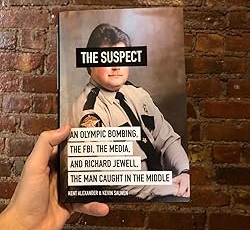
  • The Suspect by Kent Alexander and Kevin Salwen

    The Suspect by Kent Alexander and Kevin Salwen

    The Suspect by Kent Alexander and Kevin Salwen delves into the complex story surrounding the 1996 Centennial Olympic Park bombing and the ensuing investigation that centered on Richard Jewell as a primary suspect. Set against the backdrop of Atlanta during the Summer Olympics, the book follows the high-stakes journey of Jewell, a security guard who discovered the bomb and initially hailed as a hero. However, the narrative takes a dark turn as he becomes the FBI’s prime suspect, transforming the life of a man dedicated to safety into a media nightmare.

    Through meticulous research, Alexander and Salwen reconstruct the events that led to the attack, highlighting the conflicting forces at play among the FBI, the media, and Jewell himself. With each passing chapter, the book examines the fallout of a society quick to make judgments based on incomplete information, as well as the consequences of a media frenzy on an innocent man. In this six-part summary, readers are given an inside look into the behind-the-scenes workings of the FBI’s case against Jewell, the psychological toll it took on him, and the ethical dilemmas faced by journalists who hastily published his name without concrete evidence.

    The narrative skillfully captures the immediate aftermath of the bombing, showcasing how law enforcement scrambled to resolve the incident, and initially focusing on Jewell as the key to resolving the attack. It illustrates the tense atmosphere of the investigation, the pressures of a quick resolution, and the detrimental impact of assumptions and bias. This investigation sheds light on the complex network of characters involved, from law enforcement officers under intense scrutiny to journalists rushing for the next breaking news piece.

    Through their investigative writing, Alexander and Salwen bring to life the intersection of law, journalism, and the lives affected by their actions, not only examining Jewell’s innocence but also questioning the protocols that allowed for his public condemnation. Beyond Jewell, the story probes deeply into society’s penchant for scapegoats and the ramifications of living in a culture where guilt is assumed before innocence is proven.

    The book builds a thorough portrayal of the societal and personal effects that followed Jewell’s wrongful accusation, weaving in perspectives from various stakeholders involved in the case. Ultimately, The Suspect is a story about systemic flaws, societal expectations, and the heavy personal cost of being caught at the intersection of two powerful forces: media and law enforcement.

    Plot Analysis

    The plot of The Suspect is structured around a real-life event, which gives it a unique foundation of tension and engagement from the start. The pacing is carefully measured, allowing readers to absorb the narrative complexity and moral dilemmas presented. This real-time recounting lends itself to an immersive reading experience, although the plot could occasionally feel dense for readers unaccustomed to the depth of investigative journalism. The balance between emotional engagement and factual reporting is well-maintained, and the storytelling is driven by careful, detailed exposition. Score: 8/10

    Character Analysis

    Richard Jewell is portrayed as a compelling and empathetic figure, his character arc sharply defined by the unwarranted accusations against him. Jewell’s vulnerability and resilience are well-captured, bringing depth to his portrayal. Secondary figures, such as the journalists and law enforcement officers involved, serve as reflections of societal roles in the tragedy, but could have benefited from additional complexity. The authors succeed in presenting a humane, multidimensional view of Jewell, fostering empathy for his plight. Score: 9/10

    Illustrations

    This book does not feature illustrations; however, its narrative relies on vivid descriptive language that effectively evokes imagery, grounding the reader in its 1990s setting without the need for visual aids. Score: N/A

    Writing Style

    The authors’ writing style is both meticulous and accessible, balancing journalistic clarity with storytelling flair. They manage to convey factual details without sacrificing emotional depth, maintaining a tone that is respectful yet critical of the systems at play. The linguistic choices highlight both the societal tension and the individual trauma that Jewell endured. Score: 8/10

    Themes

    The main themes explored in The Suspect include media ethics, justice, and the power of public perception. The book raises important questions about the balance between free press and the presumption of innocence, a timely theme that remains relevant in today’s digital age. The themes are thoroughly examined and thoughtfully presented, inviting readers to consider their own role in the consumption of media and judgment of others. Score: 9/10

    Educational Value

    The Suspect offers valuable insights into the operations of the media, legal system, and law enforcement, as well as the ethical responsibilities that accompany these fields. For readers interested in criminal justice, journalism, or ethics, the book is both educational and thought-provoking, providing a case study in the consequences of unchecked assumptions. Score: 9/10

    Emotional Impact

    The emotional impact of The Suspect is profound, as it takes the reader through Jewell’s harrowing experience and the immense personal cost of public shaming. The book captures the reader’s empathy by showing the devastating effects of false accusation on Jewell’s mental health and reputation. While emotionally engaging, it avoids melodrama, allowing readers to form an objective yet empathetic perspective. Score: 8/10

    Cultural Significance

    The Suspect holds significant cultural relevance as it addresses issues of media responsibility and the speed of judgment that defines contemporary society. The book is a critical examination of the complex relationships between individuals, the state, and the press, highlighting an era that marked a shift in media ethics. Its relevance remains as pertinent today as it was during Jewell’s time, making it a culturally impactful read. Score: 9/10

    Final Rating

    Overall, The Suspect is a well-researched, thought-provoking, and emotionally engaging book that provides an in-depth analysis of a tragic event that changed lives and shook societal institutions. Its balanced approach and careful handling of the themes give readers a profound understanding of the dangers of premature judgment. Overall Rating: 8.5/10

    Views: 9
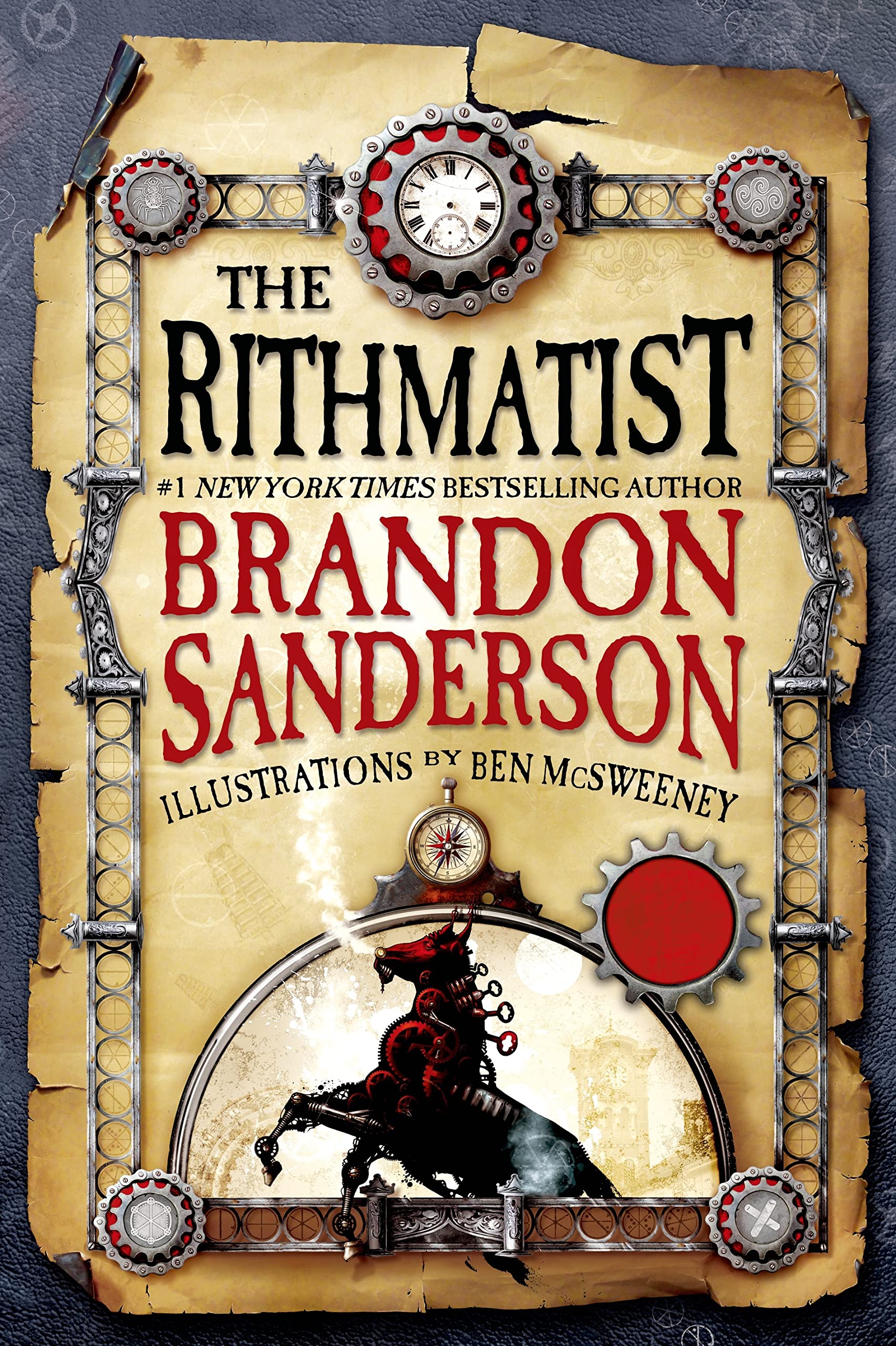
  • The Rithmatist by Brandon Sanderson

    The Rithmatist by Brandon Sanderson

    My rating: 5 of 5 stars

    “More than anything, Joel wants to be a Rithmatist. Rithmatists have the power to infuse life into two-dimensional figures known as Chalklings. Rithmatists are humanity’s only defense against the Wild Chalklings. Having nearly overrun the territory of Nebrask, the Wild Chalklings now threaten all of the American Isles.

    As the son of a lowly chalkmaker at Armedius Academy, Joel can only watch as Rithmatist students learn the magical art that he would do anything to practice. Then students start disappearing—kidnapped from their rooms at night, leaving trails of blood. Assigned to help the professor who is investigating the crimes, Joel and his friend Melody find themselves on the trail of an unexpected discovery—one that will change Rithmatics—and their world—forever.”–Goodreads

    Wow. Oh, wow. This book was sooo good. I loved every part of it–except for the “to-be-continued” ending. Can we get a release date for The Aztlanian please?

    I devoured this book. It has been a long while since I’ve read a book that fast, and it felt good. I loved the entire plot, the amazing world-building, the fantastic characters….I could go on and on. This book is definitely worthy of its five star rating.

    The plot was thrilling. As an artist, the idea of chalk drawings coming to life was very intriguing, and it was exciting to see how Sanderson spun out the mystery. He did an excellent job of weaving in unexpected twists and turns to keep the mystery going until the very end. My only complaint would be that the mystery was wrapped up very quickly in the end, leaving me wondering if that really was the solution, or if there was something more in store. And it ended with “To be continued,” and some unresolved loose ends. Not cool–how am I supposed to survive until the sequel comes out?

    The world-building was phenomenal. It was completely unlike any other setting I’ve ever read. It was based on the premise of “what if America was actually an archipelago of islands?” It also had some other twists in history, but I’ll let you discover them for yourself. Part alternate history, part fantasy, it had a familiar feel to it while still being original. It even had touches of steampunk–er, springpunk? And the magic of the Rithmatists? It was awesome. I loved how it was based on logical principles and geometric properties. I can’t wait to read more about it in the next book. One note: the Monarchical Church in the book seems Christian in nature at first, and is classified with other Christian denominations. However, from the little tidbits that were in the book, it seems more of a religion glorifying science, along with some ritualistic aspects that could become dark very quickly. I would be wary letting younger children read this book on their own–if they do, at least discuss with them the religious views the characters hold to, and how that differs from Christianity to avoid confusion and misunderstanding.

    The characters were great. Quite well-developed and life-like. My personal favorite was Melody–I loved her spunky, melodramatic personality, and all the hilarious comments she added. When I first started the book, it was a little hard to figure out whose POV it was from, but it became clearer within the first few pages. By the way, I kept wanting to call Joel “Joe” instead. Not sure why–I just thought it fit him better.

    Wrap-up: This was a really fun, exciting read. It’s a blend of magical realism, alternate reality, and steampunk. I highly recommend it. Just a warning though: the explanation behind the origin of Rithmatist powers was hinted at, and it points to a rather dark theory. Some of the religious aspects, a fight scene toward the end, and the actual villain were very creepy and disturbing. Not for the weak of stomach.

    Rating: 5 stars

    Recommended: 14 and up.

    Content guide (may contain minor spoilers):
    Language: 1/10 (“dusts,”and “dusting,” were common ejaculations.)
    Sexual Content: 1/10 (mentions of dress showing quite a bit of leg, a girl being pretty, etc)
    Violence: 7/10 (most of the attacks are off page, though the end fight scene is very creepy. the wild chalklings eat off the skin and eyes of victims. one “historical” account of a chalkling attack is pretty disturbing.)

    For more reviews, see gabriellenblog.wordpress.com

    Views: 3

  • Romancing the Crime

    Romancing the Crime


    Rating: 3.5 Stars

    Age Recommendation: Adult (~16+)

    Warnings: Frequent Adult Language, Implied Sexual Content (nothing explicit)

    Genres: Crime, Murder Mystery, Romance

    Pages: 421 (paperback edition, provided in exchange for a review)


    Lou glanced at the back jacket. “Fletcher Manning. Turns out he’s a best-selling novelist. And he was so impressed by your little performance, he wants to shadow you as part of the research he’s doing on his new book.”

    Cory leaned back, letting the counter support her. A novelist? He wanted to see her again.


    JW Robitaille’s Romancing the Crime is essentially a fresh take on a classic murder mystery, crime-solving novel, but it also includes a romance that has a strong footing within the story. The characters brought together are done so in a way that’s very similar to the television show Castle, and thus gives their interaction a great starting point. It’s very difficult to miss that common plot between this book and the series, but the story is one with a merit of its own.

    The research for this novel has clearly been done formidably, and the writing is – a good 95% of the time – quite spectacular. I did get lost a bit in the number of secondary characters that were introduced, but I understand that this book is the first in a series, and expect that these characters will be returning ones, or ones meant to help with this plot until we meet the new ones. As far as the plot goes, for the most part, everything seemed to line up and follow along with an understandable, realistic path. I struggled, though, when sometimes things seemed to go off on a tangent without explanation.

    For example, Marin decides in chapter four to ask about another detective’s brother seemingly out of the blue, with no obvious relation to the action that’s been happening in the book or even in the scene. Moments like that distract me from the story because even as I read along, I’m still stuck back at the start, wondering why it was brought up.

    Romancing the Crime also felt slightly problematic in regards to the way diversity was featured. I think that diversity is very important because it accurately represents the world we live in, but sometimes the characters in this story seemed to be described as a bit too long, or in a way that implies that they are somehow marked as an ‘other.’ And while that’s fair considering who Marin is, it felt a bit unnecessary and forced.

    In truth, the descriptions of Gainsville, Florida – the setting of Robitaille’s story – and the detailed knowledge of detectives and how they work were the real stars of Romancing the Crime. Those who love crime stories will find it easy to dive into this one and anyone who loves a bit of local information to help solidify a story will be pleased that the author has included so much of it. That decision certainly made it easier to imagine the scene and the world in which Marin’s investigation takes place.

    On the whole, the plot is one that easily engages those interested in knowing “Whodunit,” with many false leads and an ending the reader probably won’t see coming. For those that enjoy Romancing the Crime, Robitaille has written a few other novels, as well as screenplays and short stories that may need to be the next on their To-Be-Read list!

    Views: 1

  • Where Death is a Hunter

    Where Death is a Hunter

    Where Death is a Hunter

    Recommended Age: 16+

    Warnings: Character Death, Surgery, Mild Violence, Mentions of Alcoholism / Hallucinations

    Pages: 371 (Paperback)


    Christopher Stookey’s Where Death is a Hunter was recently sent to me by Full of Books to review. As with most of my readings assigned for review, I enjoyed the book more than I expected to.  As an avid YA-Fiction fan, I rarely decide to read books from other genres – especially medical thrillers. However, I definitely enjoyed the change in genre, even for just one book.

     Hannah Fatier has just started her first job as an anesthesiologist at Deaconess Hospital in San Francisco, she has just bought a new home, and she is newly engaged. In short, Hannah’s life is going well. That is, until a patient under Hannah’s care dies of mysterious causes during a routine operation. An investigation of the case reveals the cause of death to be a basic medical error that Hannah seems to be responsible for. When she decides to dig deeper into the records concerning the case, Hannah discovers a number of puzzling inconsistencies. She begins to suspect that someone has framed her for the death of her patient, but who? And more importantly, why?

    Let me get this straight: I consider myself to be a ‘scaredy-cat’. I jump easily at horror films, don’t enjoy “scary” activities, and hate seeing blood and gore. However, the medical and thriller aspects of this book didn’t bother me at all. I enjoyed the fact that the book included facts and statistics, which provided further insight to the medical world. (For example: did you know that at least 44,000 people die in hospitals each year because of medical errors?) The plot did not drag back or rush ahead; it moved at a perfect pace. The big reveal of ‘whodunit’ is an unexpected plot twist, and the novel has a strong conclusion. The only drawback is the fact that there was almost no character development. Hannah does learn that she cannot trust everyone, but there is no big realization or change from the beginning to the end of the book.


    Views: 2

  • The Devil in Canaan Parish

    The Devil in Canaan Parish


    Rating: 2 Stars

    Age Recommendation: 17+

    Warnings: Mentions of specific body parts in reference to lust or scenes involving sex, strong language (mainly towards the end of the novel), domestic violence, racist characters

    Genres: Historical fiction, Drama, Mystery, Suspense

    Pages: 204 (paperback edition provided in exchange for a review)


    “It was 1934, and my mother, my little sister Gracie, and I were living in Ida Mae Wilson’s boarding house in Savannah. My father was on the road to Atlanta, trying to scrape together enough to buy more wares to sell, and he had left us behind. I didn’t mind. It was one of the few times when I could rest from out nomadic existence. When I felt that we had a home, even if it wasn’t ours.”


    The Devil in Canaan Parish, by Jackie Shemwell, is an intricately detailed account of Southern Louisiana in the 1950s. The most interesting part of the novel, far and away, was the level of research that obviously went into the writing of this story. The biggest problem I had came from trying to find the plot. Upon finishing, this is the key information I feel I’ve been left with as a reader (without including spoilers, of course):

    Bram and Sally Palmer met at university and she decided to marry him despite the fact that he didn’t really fit in with her parents’ well-off lives in Techeville, Louisiana. They’ve been experiencing problems with their relationship for years now, and Bram is really quite tired of it. One night, a storm rips through town and at one store, a necklace is stolen, while at another, a Cajun girl named Melee washes up looking for a place to work. Bram brings her home to work in their household and from there a lot of trouble ensues.

    Sally has been wanting to have a baby but is quite ill. Bram takes a liking to Melee, even though he shouldn’t. And a lot of secrets are kept.

    Basically, it’s the making for a great domestic, realistic fiction novel. But I had a number of problems with it, which I feel I ought to address in order to explain the rating I gave this book. First, though, I do want to say that lovers of historical fiction – particularly set in the American South – could very well adore The Devil in Canaan Parish. I’m not saying that anyone shouldn’t. But I, personally, had trouble reading it.

    The other main problem, besides my struggling to find the story arc, was the editing. It seems like the text wasn’t edited for formatting, and may not have been line edited before the final draft was published. By that, I mean that there were a large number of typographical errors. Paragraphs weren’t indented, punctuation was missing, quotation marks did not appear at the beginning of a new paragraph when the same character continued speaking. The final line of The Devil in Canaan Parish is neither indented nor punctuated in any way. I don’t know if that was a stylistic choice, but it didn’t match the central portion of the text. Most of the errors occurred at the beginning and end. The other typing-based issue came from words being switched out incorrectly (for example, “here” instead of “hear”).

    I do want to look at the plot as well, without giving too much away. It wasn’t until about the 100-page mark (in other words, halfway through the story) that the plot actually picked up. The first half is almost entirely backstory, which is fine and necessary in its own way, but perhaps it could have been worked in throughout the story so that the current plot could take more precedence?

    Something I did appreciate, however, was that nearly all of the characters were important to the plot, rather than thrown in as extras. Even minor characters ended up being important, although one of the main plot devices at the end came out of nowhere and wasn’t hinted at beforehand, so that confused me greatly.

    If the reader goes into this story wanting as much historical detail as possible and is the sort of person who loves backstory and character building of that nature, the editing errors may not bother them. I’m the sort of person that notices those things easily because editing novels is something that I want to do in the future. And I wanted so badly to enjoy The Devil in Canaan Parish. When I was offered the chance, I put it at the top of my list and the front of my schedule, and I think that maybe I just got too distracted to fully take it in.

    The descriptions are easy to understand, and the opening paragraph is both charming and beautiful. It isn’t hard to imagine that, were those errors not in place and if the backstory wasn’t so overwhelming at the beginning, I would have easily fallen in love with The Devil in Canaan Parish.

    Views: 6

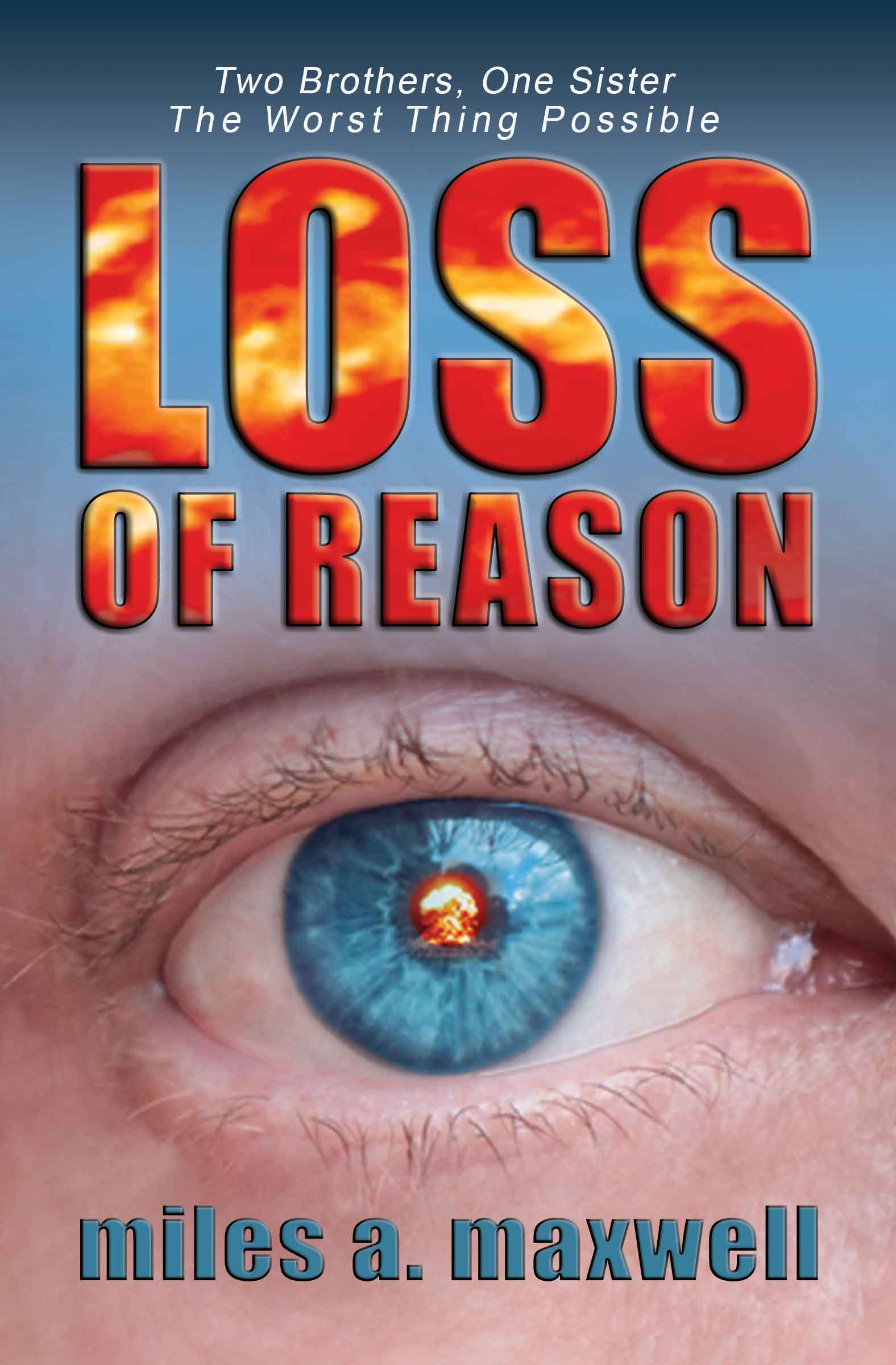
  • Loss of Reason

    Loss of Reason

    I cherish books and getting books from an author or a company is really energizing. A few months ago, I received Loss of Reason by Miles A. Maxwell and to make things even better, it even had the author’s signature. It is about how a bomb goes off in New York and all the difficulties that the characters go through. A very interesting part of the book is that it’s also very technical.

    I grabbed Loss of Reason while I was on a train which I generally do since I appreciate reading while in transit to work or elsewhere. So with a receptive outlook, I began to read. I had to re-read the initial two pages and I could not get into the book. I do not know whether it was just me or plenty of readers could not get into the book. It was not that the book was boring or horribly written, I just do not know why I could not get into the book. Maybe it was because I have been in a reading slump? Perhaps I was just truly drained? I don’t recognize what it was.

    I was not going to surrender so rapidly, so I set away Loss of Reason and attempted some other time. I was so determined to finish the book that I picked it up again and began to read. At that point it hit me… once more! I just could not get into the book. I trust that it was an excessive amount going on at once and too many characters all at once in the beginning. I thought the characters were not introduced properly and I got confounded frequently. The book was interesting, well at least the plot was. Yet, Loss of Reason was poorly written.

    When I write reviews, I loathe when it’s a negative review. On top of writing negative reviews, I loathe not completing books I began. This was very disappointing for me. I feel bad terrible for simply writing this now. In any case, I’m going to be honest and give my opinion of the book. I would not recommend Loss of Reason to my family or dear companions however I would recommend it to my friend at work since he enjoys science fiction. I gave it two chances and I could not get into it and I am sorry about that. For the rating, I’d have to give Loss of Reason two out of five stars. From what I read I believe that this deserves the rating I gave it.

    Views: 21