Tag: historical fiction

  • The Devil in Canaan Parish

    The Devil in Canaan Parish


    Rating: 2 Stars

    Age Recommendation: 17+

    Warnings: Mentions of specific body parts in reference to lust or scenes involving sex, strong language (mainly towards the end of the novel), domestic violence, racist characters

    Genres: Historical fiction, Drama, Mystery, Suspense

    Pages: 204 (paperback edition provided in exchange for a review)


    “It was 1934, and my mother, my little sister Gracie, and I were living in Ida Mae Wilson’s boarding house in Savannah. My father was on the road to Atlanta, trying to scrape together enough to buy more wares to sell, and he had left us behind. I didn’t mind. It was one of the few times when I could rest from out nomadic existence. When I felt that we had a home, even if it wasn’t ours.”


    The Devil in Canaan Parish, by Jackie Shemwell, is an intricately detailed account of Southern Louisiana in the 1950s. The most interesting part of the novel, far and away, was the level of research that obviously went into the writing of this story. The biggest problem I had came from trying to find the plot. Upon finishing, this is the key information I feel I’ve been left with as a reader (without including spoilers, of course):

    Bram and Sally Palmer met at university and she decided to marry him despite the fact that he didn’t really fit in with her parents’ well-off lives in Techeville, Louisiana. They’ve been experiencing problems with their relationship for years now, and Bram is really quite tired of it. One night, a storm rips through town and at one store, a necklace is stolen, while at another, a Cajun girl named Melee washes up looking for a place to work. Bram brings her home to work in their household and from there a lot of trouble ensues.

    Sally has been wanting to have a baby but is quite ill. Bram takes a liking to Melee, even though he shouldn’t. And a lot of secrets are kept.

    Basically, it’s the making for a great domestic, realistic fiction novel. But I had a number of problems with it, which I feel I ought to address in order to explain the rating I gave this book. First, though, I do want to say that lovers of historical fiction – particularly set in the American South – could very well adore The Devil in Canaan Parish. I’m not saying that anyone shouldn’t. But I, personally, had trouble reading it.

    The other main problem, besides my struggling to find the story arc, was the editing. It seems like the text wasn’t edited for formatting, and may not have been line edited before the final draft was published. By that, I mean that there were a large number of typographical errors. Paragraphs weren’t indented, punctuation was missing, quotation marks did not appear at the beginning of a new paragraph when the same character continued speaking. The final line of The Devil in Canaan Parish is neither indented nor punctuated in any way. I don’t know if that was a stylistic choice, but it didn’t match the central portion of the text. Most of the errors occurred at the beginning and end. The other typing-based issue came from words being switched out incorrectly (for example, “here” instead of “hear”).

    I do want to look at the plot as well, without giving too much away. It wasn’t until about the 100-page mark (in other words, halfway through the story) that the plot actually picked up. The first half is almost entirely backstory, which is fine and necessary in its own way, but perhaps it could have been worked in throughout the story so that the current plot could take more precedence?

    Something I did appreciate, however, was that nearly all of the characters were important to the plot, rather than thrown in as extras. Even minor characters ended up being important, although one of the main plot devices at the end came out of nowhere and wasn’t hinted at beforehand, so that confused me greatly.

    If the reader goes into this story wanting as much historical detail as possible and is the sort of person who loves backstory and character building of that nature, the editing errors may not bother them. I’m the sort of person that notices those things easily because editing novels is something that I want to do in the future. And I wanted so badly to enjoy The Devil in Canaan Parish. When I was offered the chance, I put it at the top of my list and the front of my schedule, and I think that maybe I just got too distracted to fully take it in.

    The descriptions are easy to understand, and the opening paragraph is both charming and beautiful. It isn’t hard to imagine that, were those errors not in place and if the backstory wasn’t so overwhelming at the beginning, I would have easily fallen in love with The Devil in Canaan Parish.

    Views: 6

  • Lost in Tanganyika

    Lost in Tanganyika

    One week later, a fisherman’s boat carried them to the Island where two British soldiers escorted the visitors to the Consulate of Lieutenant Colonel Hamerton, His Majesty’s Consul and East India Company’s Honorable agent. – Lost in Tanganyika

    I hate to say this but I found Lost in Tanganyika to be rather bland, boring, monotonous and the pacing was just unbearable. Let’s see the characters were single dimensional people with no development or any depth, they were just there to carry on the story, we had Williams and Elizabeth falling ill from time to time in the good old 1850s but no way near where I can feel for them. I felt like I was reading a history book with an encyclopedia and that too in a fictional theme, I loved history in school because it was factual and not a figment of an inspired event from someone else’s journeys.

    By evening, stormy winds subsided and swells diminished, but pitching lasted through the night

    There were too many facts and too little explanation or description about the surroundings. I mean how am I supposed to know every tribe, place, territory and history of a land as rich as Africa. Some explanation is due, right? I mean I was so lost and wandering in the book that I didn’t feel bad for Williams and Elizabeth as much as I felt bad for myself. Please explain to me the landscape, the people, nature and the atmosphere surrounding the Williams and Elizabeth in detail and not just in a vague way. I should know about Williams and Elizabeth so that I can enjoy and suffer with them like reliving their terror and quest for freedom. As far as I am concerned the most knowledge that the majority people have is from the Discovery Channel.

    “People of Uganda are the Waganda, and Wa-Khutu possessions are also U-Khutu. Of course, many tribes have migrated and through wars or slave trade occupied territories of another name. Uzinza, for example, is ruled by two Wanguana chieftains.”

    I also read that Thomas Thorpe was inspired by the journeys of several individuals. God bless them but the thing is that his book, Lost in Tanganyika,  should be inspired by their journey not a word by word account of their adventures, the way I see it is like enjoying others journey then describing them in such a way that the readers can journey together in this awesome land Africa but what do I get? I get a very dull book. Now, of course, some will say that I tend to read the romance genre, I like to point out that some books like John Grisham’s are also inspired by law or events relating to it but it’s the flair of the storyteller that keeps me glued to the book. Although Thomas Thorpe has a rich vocabulary and good command of the language he failed to deliver the masterpiece. He had an abundance of information and facts that can be exploited for the benefit of all but still what was presented was just an inspiration that in my opinion missed the mark by a great distance.

    Here, cuts in the ravines revealed granite and coarse sandstone, brown and green with sun-blackened strata tilted up to outcrops. At higher elevations, the ground was overgrown with shrubbery of mimosas and other thorny gums. 

    I hope that the effort put in Lost in Tanganyika is appreciated by others and maybe they see the light at the end of the tunnel or the end of an epic adventure, me not so much. All the best to the others, it was a very boring read and required loads of effort from my side.

    Rating: 2 Stars- Stars are mostly for the effort

    Views: 37

  • Out of the Easy

    Out of the Easy

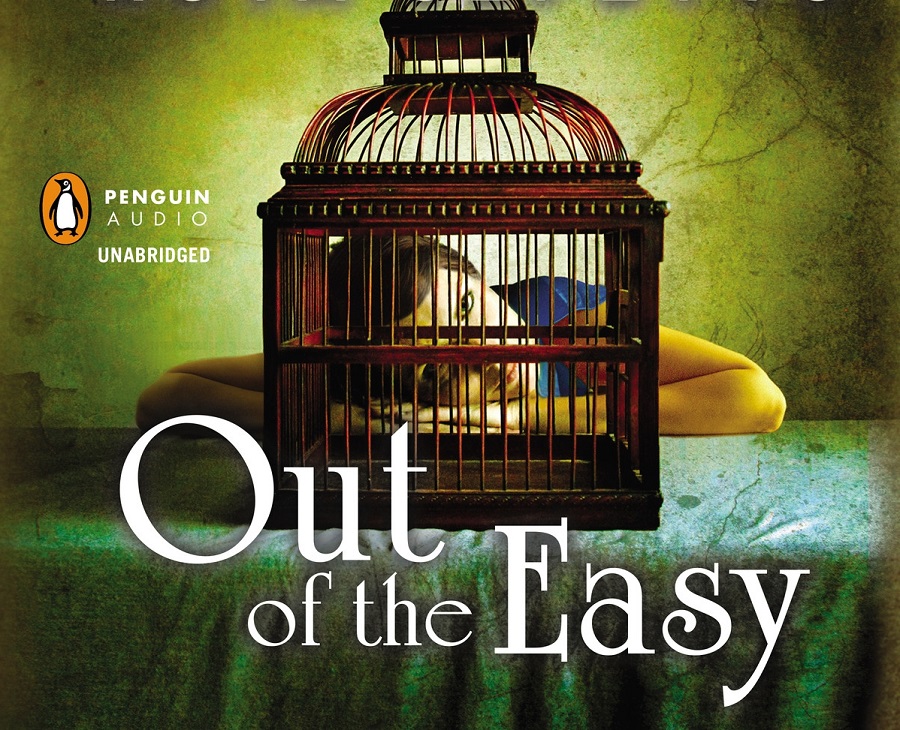
    I finally had the opportunity to get my hands on a book from one of my most loved writers, Ruta Sepetys, a month or so ago. Out of the Easy is her second book, after her dazzling debut novel Between Shades of Gray. This novel was surprisingly better than her first, which was difficult to beat. Mrs. Sepetys composes hard-hitting historical fiction (which isn’t normally my go-to genre, however, I’ll gladly make an exemption for any of Sepetys’ books) from World War II to New Orléans in the 50’s.

    Out of the Easy takes after a 17-year-old young woman named Josie Moraine in a first-person narrative. Josie lives in the French Quarter of New Orléans with her mother, and the year is 1950. Much the same as many other 17-year-olds, Josie has enormous dreams to get away from the ‘Huge Easy’ and set off for college, yet there are plenty of obstacles holding her back. For one thing, she works in the mornings cleaning the brothel her mom works at, and afterward, she spends her days working in a bookshop and caring for the mentally ill owner with the help of his son Patrick. But a strange death somehow related to Josie that she can’t disregard entangles her in a web of secrets, lies, mystery, and murder that makes her question everything she’s ever worked for.
    I cannot say enough about how much I loved Out of the Easy. I read far into the night (or morning) more than once until I finished reading ‘one more chapter’. I also may or may not have been almost late for class because I read all the way through my lunch period. But that’s another story. There was an engaging flow of plot and action that made me grab for each page as it came along and while I became more and more engrossed in Josie’s thrilling story. The character development was elegantly composed, as Josie goes on a journey of self-discovery and accepting some hard truths that re-shape her entire life. Lastly, Josie has a strong will, determination, and self-respect that are some of my favorite qualities of any character in any novel and not often found in today’s society.

    By and large, I would rate Out of the Easy 5/5 stars since it was so freaking amazing! On another note, Sepetys’ new book Salt to the Sea is out now, so go look at that soon and be expecting a review after I read it (which ought to be in the following month).


    Views: 49

  • Outrageous: The Victoria Woodhull Saga Volume One

    Outrageous: The Victoria Woodhull Saga Volume One

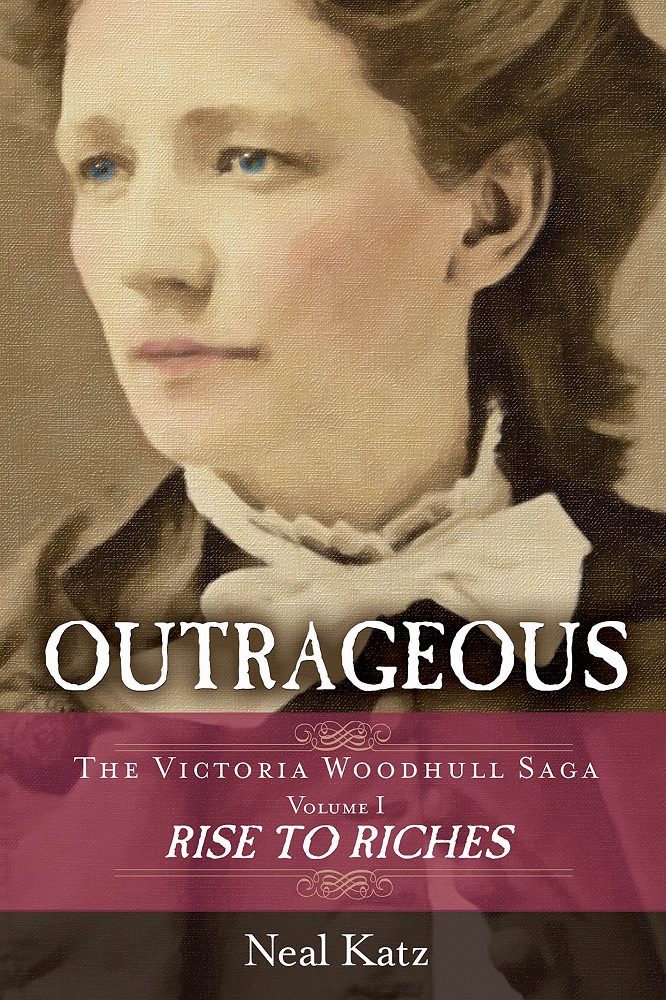
    Outrageous: The Victoria Woodhull Saga Volume One Rise to Riches by Neal Katz is a historical fiction book that follows the early life of Victoria Woodhull. In order to see and understand where she ends up, the story begins in her poor home with one too many children to feed and an abusive father. Firstly, this is a book for adults. The first chapter opens with Victoria’s father abusing her only to be followed by her being whipped in the second chapter. This is not a novel for the faint of heart. As a reader, I understand that this tragic and horrible background helps motivate her to escape and create a new life, but, as a person, I was rather troubled and, at times, distressed. There were moments I was cringing and waiting for her life to get better in the coming pages.

    In regards to Katz’s writing style, there were a few characteristics I would have liked to see him expand upon. Since Victoria’s persuasive tone and ability to speak well are large elements of her personality, I would have liked to see those talents develop. In chapter two, Speakin’, Katz cited a scene in which Victoria was telling stories to the local children while their parents were busy; “I used my big, blue eyes to help me tell the stories. I already knew that I could make people listen by changing the tone or volume of my voice. The children sat in silent rapture, all participating in the deception.” I think this is a very well written section, but, given the nature of her upbringing and future depending on her persuasive nature, it would have been nice to see more in this scene. For instance, Victoria saw the children drifting off and needed to do something new to captivate them, such as using varying voices for different characters.

    To be honest, it was hard for me to read Outrageous: The Victoria Woodhull Saga Volume One Rise to Riches. Victoria had a really tough life.  She went from one bad situation to another. This may be a sign of good writing, my being so disturbed. I do want to stress that this novel is fiction. After this book crossed my path, I did a little more research on Victoria Woodhull. Katz utilized several rumors surrounding her life as the foundation for his novel. There is no evidence that she was a “working girl” or believed in marriage for monetary gain. Other subjects are true, such as Dr. Woodhull’s alcoholism and womanizing. Katz blended some historical records with his imagination to create this novel.

    Views: 1

  • Outlander

    Outlander

    Rating: 3.5 Stars

    Age Recommendation: Adult (16/17+, depending on the reader’s discretion)

    Warnings: Adult themes including violence, language, and suggestions of sexual activities (not all consensual)

    Genre(s): Fantasy, Romance, Historical Fiction


    The screaming stones were the last thing I could truly say I remembered. And even that I had doubts about. The screaming had kept up, all the time. It was possible, I thought, that the noise came not from the stones themselves but from… whatever… I had stepped into.


    Outlander, by Diana Gabaldon, is the first book in a series of six, and introduces the reader to Claire Randall, a woman who worked as a nurse during World War II. Her interest in botany and her husband, Frank’s, interest in his family history leads the two to Inverness, Scotland, for their second honeymoon. While there, he learns about an ancestor of his named Jonathan “Black Jack” Randall and dives into learning about him while Claire goes off on her own adventure. When she stumbles across the standing stones upon a nearby hill, she, of course, has no idea that the circle will transport her back in time.

    Claire finds herself in the middle of British soldiers as they fight clansmen, gets caught up in a web of lies about who she is and where she has come from and decides that – until she can get back home to Frank – what really matters is that she manages to stay alive.

    The plot of Outlander is what drew me in, initially. I have heard so many rave reviews, although I’ll point out that most of them include a great deal of love for the male lead, Jamie, rather than any intensive look at other characters or writing style. I do not believe that Diana Gabaldon is a bad writer, in any sense. I will say, however, that her main character is not particularly likable in my opinion. I did watch the television show (an HBO series) before picking up the book, mainly because my best friend is rather in love with the novels as well as the show.

    Obviously, my reaction to the written story was not the same as hers, so you may wish to take it with a grain of salt, but I found Claire to be indecisive and frustrating, as the goals she sets for herself are not met and she doesn’t seem particularly invested in trying to accomplish them. It does feel a bit like Gabaldon may have tried to ensure that the romance would happen, and that makes sense. It’s the main reason the plot works at all. But I find it difficult to enjoy the novel I’m reading if I do not feel I can connect with the main character.

    The descriptions, however, are beautiful – even if sometimes they do go on for quite some time. For this reason, among others (mainly to do with exposition and setting the scene), the beginning feels very slow. The way Gabaldon explains action sequences, however, is quite something. I always understood exactly where each character was and what was happening to them. The portion where Claire is transported back in time is kept vague purposefully, I believe, and in that instance, I do think it works. Later scenes, I feel, are granted more explanation.

    The plot does not seem to be like any other I have come across, which is a reason that means quite a lot to me these days, as many books seem to all have some element in common. This series is original, and actually rather funny, and I do recommend that people read Outlander before watching the show if they wish to enjoy the book. The adaptation is absolutely phenomenal in how closely it sticks to the book, but I think that, after watching that version of Claire, I was disappointed by the written one.

    As ever, I feel that my opinion may or may not be similar to yours, but I do think that it is worth giving the series a go – particularly if you have yet to start the television show. I wouldn’t recommend that young readers try this one out, as there are some potentially upsetting themes. The television show, on that note, is something that parents may wish to be wary of as well, just as a heads up.

    If I could rate Outlander on plot alone, I would give it a good 4.5 stars, but some of the descriptions along with my issues with Claire brought the rating down.

    Views: 2

  • Passenger

    Passenger


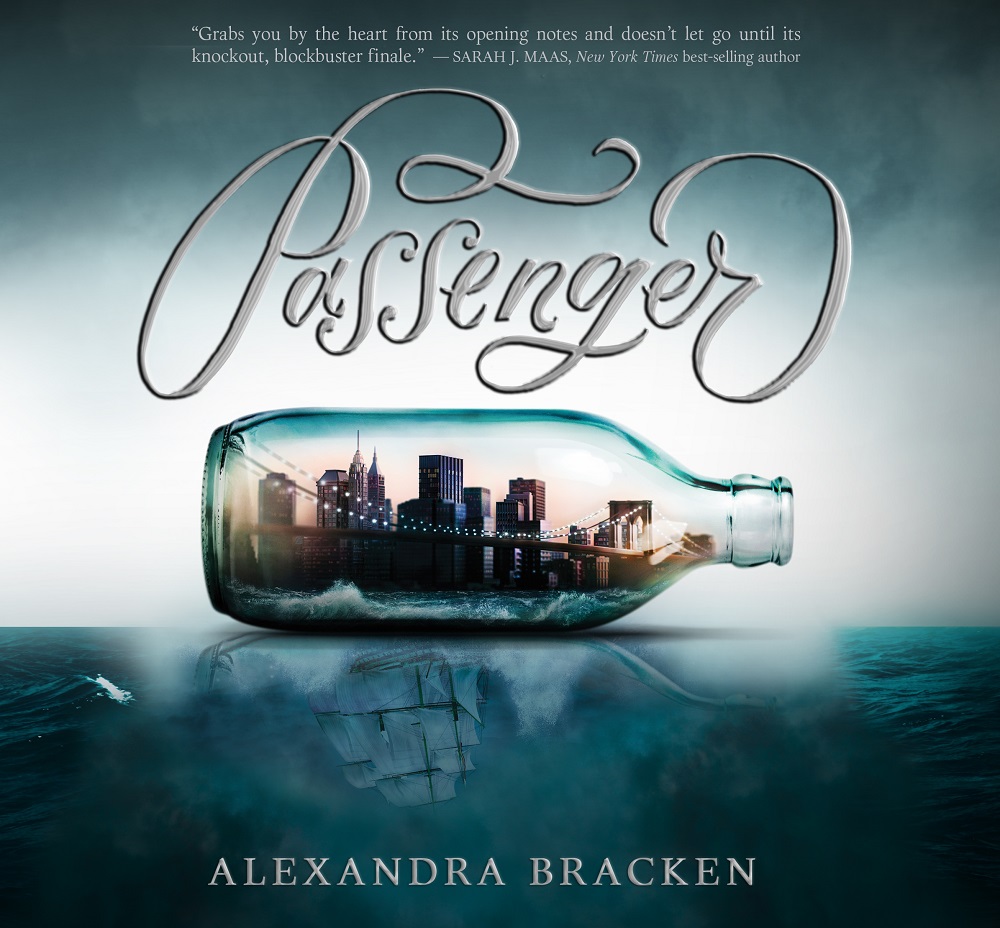
    In one devastating night, violin prodigy Etta Spencer loses everything she knows and loves. Thrust into an unfamiliar world by a stranger with a dangerous agenda, Etta is certain of only one thing: she has traveled not just miles but years from home. And she’s inherited a legacy she knows nothing about from a family whose existence she’s never heard of. Until now.  Nicholas Carter is content with his life at sea, free from the Ironwoods—a powerful family in the colonies—and the servitude he’s known at their hands. But with the arrival of an unusual passenger on his ship comes the insistent pull of the past that he can’t escape and the family that won’t let him go so easily. Now the Ironwoods are searching for a stolen object of untold value, one they believe only Etta, Nicholas’ passenger, can find. In order to protect her, he must make sure she brings it back to them— whether she wants to or not.

    Together, Etta and Nicholas embark on a perilous journey across centuries and continents, piecing together clues left behind by the traveler who will do anything to keep the object out of the Ironwoods’ grasp. But as they get closer to the truth of their search, and the deadly game the Ironwoods are play­ing, treacherous forces threaten to sep­arate Etta not only from Nicholas but from her path home… forever.

    passage, n.
    i. A brief section of music composed of a series of notes and flourishes.
    ii. A journey by water; a voyage.
    iii. The transition from one place to another, across space and time.

    Passenger by Alexandra Bracken was one of my most anticipated reads of this year, mainly because of how much I adored Alex’s The Darkest Minds trilogy, but sadly Passenger didn’t live up to the expectation I (maybe set too high?) had of it. In no way was this book bad, on the contrary really, it was in the third person (love-heart eyes), the plot was intriguing, it had strong characters and, my favourite part, there were pirates! It did, however, lack in action and excitement. I wanted there to be more suspense, especially to counter the love story, and more twists and turns. It was, at times, predictable and seemed too easy.

    I had a love-hate relationship towards Etta, the protagonist. She presented herself as strong and capable throughout most of the book, quick-witted and biting back against prejudices towards Nicholas – her partner, love interest and the other protagonist of the story –  yet she was also quite irritating, working out things chapters after I did so myself and falling in love too quickly/easily (barely two weeks of knowing Nic?). She needed more character depth and I felt like she lost her sharp temper towards the end of the book, which I missed. Nicholas, on the other hand, was a very well-developed character. The motives behind his actions were clear, he was his own person, and he was both physically and mentally strong. A protector. What I didn’t understand, though, is why he missed/longed for his brother so much. Unless I misinterpreted, his brother treated him like a slave along with the rest of the Ironwood family, Nicholas kept reinforcing how much he wanted to be free and his own person, to make a life for himself by himself, yet he missed him a great deal more than what I would expect.

    The thing that got me in this book was the change in the atmosphere once they left the ship. I missed the feel of the beginning of the novel, there was suspense, there was action, there were intrigue and suspicion, curiosity and attraction. And once they met Ironwood, it disappeared and became something different. I found myself bored and disinterested during the middle of the book and I think it was aided by the fact that I missed the air of the beginning of the novel.

    I was particularly fond of the side-character, Sophia. What she was with the cage around her was fierce and admirable, even if she acted like a swine to Etta, and when she took her life into her own hands, not trapped by her grandfather or society of the time, I felt really proud of her and found myself rooting for her more the Etta and Nic. There’s a soft spot for characters that strive to destroy someone for what they’ve done to them in my heart, as dark as it sounds. Makes things a hell of a lot more interesting that doing something for the good of the future and it’s people.

    Another thing I noticed was this book is very Americanized. It focused a great deal on American standards, beliefs and biases, which were at times more prominent than the actual story. Etta was considered “experienced” at seventeen, which is a growing concern I have for young people and that is aided by media (look at Teen Wolf Season One, they main characters are supposed to be like 15?) sourcing in the US. It is becoming a standard that young people are losing their virginity at young ages and it is because of media, especially social media, that this is happening, and the weird thing is; it’s frowned upon in society to be a slut, yet the same if you’re a virgin? I felt like this added (not largely, but enough) to that notion being presented in media in a negative way – She acted a lot older than 17 and, if she were to say she had done this before rather than that she was experienced then I wouldn’t be as concerned, experienced makes it sound like she’s done it often? I know it may sound like an overreaction but it is so carelessly used/thrown around, and Passenger just added to the list of culprits. Also, the issues of racism and sexism were presented very well, but it began to dwell on them. I know racism is a large issue in America at the moment, and I feel Alex wanted to reinforce that issue in this book, but her political correctness was overdone and it began to get in the way of the actual story line. I understand it shaped Nic into who he is, and Sophia the same, but we don’t need to read paragraph after paragraph about it once it’s already been stated. The characters are more than just a half-caste and a woman in the 18th century, and I felt Alex was too consumed with being politically correct that she forgot that they were still people, not icons for racism and sexism. And lastly, the setting. If I hadn’t played ACIII (thanks, Ratonhnhaké:ton) I would have no clue about what the hell was going on during the time period, actually, even playing Assassins Creed, I was still lost. What I’m trying to say is that not everyone is familiar with American history, I know I never learnt anything about it at school, so more information was needed. Though I am happy because I did learn something from this book: that a white could be physically punished for marrying (or was it just touching?) an African-American.

    The time-travelling aspect of Passenger was very intriguing and, well, cool, but I was lost. I don’t quite understand the rules of the travellers and guardians. Why can’t you be in the same time that you’ve already been in? What happens when you create a ripple? Can only travellers travel, what if they accompany a non-traveller or a guardian? How did the whole thing come about? I have too many questions and not enough answers which is why I feel Alex needed more world-building and explanation in this book. I also felt like the love between Etta and Nic was very fast and needed to simmer longer, I didn’t believe it as much as the author wanted me to.

    With all that I’ve said, I still enjoyed Passenger, though not as much as I thought and wanted to. The plot was intriguing, the characters strong and fierce and the writing easy to read and well manipulated. The ending was, in true Alex Bracken style, a cliffhanger and I will more than likely be picking up the next installment to see how it all plays out.

    ★★★☆☆ – (3 Stars)


    Views: 11

  • The Camelot Shadow

    The Camelot Shadow


     A moment later, Will looked up, bleary eyed, to see his friend staring at him. “I suppose I owe you an explanation.”

    “An explanation for starters,” replied Alfred. “Then, you will proceed to tell me exactly how you plan to recover the scabbard.”

    “I’m afraid that may only be possible over my dead body.”

    “At this moment,” said Alfred without even the barest suggestion of a smile, “that hardly seems to high a price.” 


    Rating: 3.5 Stars

    Age Recommendation: Adult, potentially Young Adult

    Warnings: Occasional hints at adult subject matter

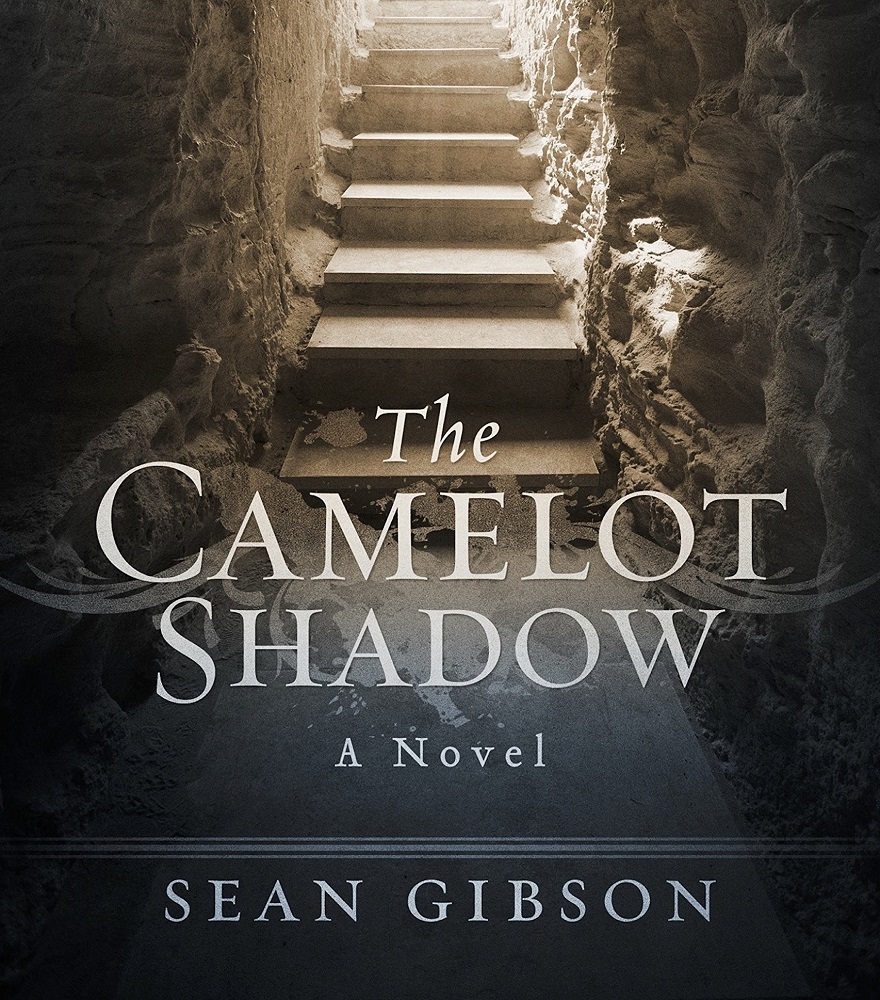
    Sean Gibson’s The Camelot Shadow presents the story of Lord Alfred Fitzwilliam, who will do anything to save his wife, Ellen, who is dying. When approached about the possibility of King Arthur’s scabbard being preserved and its supposed abilities to heal people, he takes a chance and heads off to search for it. Joining him are his friend William Upton, and two parties both interested in taking the scabbard for their own purposes. Full of mystery and magic, this Victorian Era novel is a new and original take on the legend of King Arthur.

    Some of you are probably looking at the rating and wondering why a story so interesting would receive a 3.5 out of 5 stars. I don’t have any particular issue with The Camelot Shadow, but there is something to be said for mystery within a story and I feel like this book could have had a bit more of it. The author allows the reader to see each character’s perspective and motivation, which it of course quite interesting. But – except for a few instances – there were several scenes that took away from the question of what would happen down the road. Gibson did a splendid job of avoiding vagueness to the point that it would ruin the plot, but I personally enjoy trying to put all the pieces together and that was not something I necessarily had to do.

    Perhaps the most interesting part for me of The Camelot Shadow was Will’s story and everything that followed it. Once most of the characters involved in the main plot were in the same place, the arc really took off and pulled me back into the story. The sections that held my attention the best were the very beginning, and about halfway through until the end.

    I suppose my main issue was that I felt disconnected from The Camelot Shadow’s characters a lot of the time. Information given in flashback was extremely compelling, and anything offered in description felt very believable. Some of The Camelot Shadow‘s dialogue seemed stiff or provided solely because the plot needed further explanation. When Gibson settled into the story and allowed Alfred and Will to dive towards their goals, everything became far more engaging. Also, once I caught onto which character was which (because at first I was mixing them up left and right), everything became much easier to follow and believe in.

    I also want to mention that the wit and humor in The Camelot Shadow held me, even when the plot grew confusing or when I wasn’t sure how I felt about it. Essentially, I came for the plot and stayed for the humor and the drama that follows the story. Some of the language used, as far as vocabulary goes, was a bit beyond me, but it simply reminded me of classics that I would read for my literature classes. Essentially, even if you have some trouble with the beginning of the novel, determine to make it to the middle, because by then, you won’t be able to put it away.

    Views: 2

  • The Night Circus

    The Night Circus

    Rating: 5 Stars

    Age Appropriateness: Upper Young Adult readers and above.

    Warnings: Rare instances of strong language, some dark and adult themes, character death.


    “’It is important,’ the man in the grey suit interrupts. ‘Someone needs to tell those tales. When battles are fought and won and lost, when pirates find their treasures and the dragons eat their foes for breakfast with a nice cup of Lapsang souchong, someone needs to tell their bits of overlapping narrative. There’s magic in that.’ … ‘There are many different kinds of magic, after all.’” 


    The Night Circus by Erin Morgenstern, has received a large number of rave reviews. It tells the story of two children, Celia and Marco, who are trained for the majority of their lives in magic. This training, they learn very early, is meant to prepare them for a challenge in which they will face off with an unknown opponent (each other). The circus itself is created as the novel goes on, and is the intended venue for this challenge. Full of mystery, romance and magic, this dark and hauntingly beautiful fantasy is unlike anything I’ve read before.

    The novel is divided into five parts, each with chapters and subsections. The subsections are describing a different timeline to the rest of the novel. Throughout the main chapters, a specific date is given, while the subsections lack a certain year or month, and the narrator in those portions directly addresses the reader, as though they are in the circus themselves. The novel opens with one of these subsections and immediately grabs the reader’s interest. From there, the novel switches to the omniscient third person and follows a whole cast of eccentric and fantastical characters.

    For the majority of the book, the reader is as in the dark about the big “challenge” that awaits the two main characters, and it only keeps you all the more interested. JJ Abrams, acclaimed movie director, once said that a story must have “mystery boxes” for the viewer (or, in this case, reader) to uncover as they go. There must always be a mystery to keep them interested, and Morgenstern has absolutely accomplished this.

    Although the novel is not particularly fast-paced at the start, it can feel like it when the descriptions of magic and the grandeur of the circus take place. Equally, the way characters move within the story is explained so well that it’s almost as though you’re watching everything take place rather than reading about it. As someone who tends to imagine everything in her head as she reads, this is utterly brilliant in my opinion.

    Easily as interesting as the central plot is an undercurrent of information about a boy named Bailey, whose story happens at a different time than most of Celia and Marco’s. Towards the latter end of the novel, however, the two timelines begin to converge and everything rapidly picks up pace, making it nearly impossible to put the book down.

    The packaging of the book, similarly, is beautiful. The cover itself, even for the paperback edition (which is the version I read), is exquisitely crafted, and the inside of the book has been anything but neglected. In short, the book itself is as beautiful as the story and objects described within it.

    Although the timeline can be confusing at first, it is not terribly difficult to put the pieces of the story together as you go along. So long as uncovering a mystery is, in your opinion, interesting – and if you find magic, circuses, or love stories to be worth your time – then this book needs to find its way to the top of your “to-be-read” list.

    Views: 10