Tag: Adventure

  • Scarlet

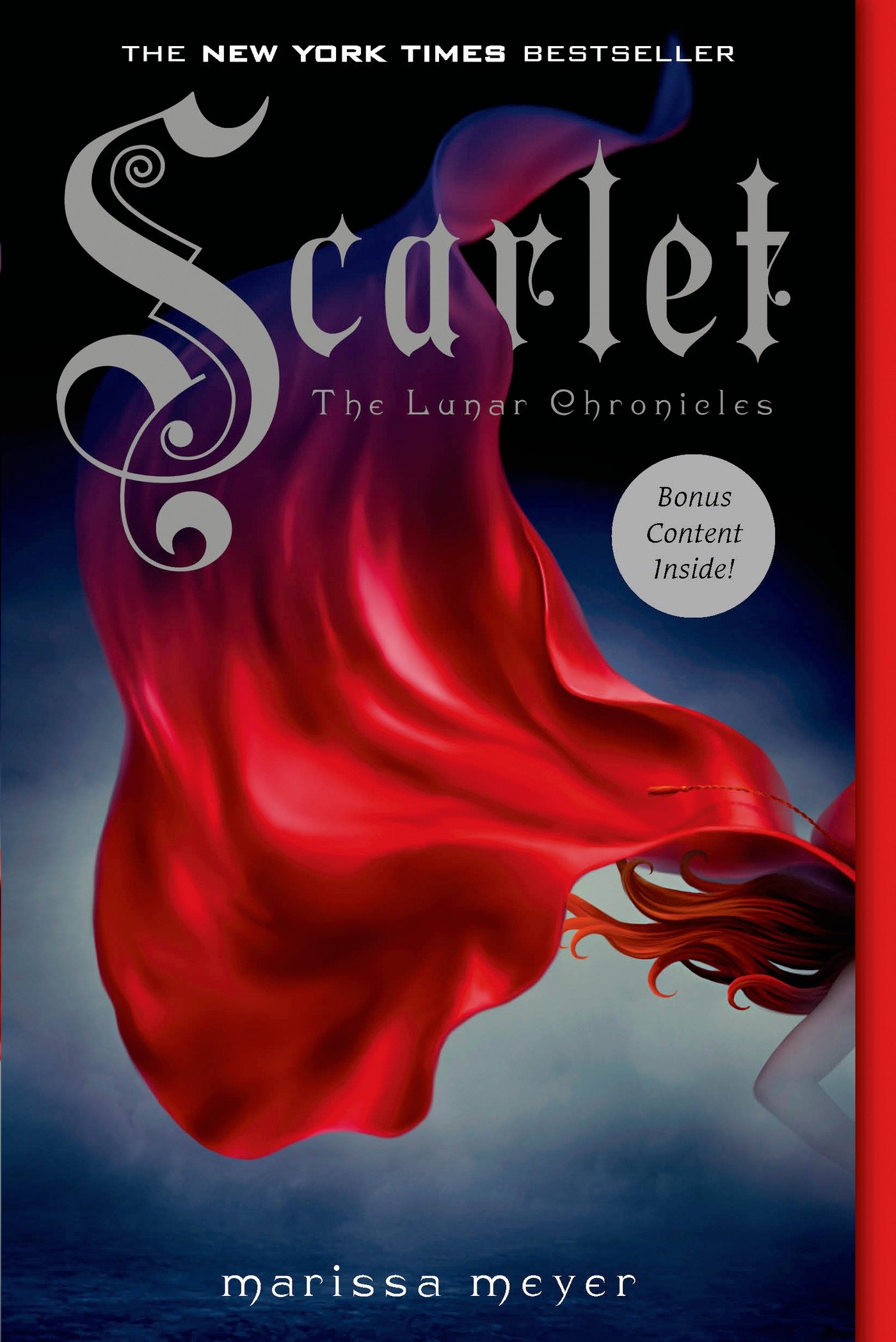
    Scarlet


    Rating: 5 stars

    Age Recommendation: Young Adult +

    Warnings: Violence, Character Death, Potential Trigger Warnings (character torture, explained below)

    Genre: Fantasy, Science-Fiction, Fairytale Retelling


    “What’s stupid is not that I’m going to try and protect you,” Wolf said, pulling his focus back down to her. “What’s stupid is that I almost believe it will make a difference.”


    Scarlet continues the story that Marissa Meyer began when she wrote Cinder, this time telling a version of Little Red Riding Hood that I most certainly did not expect. Scarlet Benoit is a girl of about sixteen, who is living on her own in France, trying to run the family farm. Sure, she has help from farm hands, and the androids running about. But her grandmother has been missing for several weeks, and Scarlet is starting to panic. No one believes that her grand-mère could have been kidnapped, especially after her father left them. There are a lot of things that Scarlet doesn’t know about her family, though, and they are all about to come crashing down in front of her.

    Without mentioning any spoilers, I am going to let you guys in on the secret as to why I liked this book. Yes, it’s true that I very much enjoyed reading the first installment in the Lunar Chronicles. But this book has three new characters, all of whom I loved, and none of whom did what I expected them to do. That’s the thing. I would think I knew what would happen, and then Wolf or Scarlet or Captain Thorne would take it in a completely unexpected direction. Even Cinder and Kai, our main characters from the previous novel, have returned to make things interesting.

    As Cinder and her new friend, Thorne, go looking for answers, Scarlet does the same. She needs a bit of help, though, and finds it in a fairly mercurial street-fighter named Wolf. Sometimes he acts much like his name suggests, going from angry to looking like a scolded puppy. But the rest of the time, he seems very genuine in wanting to help her, seems like he knows some of the answers to Scarlet’s problems. But boy, did she get something quite different than she bargained for.

    Scarlet is a very strong lead character in my opinion, as she is willing to do anything in order to save her grandmother and find out the truth that has been hidden from her throughout her life. Meyer’s plot choices are bold and actually quite brave for someone writing to a Young Adult audience. As I mentioned in the warnings section above, there is a fair amount of violence, but the way it’s written leaves no question in the reader’s mind as to what has happened. Everything is described incredibly well, and it’s almost as though I was watching it happen in front of me, or a little film was playing in my head throughout.

    The other thing that surprised me about Meyer’s plot was the mention of character torture. None of it is presented within the pages of the book, but it is referenced and the consequences are explained and shown to another character, which may be uncomfortable for some readers. I do feel that it is a brave choice to make on the author’s part, though, and I was actually quite impressed when I came across that part of the plot.

    It was not surprising to me that the romance aspect of this novel was at the forefront a lot of the time. But, and I say this with the knowledge that it might sound strange to those who have not read it, I think that it needed to be a main focus. Yes, this book has action and science-fiction and magic that I don’t want to spoil for anyone. But the relationship driving this novel is incredibly important, and I actually think that a great deal can be learned from it if one wishes to find the lessons there. It lacks the typical YA romance dynamic of a weak female character and an over-protective male character. Sure, the two I’m thinking of have their moments, but it isn’t half as trope-filled as the other romances I’ve seen recently. If it sounds like I’m excited about it, I am. Because we get at two more books of this as far as I know.

    Am I looking forward to reading Cress and Winter, you ask? Oh, absolutely.

    Views: 6
  • Passenger

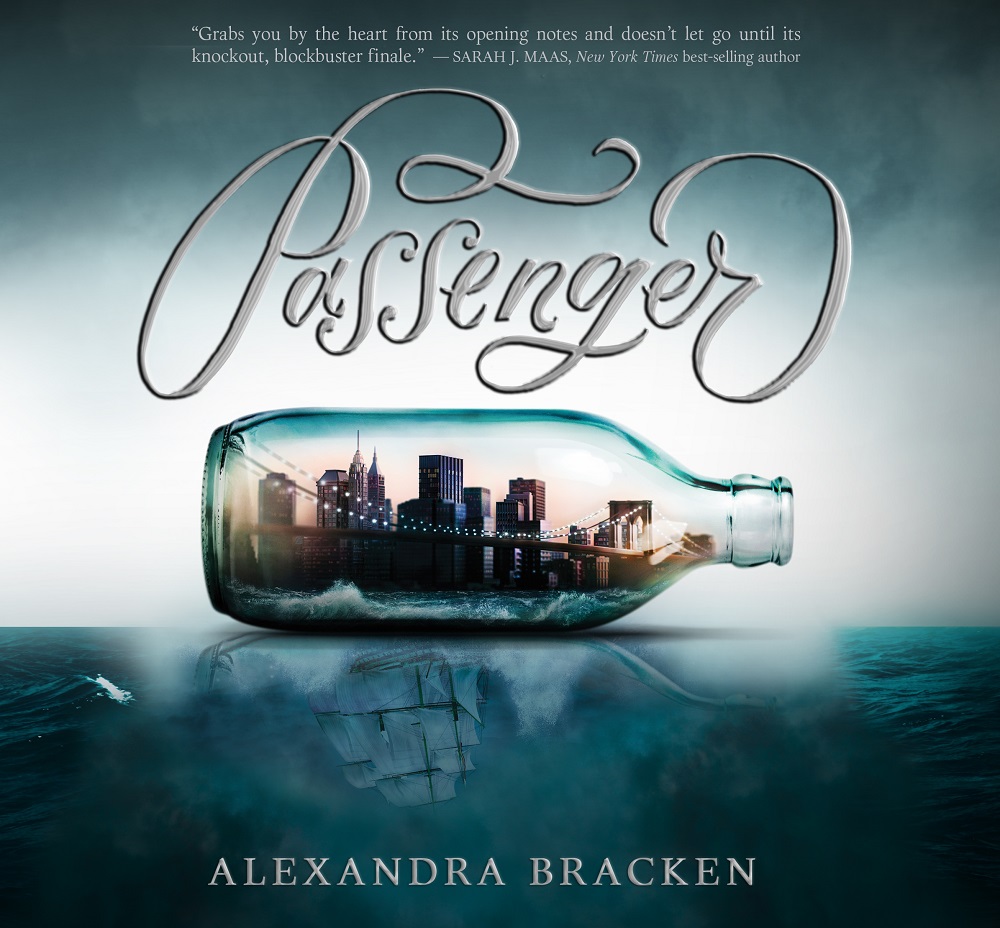
    Passenger


    In one devastating night, violin prodigy Etta Spencer loses everything she knows and loves. Thrust into an unfamiliar world by a stranger with a dangerous agenda, Etta is certain of only one thing: she has traveled not just miles but years from home. And she’s inherited a legacy she knows nothing about from a family whose existence she’s never heard of. Until now.  Nicholas Carter is content with his life at sea, free from the Ironwoods—a powerful family in the colonies—and the servitude he’s known at their hands. But with the arrival of an unusual passenger on his ship comes the insistent pull of the past that he can’t escape and the family that won’t let him go so easily. Now the Ironwoods are searching for a stolen object of untold value, one they believe only Etta, Nicholas’ passenger, can find. In order to protect her, he must make sure she brings it back to them— whether she wants to or not.

    Together, Etta and Nicholas embark on a perilous journey across centuries and continents, piecing together clues left behind by the traveler who will do anything to keep the object out of the Ironwoods’ grasp. But as they get closer to the truth of their search, and the deadly game the Ironwoods are play­ing, treacherous forces threaten to sep­arate Etta not only from Nicholas but from her path home… forever.

    passage, n.
    i. A brief section of music composed of a series of notes and flourishes.
    ii. A journey by water; a voyage.
    iii. The transition from one place to another, across space and time.

    Passenger by Alexandra Bracken was one of my most anticipated reads of this year, mainly because of how much I adored Alex’s The Darkest Minds trilogy, but sadly Passenger didn’t live up to the expectation I (maybe set too high?) had of it. In no way was this book bad, on the contrary really, it was in the third person (love-heart eyes), the plot was intriguing, it had strong characters and, my favourite part, there were pirates! It did, however, lack in action and excitement. I wanted there to be more suspense, especially to counter the love story, and more twists and turns. It was, at times, predictable and seemed too easy.

    I had a love-hate relationship towards Etta, the protagonist. She presented herself as strong and capable throughout most of the book, quick-witted and biting back against prejudices towards Nicholas – her partner, love interest and the other protagonist of the story –  yet she was also quite irritating, working out things chapters after I did so myself and falling in love too quickly/easily (barely two weeks of knowing Nic?). She needed more character depth and I felt like she lost her sharp temper towards the end of the book, which I missed. Nicholas, on the other hand, was a very well-developed character. The motives behind his actions were clear, he was his own person, and he was both physically and mentally strong. A protector. What I didn’t understand, though, is why he missed/longed for his brother so much. Unless I misinterpreted, his brother treated him like a slave along with the rest of the Ironwood family, Nicholas kept reinforcing how much he wanted to be free and his own person, to make a life for himself by himself, yet he missed him a great deal more than what I would expect.

    The thing that got me in this book was the change in the atmosphere once they left the ship. I missed the feel of the beginning of the novel, there was suspense, there was action, there were intrigue and suspicion, curiosity and attraction. And once they met Ironwood, it disappeared and became something different. I found myself bored and disinterested during the middle of the book and I think it was aided by the fact that I missed the air of the beginning of the novel.

    I was particularly fond of the side-character, Sophia. What she was with the cage around her was fierce and admirable, even if she acted like a swine to Etta, and when she took her life into her own hands, not trapped by her grandfather or society of the time, I felt really proud of her and found myself rooting for her more the Etta and Nic. There’s a soft spot for characters that strive to destroy someone for what they’ve done to them in my heart, as dark as it sounds. Makes things a hell of a lot more interesting that doing something for the good of the future and it’s people.

    Another thing I noticed was this book is very Americanized. It focused a great deal on American standards, beliefs and biases, which were at times more prominent than the actual story. Etta was considered “experienced” at seventeen, which is a growing concern I have for young people and that is aided by media (look at Teen Wolf Season One, they main characters are supposed to be like 15?) sourcing in the US. It is becoming a standard that young people are losing their virginity at young ages and it is because of media, especially social media, that this is happening, and the weird thing is; it’s frowned upon in society to be a slut, yet the same if you’re a virgin? I felt like this added (not largely, but enough) to that notion being presented in media in a negative way – She acted a lot older than 17 and, if she were to say she had done this before rather than that she was experienced then I wouldn’t be as concerned, experienced makes it sound like she’s done it often? I know it may sound like an overreaction but it is so carelessly used/thrown around, and Passenger just added to the list of culprits. Also, the issues of racism and sexism were presented very well, but it began to dwell on them. I know racism is a large issue in America at the moment, and I feel Alex wanted to reinforce that issue in this book, but her political correctness was overdone and it began to get in the way of the actual story line. I understand it shaped Nic into who he is, and Sophia the same, but we don’t need to read paragraph after paragraph about it once it’s already been stated. The characters are more than just a half-caste and a woman in the 18th century, and I felt Alex was too consumed with being politically correct that she forgot that they were still people, not icons for racism and sexism. And lastly, the setting. If I hadn’t played ACIII (thanks, Ratonhnhaké:ton) I would have no clue about what the hell was going on during the time period, actually, even playing Assassins Creed, I was still lost. What I’m trying to say is that not everyone is familiar with American history, I know I never learnt anything about it at school, so more information was needed. Though I am happy because I did learn something from this book: that a white could be physically punished for marrying (or was it just touching?) an African-American.

    The time-travelling aspect of Passenger was very intriguing and, well, cool, but I was lost. I don’t quite understand the rules of the travellers and guardians. Why can’t you be in the same time that you’ve already been in? What happens when you create a ripple? Can only travellers travel, what if they accompany a non-traveller or a guardian? How did the whole thing come about? I have too many questions and not enough answers which is why I feel Alex needed more world-building and explanation in this book. I also felt like the love between Etta and Nic was very fast and needed to simmer longer, I didn’t believe it as much as the author wanted me to.

    With all that I’ve said, I still enjoyed Passenger, though not as much as I thought and wanted to. The plot was intriguing, the characters strong and fierce and the writing easy to read and well manipulated. The ending was, in true Alex Bracken style, a cliffhanger and I will more than likely be picking up the next installment to see how it all plays out.

    ★★★☆☆ – (3 Stars)


    Views: 11

  • The Secret of Christopher Topher

    The Secret of Christopher Topher

    Rating: 3.5 stars.

    Age Recommendation: Middle grade, maybe Lower Young Adult.

    Warnings: Contains material that followers of certain religions might find offensive.

    Genre: High Fantasy, Science-Fiction.

    Urgent sounding chatter could be heard from outside the room. Something barely audible, about a State of the Union address. Alex held his ear near the door to listen. He heard talk of calming the citizens of the world, and readying the troops for battle.


    The Secret of Christopher Topher, by Gee Williams, tells the story of a twelve-year-old boy named Alex Smiley, and how he and his friend Karen spend four years of their lives working to save the human race. The reader is taken along with them on their journey, learning about the truth of the human race’s history. As it turns out, the Roman Catholic Church is perhaps not what it seems. Equally, aliens ought to be taken very seriously if you’ve learned their true nature and history.

    The story isn’t at all what I expected when I was sent a copy of the novel for review. Alex is a rather peculiar boy for being only twelve; he’s in love with his best friend, knows extinct languages, and has an impressive vocabulary. In truth, he isn’t what most people would expect when they think of a young boy. And that really is part of what makes him fit for the job of saving the world, rescuing the President and so on. When he finds a series of secret scrolls, written in a language that his father taught him how to read, he learns more about his dad than he ever imagined could be true. From there, everything is quite hectic and action-packed.

    In truth, the plot of the story was well-thought out, and the twists – even early on – were surprising. I didn’t have any trouble accepting the new rules that Williams presented, given the genre in which the book was set (fantasy and science-fiction). However, I did have trouble with the writing style throughout.

    Essentially, when I’m reading a novel, I like to find things out about the world, or the characters, by being shown things. For example, if a character is blonde and funny, I’d like to learn about that through circumstances rather than having the narrator or the novel simply tell me so. That’s why, when I first started and the initial paragraphs were about looks and personalities of multiple characters I had yet to meet, I was thrown off. Much of the story is presented in this way, with paragraphs of information that the main character shouldn’t have known, or information that could have been presented in a different way. Perhaps, if it had been spread out into a couple of novels, the information could have been given differently.

    I do want to qualify what I’ve just said with this fact, though: My reading tastes are not necessarily the same as yours. I prefer to guess the ending of a book early on, to learn little things about characters that others may not have noticed. I think it comes from reading many series set in fantasy or dystopian worlds (such as Harry Potter or Divergent). But that does not mean that you, as a reader, won’t like this book.

    It is not difficult to understand what’s going on, and is probably pretty good for young readers as far as vocabulary building goes. Some of the names of the alien species will be unpronounceable to those who have not taken a course in linguistics or phonetics, but there are several appendixes, giving extra information. It is not lost on anyone, I’m sure, that the author has done her research and is passionate about the story and the topic she has chosen.

    If you’re looking for an easy read, or are hoping to find something fantastical for your kids to try out, consider giving this book a shot! It may not have been my cup of tea, per se, but it might surprise you, and might give a child the kickstart they need to grow into loving fiction.

    Views: 1

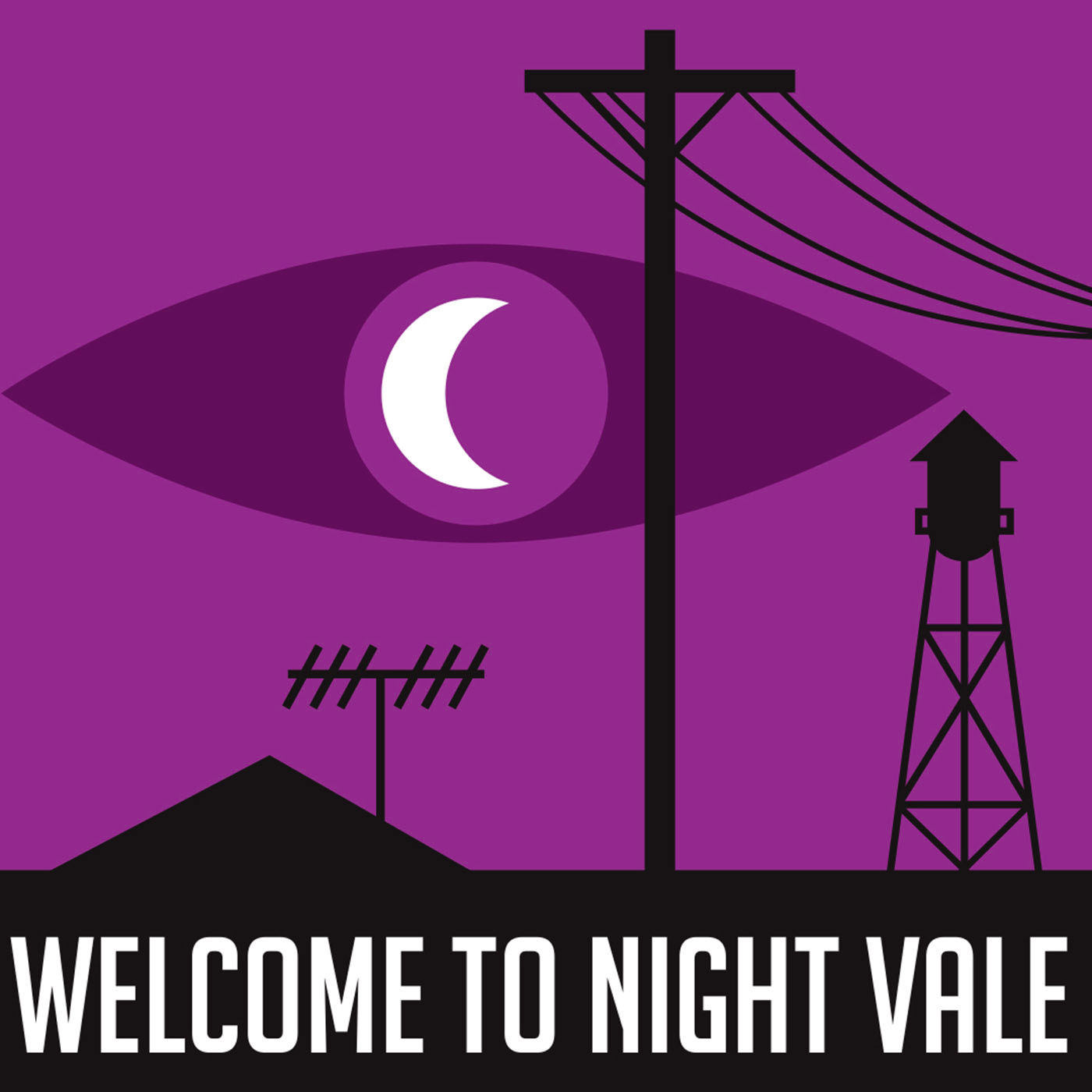
  • Welcome to Night Vale

    Welcome to Night Vale

    Welcome to Night Vale by Joseph Fink & Jeffery Cranor

    Rating: 4 stars

    Age recommendation: Young Adult and up

    Genre: Adventure, Dark, Fantasy, Fiction, Humor, Mystery, Sci-Fi, Supernatural

    Opening excerpt: “Pawnshops in Night Vale work like this. First you need an item to pawn. To get this, you need a lot of time behind you, years spent living and existing, until you’ve reached a point where you believe that you exist, and that a physical item exists, and that, improbable as all those are, these absurd beliefs line up in a way that results in you owning an item.”

    Favorite excerpt: “Something in me says that this is only the start. The moment after which all other moments will come. And looking back at the point we are at now, we will know that this was before and that all of our nows from here on out will be after. This is the only way we know time works.” (Chapter 49, pg. 393)

    There are two women. Not dissimilar to any pair of women you’ve seen walking down the street, thoughts filled with love, hate, ignorance to the cameras and surveyors watching their every move. Yet completely different. Utterly and totally different. You’ve never seen these women before. You’ve never imagined them. (Well, now you have. Good job.) You don’t know these women. And they don’t know you. They don’t know a lot of things. They don’t know why the sun rises or why the planets orbit or why the sky turns green every other Tuesday. They just don’t. Neither do you. But that’s not the point. The point is about the fact that there are two women. Driving down a dusty road, towards something terrifying, new, unknown. They’re going somewhere, somewhere you’ve never been and never will go. They’re going somewhere not knowing what will happen. Will they find what’s lost? Will they return the unwanted? Will they answer the question that’s banging inside their head like an angry warthogs nest? I don’t know. I don’t know, dear listeners. I don’t even know why you’re asking me. Please stop asking me. Please stop.

    Welcome to Night Vale follows the emotional and physical journey of two women, who live in a very abnormal town in the desert. One only worries about her growing teen son and the other leads a literal monotonous life running a pawn shop. Their lives cross in pursuit of a common irritant, them first meeting with great distaste, but as their goal appears both closer yet so inescapably far, they work together and forge an incredible admiration and support for one another, resulting in the answer to all their questions.

    The novel follows the style of the bi-monthly podcast called, Welcome to Night Vale, focusing on two new main characters, Diane Crayton and Jackie Fierro, with features of the admired Cecil Palmer and Carlos the Scientist, alongside other favored characters. One can expect the same antics from the podcast, voids, time traveling flamingos and bleeding to open doors, to be pervasive throughout the novel.

    Now for my take on the book. Personally, I am a fan of the podcast, so I may be swayed in my review, but I think Welcome to Night Vale was a really good read. There are so many themes and aspects of this novel that many people can relate to. Jackie, a teenager, is stuck in a world where she is both an adult and a child. After her world is shaken, she really begins to feel this, as she’s adept and lauded in some areas, while confused and castigated in others. Diane is a biracial single mother, taking care of a teenager by herself. She feels the pressures from society to look and act a certain way, to be a mother and a woman in the way society deems okay. There’s also the very powerful theme of female friendship towards the end of the novel that is beautifully healthy and well written.

    I will admit, the resolution to their problems, in the end, was a bit weak, but it really doesn’t take away from the book. There are far too many astounding lines and themes to let that damage it as a whole.

    Is the novel weird? Yes. But does it captivate you, make you laugh, wonder, and smile? Yes. For people unfamiliar with the podcast, it may be hard to follow, but the plot and storytelling are phenomenally done and something you wouldn’t want to miss out on. It will be a read different from any other book you’ve read and hopefully quite memorable. For me, it’s a thumbs up.

    Views: 5