Tag: middle grade

  • The Secret of Christopher Topher

    The Secret of Christopher Topher

    Rating: 3.5 stars.

    Age Recommendation: Middle grade, maybe Lower Young Adult.

    Warnings: Contains material that followers of certain religions might find offensive.

    Genre: High Fantasy, Science-Fiction.

    Urgent sounding chatter could be heard from outside the room. Something barely audible, about a State of the Union address. Alex held his ear near the door to listen. He heard talk of calming the citizens of the world, and readying the troops for battle.


    The Secret of Christopher Topher, by Gee Williams, tells the story of a twelve-year-old boy named Alex Smiley, and how he and his friend Karen spend four years of their lives working to save the human race. The reader is taken along with them on their journey, learning about the truth of the human race’s history. As it turns out, the Roman Catholic Church is perhaps not what it seems. Equally, aliens ought to be taken very seriously if you’ve learned their true nature and history.

    The story isn’t at all what I expected when I was sent a copy of the novel for review. Alex is a rather peculiar boy for being only twelve; he’s in love with his best friend, knows extinct languages, and has an impressive vocabulary. In truth, he isn’t what most people would expect when they think of a young boy. And that really is part of what makes him fit for the job of saving the world, rescuing the President and so on. When he finds a series of secret scrolls, written in a language that his father taught him how to read, he learns more about his dad than he ever imagined could be true. From there, everything is quite hectic and action-packed.

    In truth, the plot of the story was well-thought out, and the twists – even early on – were surprising. I didn’t have any trouble accepting the new rules that Williams presented, given the genre in which the book was set (fantasy and science-fiction). However, I did have trouble with the writing style throughout.

    Essentially, when I’m reading a novel, I like to find things out about the world, or the characters, by being shown things. For example, if a character is blonde and funny, I’d like to learn about that through circumstances rather than having the narrator or the novel simply tell me so. That’s why, when I first started and the initial paragraphs were about looks and personalities of multiple characters I had yet to meet, I was thrown off. Much of the story is presented in this way, with paragraphs of information that the main character shouldn’t have known, or information that could have been presented in a different way. Perhaps, if it had been spread out into a couple of novels, the information could have been given differently.

    I do want to qualify what I’ve just said with this fact, though: My reading tastes are not necessarily the same as yours. I prefer to guess the ending of a book early on, to learn little things about characters that others may not have noticed. I think it comes from reading many series set in fantasy or dystopian worlds (such as Harry Potter or Divergent). But that does not mean that you, as a reader, won’t like this book.

    It is not difficult to understand what’s going on, and is probably pretty good for young readers as far as vocabulary building goes. Some of the names of the alien species will be unpronounceable to those who have not taken a course in linguistics or phonetics, but there are several appendixes, giving extra information. It is not lost on anyone, I’m sure, that the author has done her research and is passionate about the story and the topic she has chosen.

    If you’re looking for an easy read, or are hoping to find something fantastical for your kids to try out, consider giving this book a shot! It may not have been my cup of tea, per se, but it might surprise you, and might give a child the kickstart they need to grow into loving fiction.

    Views: 1

  • Don’t Stay Up Late

    Don’t Stay Up Late

    Hands down R.L. Stine will always be my most loved author regardless of how old I get. I am a major horror/mystery fan so growing up with his books kept me at the edge of my seat. I was really amped up for seeing his more up to date book, Don’t Stay Up Late, at the library rack. I picked it up right away and read it as soon as possible. Don’t Stay Up Late was fresh out of the plastic new and in the event that you know me very well, you’ll know how much I cherish new books. It was a hardcover and I appreciated every little thing about Don’t Stay Up Late; from the look to what was composed inside of the pages.

    Don’t Stay Up Late was a simple read and despite the fact that it is not my favorite type of story, I appreciated it. I can hardly wait for a greater amount of this work to be published in the coming years. Despite the fact that R.L. Stine is my favorite author, there were a few things of the book that were great and some terrible.

    Pros

    1) It’s generally composed in the most immediate and appropriately dissimilar to different books I’ve perused.

    2) It plays with your brain a bit.

    3) It’s simple to peruse and each to traverse.

    Cons

    1) It’s exceptionally unsurprising.

    2) It’s not a story that I usually read.

    The plot behind Don’t Stay Up Late is a young lady, Lisa, 16 years of age gets into a car accident with her mother, father, and her dog Morty, and she loses her father in the process. In the wake of getting to the hospital, she endures a blackout, which causes her hallucinations and nightmares. She begins to see a creature/devil every time she goes to sleep. At that point, her therapist proposes for her to get an after school job to keep her psyche off of things. So she begins to keep an eye on an eight-year-old boy, Harry.

    He must be snoozing by 8 and no later, apparently because of his condition. While she looks after Harry, she sees the creature and something strange happens to her loved ones. She gets questioned by her therapist and police officers and confesses about the strange creature, yet nobody believes her about the creature.

    You know how this story ends, yet notwithstanding I am still a child on the most fundamental level and R.L. Stan’s books will always be one of my most cherished memories.

    Views: 11

  • The Quantum Door

    The Quantum Door

     Rating: Four stars

    Age Recommendation: Probably directed at children aged 10-15, but with the level of science involved, any young adult readers could appreciate the plot.


    “I always feared this would happen. You know that the door leaves a signature behind it. Others will be able to find it — and us.”


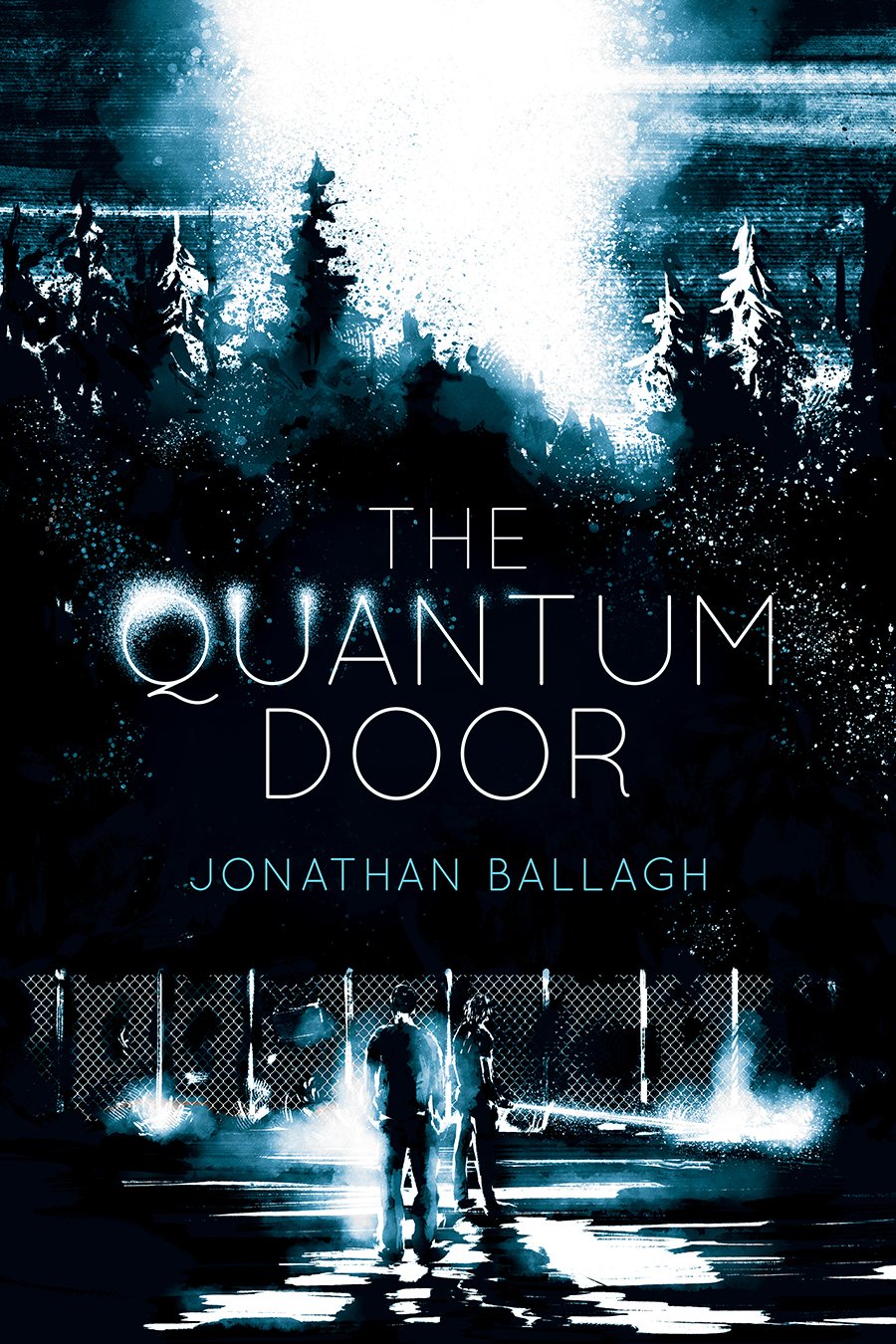
    The Quantum Door, by Jonathan Ballagh, tells the story of two brothers named Brady and Felix, who wander into the yard next door and end up getting into a mess that is extremely over their heads. Nova, their mysterious neighbor, initially tells them not to venture into her yard again. When she finds herself in trouble, however, it is up to Brady and Felix to jump in, head first and do what they can to help. Of course, nothing is quite as simple as it seems, and their adventure takes them across a curious, alternate version of Earth as they try to return home.

    I am not usually a sci-fi lover, and I don’t think that the The Quantum Door was intended for my age group, but I thoroughly appreciate the creativity of the plot and the types of beings created for this novel. Around part three of the novel, I was wishing it had been made into two separate books, but the closer I got to the end, the happier I was with the way it was done. Several things are explained and events start happening very quickly (although the majority of the novel is quite fast-paced).

    Something I had trouble with was the architectural terminology used throughout the book. I haven’t a clue what a couple of them mean – though it has convinced me to look them up, so I suppose that’s good! Other than that, the text was very easy to understand. A part of me wished for a bit more description when it comes to the characters, or maybe a bit more of their thought processes as the events were happening. A lot of it is how they react externally, which is also interesting, but I personally find the internal bits just as fascinating, if not more so.

    Ballagh has created an interesting world that young readers with any interest in science can appreciate. In thirty or forty years, will technology look like the things in Ballagh’s novel? I actually hope it does. Ben J. Adams, who has created illustrations for the work, provides another step into the world described, and each image is as beautifully designed as the last. He also made the beautiful cover for the novel.

    The Quantum Door, released in August of 2015, is sure to catch the attention of many young readers, and I hope that it drives many of them to love reading as well as science.

    Views: 41

  • Click Here: To Find Out How I Survived Seventh Grade

    Click Here: To Find Out How I Survived Seventh Grade


    Somebody once told me that good friends are like Tootsie Pops, if you don’t bite them they won’t bite you.


    Rating: 4.5 Stars

    Age recommendation: 11+ (Middle Grade)

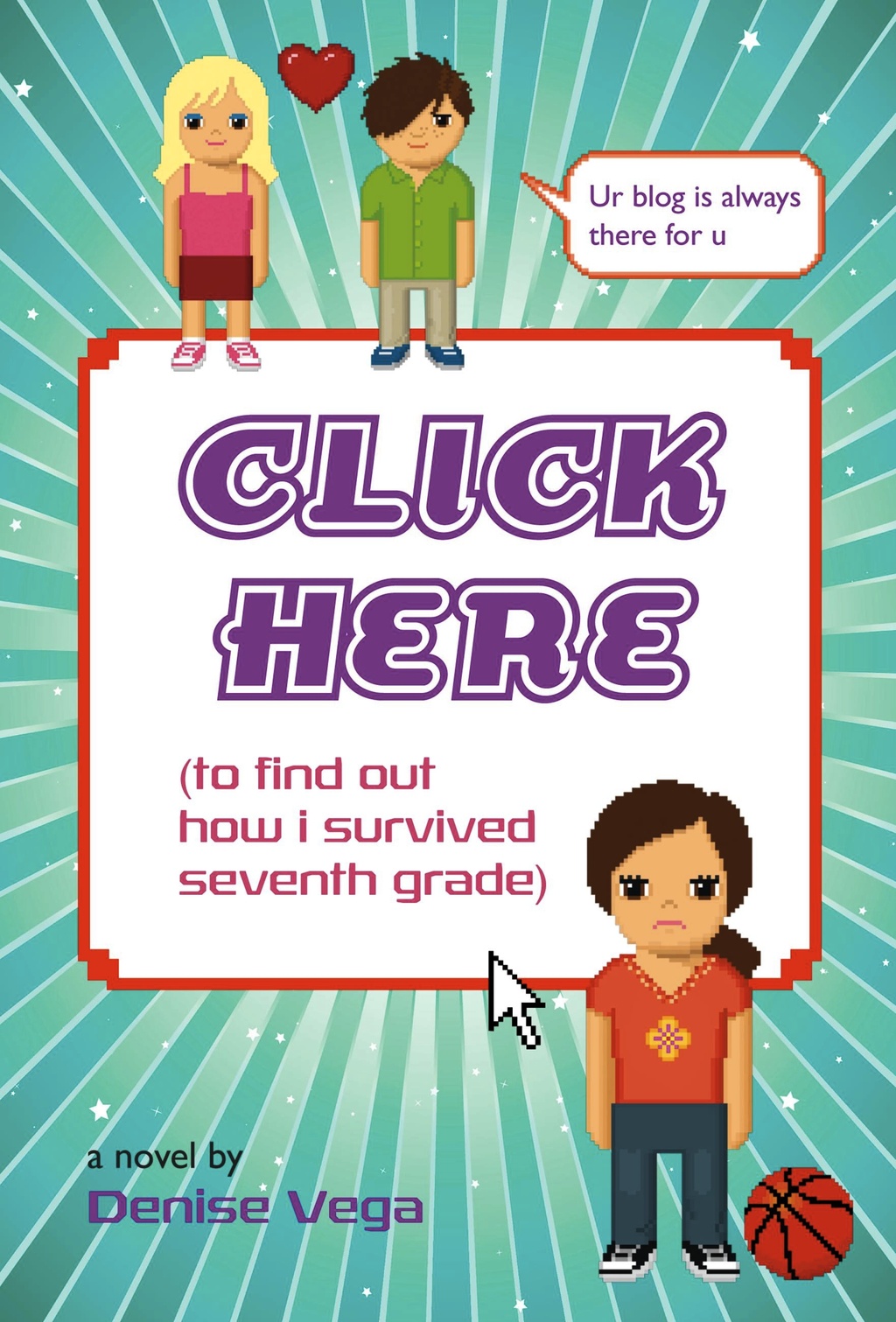
    Anyone who ever experienced bullying in school is bound to appreciate Click Here: To Find Out How I Survived Seventh Grade. My mom gave me this book when I was going into 7th grade – appropriately, of course – and although I enjoyed it then, a re-read has reminded me of just how great it was. Click Here: To Find Out How I Survived Seventh Grade, by Denise Vega, tells the story of a girl named Erin Swift, who is separated from her best friend during her classes as they move to a new school and enter 7th grade. Erin has always been very attached to Jilly’s side, essentially doing whatever her friend asks of her, in part because she doesn’t have other close friends, but also because Jilly seems to want Erin to do well.

    As the new school year goes on, however, and Erin finds that she has made friends with a boy she likes and has joined the Intranet club, which involves a group of her new friends working on a project that is sort of like an Internet system but only within their school. Erin keeps a blog that only she is allowed to see, but it gets very out of hand when a mistake is made.

    As a student, Erin has it pretty rough. Her brother doesn’t understand her struggles when she gets into a fight with the little sister of the girl he likes, which leads to family drama as well as rather extreme humiliation for Erin herself. All of this leads to Erin learning some very important life lessons, and helps her learn about herself, too.

    There are many things to love about Click Here: To Find Out How I Survived Seventh Grade. The reader sees Erin learn how to handle being on her own, she makes friends easily when she thought she couldn’t, and she pines for a guy who isn’t necessarily interested in return, while failing to notice someone who seems to care about her quite a bit. It’s a perfect story for anyone who perhaps feels they have low self-confidence, or aren’t prepared to move into Middle School/Junior High. I would never say it is a book only meant for female readers, as anyone can relate to Erin, who has issues with the size of her feet or the fact that she likes the same person as her friend. However, boys may not particularly like hearing about certain ‘female issues,’ to put it politely.

    Filled with humor, puns, cultural references that most readers should catch, this is a novel that everyone should read regardless of their age. Friends, this book informs you, will last longer than a boyfriend or girlfriend. Some things don’t need to be said if they could hurt someone else. Even if you’re past Middle School/Junior High, the lessons within Vega’s novel can help anybody, and it is definitely something I’m glad I first read when I was younger.

    Views: 1