Tag: science

  • Where Death is a Hunter

    Where Death is a Hunter

    Where Death is a Hunter

    Recommended Age: 16+

    Warnings: Character Death, Surgery, Mild Violence, Mentions of Alcoholism / Hallucinations

    Pages: 371 (Paperback)


    Christopher Stookey’s Where Death is a Hunter was recently sent to me by Full of Books to review. As with most of my readings assigned for review, I enjoyed the book more than I expected to.  As an avid YA-Fiction fan, I rarely decide to read books from other genres – especially medical thrillers. However, I definitely enjoyed the change in genre, even for just one book.

     Hannah Fatier has just started her first job as an anesthesiologist at Deaconess Hospital in San Francisco, she has just bought a new home, and she is newly engaged. In short, Hannah’s life is going well. That is, until a patient under Hannah’s care dies of mysterious causes during a routine operation. An investigation of the case reveals the cause of death to be a basic medical error that Hannah seems to be responsible for. When she decides to dig deeper into the records concerning the case, Hannah discovers a number of puzzling inconsistencies. She begins to suspect that someone has framed her for the death of her patient, but who? And more importantly, why?

    Let me get this straight: I consider myself to be a ‘scaredy-cat’. I jump easily at horror films, don’t enjoy “scary” activities, and hate seeing blood and gore. However, the medical and thriller aspects of this book didn’t bother me at all. I enjoyed the fact that the book included facts and statistics, which provided further insight to the medical world. (For example: did you know that at least 44,000 people die in hospitals each year because of medical errors?) The plot did not drag back or rush ahead; it moved at a perfect pace. The big reveal of ‘whodunit’ is an unexpected plot twist, and the novel has a strong conclusion. The only drawback is the fact that there was almost no character development. Hannah does learn that she cannot trust everyone, but there is no big realization or change from the beginning to the end of the book.


    Views: 2

  • Winds of Aerathiea

    Winds of Aerathiea

    Rating: 2.5 Stars

    Age Recommendation: Young Adult

    Warnings: Would’ve been ranked as a Lower YA or even Middle Grade, but there is too much cursing for either

    Genre(s): Fantasy, Post-Apocalyptic Fiction, Action and Adventure


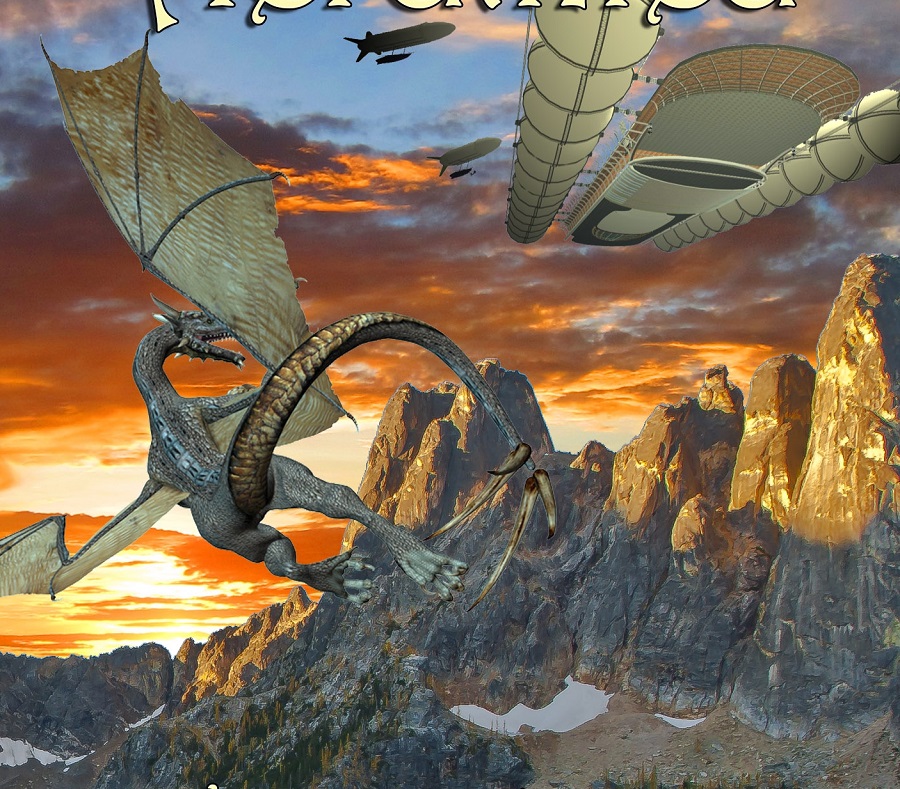
    “Liam and Red squatted in the shadows and peered up at the sight from behind an upturned car and a downed power pole. They began to see the full expanse of the vessel hovering over them. Liam had never seen anything like it. He would have said it was as big as any ship on the ocean, but this one gave you the impression it was much more at home in the sky.”


    Liam Waite is a boy, only fifteen, who is living the dangerous life of a survivor after a series of terrible natural disasters, and is now trying to make it despite a lack of supplies and food. One day, however, an airship comes down, looking for his father. He hasn’t seen his parents in months, but almost inadvertently joins the hunt, and ends up on a whirlwind of an adventure in order to do so. Along the way, he learns exciting things about his father, comes face to face with dragons, and creates bonds with a number of interesting characters. Winds of Aerathiea, by T. E. Adams, is the first in the Chronicles of Aerathiea and was released in October of last year.

    Winds of Aerathiea has an action-packed start, some well-thought out descriptions and a back story that is offered up to the reader very well. It is entirely likely that the first two chapters will hook whoever decides to pick it up. Unfortunately, I personally had issues with the text.

    On the whole, the plot is not what I had trouble with. Some things were a little repetitive, but the concept itself was interesting. The epilogue is a perfect set-up for a sequel, and I thought it was creative. However, I had issues with the way Winds of Aerathiea was written. I received an EPUB in exchange for an honest review on this site, and I found numerous mistakes in the copy (that is to say, the way in which the words were written on the document), as well as grammatical issues and problems with word choice.

    While reading, I came to the conclusion that it might simply be intended for younger readers, and thus the narration would be offered as through the eyes of the fifteen-year-old main character. I’m not entirely sure that that is the case, though, because there is a fair amount of cursing throughout. Also, are sections of the novel which are italicized and which give the characters further information, and there were issues there as well, grammatically, so I think that it may just be a series of mistakes.

    I found it difficult to focus on Winds of Aerathiea when the main character made misogynistic comments, quotation marks or commas were missing, things like that. I do think, however, that many readers might find the concept of a post-apocalyptic world interesting. Not that they should pick up the views of the main character, of course, but that’s entirely different.

    While some of the characters did not feel very fleshed out or easy to relate to, others did. While the text itself might benefit from an editor taking another look, fans of fantasy may appreciate the fantasy elements and things like magical creatures. It could very well be someone’s introduction to reading and enjoying fiction, provided the grammar and other things do not affect their ability to dive into the text, and I genuinely hope that it is.

    Views: 3

  • Passenger

    Passenger


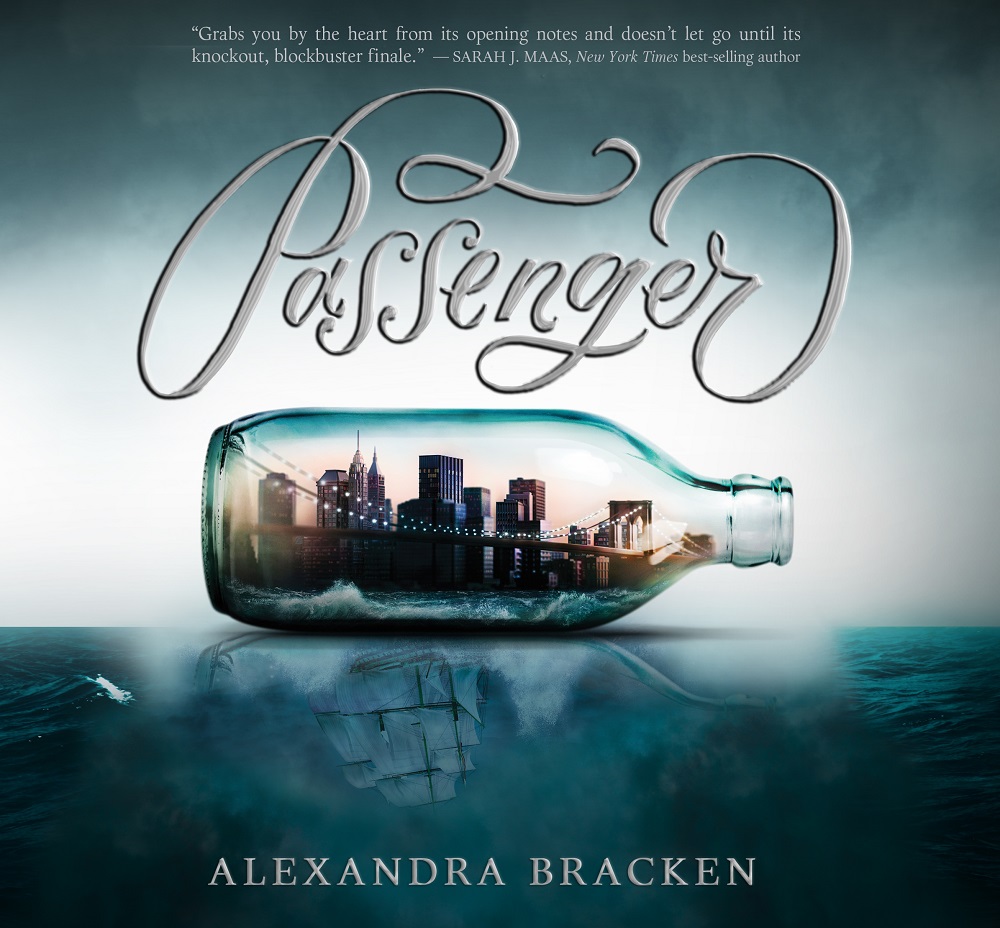
    In one devastating night, violin prodigy Etta Spencer loses everything she knows and loves. Thrust into an unfamiliar world by a stranger with a dangerous agenda, Etta is certain of only one thing: she has traveled not just miles but years from home. And she’s inherited a legacy she knows nothing about from a family whose existence she’s never heard of. Until now.  Nicholas Carter is content with his life at sea, free from the Ironwoods—a powerful family in the colonies—and the servitude he’s known at their hands. But with the arrival of an unusual passenger on his ship comes the insistent pull of the past that he can’t escape and the family that won’t let him go so easily. Now the Ironwoods are searching for a stolen object of untold value, one they believe only Etta, Nicholas’ passenger, can find. In order to protect her, he must make sure she brings it back to them— whether she wants to or not.

    Together, Etta and Nicholas embark on a perilous journey across centuries and continents, piecing together clues left behind by the traveler who will do anything to keep the object out of the Ironwoods’ grasp. But as they get closer to the truth of their search, and the deadly game the Ironwoods are play­ing, treacherous forces threaten to sep­arate Etta not only from Nicholas but from her path home… forever.

    passage, n.
    i. A brief section of music composed of a series of notes and flourishes.
    ii. A journey by water; a voyage.
    iii. The transition from one place to another, across space and time.

    Passenger by Alexandra Bracken was one of my most anticipated reads of this year, mainly because of how much I adored Alex’s The Darkest Minds trilogy, but sadly Passenger didn’t live up to the expectation I (maybe set too high?) had of it. In no way was this book bad, on the contrary really, it was in the third person (love-heart eyes), the plot was intriguing, it had strong characters and, my favourite part, there were pirates! It did, however, lack in action and excitement. I wanted there to be more suspense, especially to counter the love story, and more twists and turns. It was, at times, predictable and seemed too easy.

    I had a love-hate relationship towards Etta, the protagonist. She presented herself as strong and capable throughout most of the book, quick-witted and biting back against prejudices towards Nicholas – her partner, love interest and the other protagonist of the story –  yet she was also quite irritating, working out things chapters after I did so myself and falling in love too quickly/easily (barely two weeks of knowing Nic?). She needed more character depth and I felt like she lost her sharp temper towards the end of the book, which I missed. Nicholas, on the other hand, was a very well-developed character. The motives behind his actions were clear, he was his own person, and he was both physically and mentally strong. A protector. What I didn’t understand, though, is why he missed/longed for his brother so much. Unless I misinterpreted, his brother treated him like a slave along with the rest of the Ironwood family, Nicholas kept reinforcing how much he wanted to be free and his own person, to make a life for himself by himself, yet he missed him a great deal more than what I would expect.

    The thing that got me in this book was the change in the atmosphere once they left the ship. I missed the feel of the beginning of the novel, there was suspense, there was action, there were intrigue and suspicion, curiosity and attraction. And once they met Ironwood, it disappeared and became something different. I found myself bored and disinterested during the middle of the book and I think it was aided by the fact that I missed the air of the beginning of the novel.

    I was particularly fond of the side-character, Sophia. What she was with the cage around her was fierce and admirable, even if she acted like a swine to Etta, and when she took her life into her own hands, not trapped by her grandfather or society of the time, I felt really proud of her and found myself rooting for her more the Etta and Nic. There’s a soft spot for characters that strive to destroy someone for what they’ve done to them in my heart, as dark as it sounds. Makes things a hell of a lot more interesting that doing something for the good of the future and it’s people.

    Another thing I noticed was this book is very Americanized. It focused a great deal on American standards, beliefs and biases, which were at times more prominent than the actual story. Etta was considered “experienced” at seventeen, which is a growing concern I have for young people and that is aided by media (look at Teen Wolf Season One, they main characters are supposed to be like 15?) sourcing in the US. It is becoming a standard that young people are losing their virginity at young ages and it is because of media, especially social media, that this is happening, and the weird thing is; it’s frowned upon in society to be a slut, yet the same if you’re a virgin? I felt like this added (not largely, but enough) to that notion being presented in media in a negative way – She acted a lot older than 17 and, if she were to say she had done this before rather than that she was experienced then I wouldn’t be as concerned, experienced makes it sound like she’s done it often? I know it may sound like an overreaction but it is so carelessly used/thrown around, and Passenger just added to the list of culprits. Also, the issues of racism and sexism were presented very well, but it began to dwell on them. I know racism is a large issue in America at the moment, and I feel Alex wanted to reinforce that issue in this book, but her political correctness was overdone and it began to get in the way of the actual story line. I understand it shaped Nic into who he is, and Sophia the same, but we don’t need to read paragraph after paragraph about it once it’s already been stated. The characters are more than just a half-caste and a woman in the 18th century, and I felt Alex was too consumed with being politically correct that she forgot that they were still people, not icons for racism and sexism. And lastly, the setting. If I hadn’t played ACIII (thanks, Ratonhnhaké:ton) I would have no clue about what the hell was going on during the time period, actually, even playing Assassins Creed, I was still lost. What I’m trying to say is that not everyone is familiar with American history, I know I never learnt anything about it at school, so more information was needed. Though I am happy because I did learn something from this book: that a white could be physically punished for marrying (or was it just touching?) an African-American.

    The time-travelling aspect of Passenger was very intriguing and, well, cool, but I was lost. I don’t quite understand the rules of the travellers and guardians. Why can’t you be in the same time that you’ve already been in? What happens when you create a ripple? Can only travellers travel, what if they accompany a non-traveller or a guardian? How did the whole thing come about? I have too many questions and not enough answers which is why I feel Alex needed more world-building and explanation in this book. I also felt like the love between Etta and Nic was very fast and needed to simmer longer, I didn’t believe it as much as the author wanted me to.

    With all that I’ve said, I still enjoyed Passenger, though not as much as I thought and wanted to. The plot was intriguing, the characters strong and fierce and the writing easy to read and well manipulated. The ending was, in true Alex Bracken style, a cliffhanger and I will more than likely be picking up the next installment to see how it all plays out.

    ★★★☆☆ – (3 Stars)


    Views: 11

  • Glass Sword

    Glass Sword

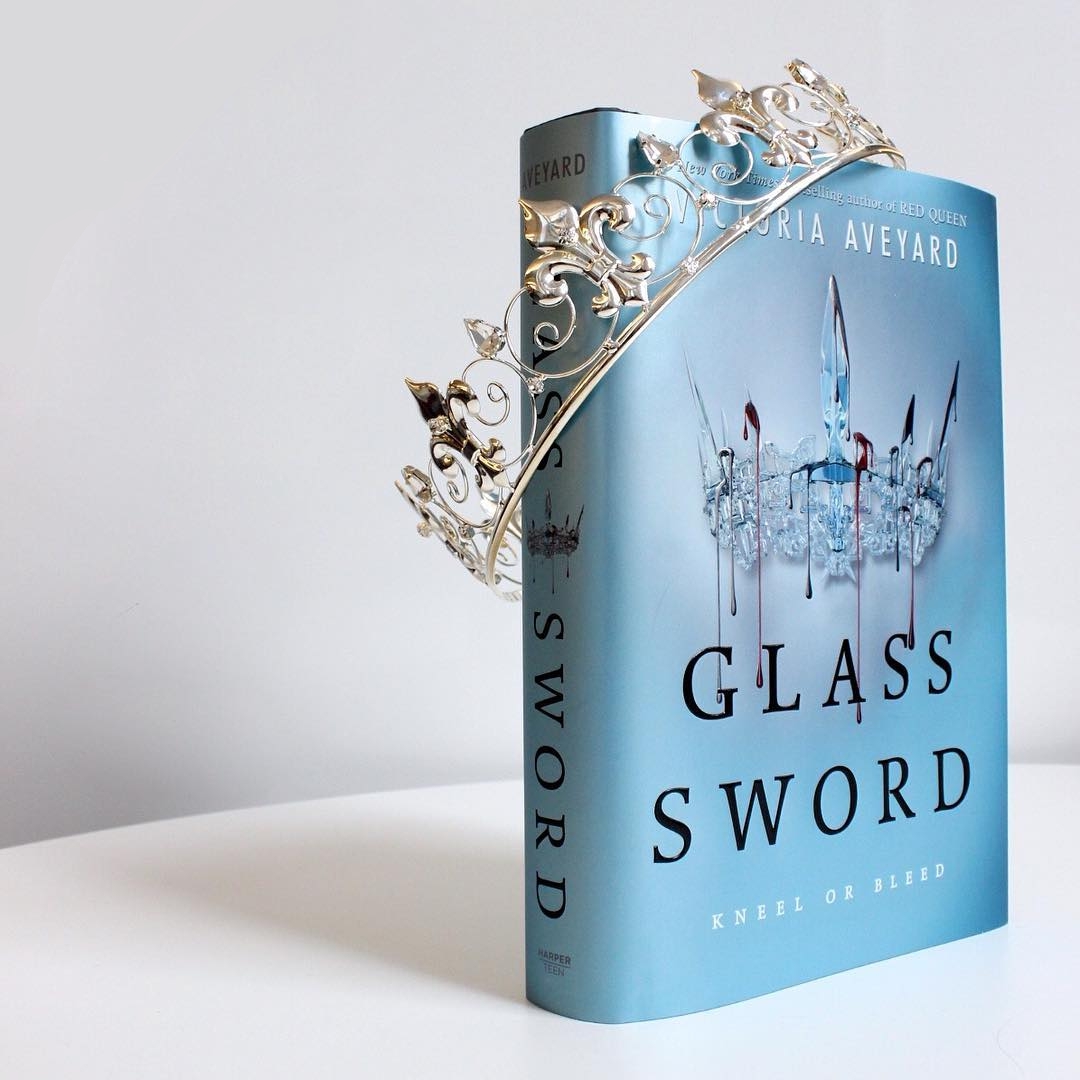
    Glass Sword was an amazing sequel to an equally amazing book called Red Queen. I found Red Queen at a local bookstore and decided to give it a try. I don’t have a copy of Glass Sword, but my fellow book-lover and friend lent me her (signed) copy to read. Needless to say, It was superb. Not only fast-paced from the first chapter, Glass Sword also introduced more character development (yay!) and the end was a plot twist that made me ready for the next book! All of the characters were uniquely written, and the author had me cringing, gasping, laughing, sighing, blushing, and grabbing for the next few words all throughout the book.

    Though Mare was definitely not my favorite character for the vast majority of the book because she was cruel and ruthless, I do appreciate flawed characters (Dumbledore and Snape, anyone?) and think that characters without flaws are flat and rather stock. Cal was, as usual, amazing (kind, intelligent, and, well, attractive) and definitely a new fictional boyfriend for me. Farley was amazing; a truly brave, strong young girl that today’s normalized society lacks in. I think all of the characters have matured greatly from Red Queen, especially Mare, who went from a little girl afraid and angry at the world to a mature young woman who understands the world (but is still afraid and angry).

    The only aspect of Glass Sword that I feel could be improved is rather small, but still worth mentioning. I personally think that some of the action in the opening chapter could have been held back until a little later in the book. There should be a balance between the first few chapters of a book filled with rather boring plot and jumping straight into the action, and I feel like Mare, Cal, and the Red Guard should have been given more time to adjust from the events concluding Red Queen before running into battle.  However, the rest of the book was brilliantly written, and I give kudos to Victoria Aveyard. Looking forward to the next book!

    Rating: 4.75 out of 5 stars.

    Views: 6

  • Anatomy of an Epidemic

    Anatomy of an Epidemic

    Having watched one friend after another succumb to the lure of Prozac, and the irresistible argument that it’s a chemical imbalance that’s responsible for all their problems (and not their difficult marriage, family circumstances or financial straits) – I’ve been searching for a book to finally put the whole ‘chemical imbalance’ debate to bed, once and for all.

    If it exists, it must be provable, scientifically, and that information must be out in the public domain somewhere.

    Sadly, the more I’ve been trying to find this proof, the clearer it’s becoming that the Loch Ness Monster is actually more of a fact than the ‘chemical imbalance’ theory of mental illnesses.

    The latest nail in the coffin has been Robert Whitaker’s investigative masterpiece: Anatomy of an Epidemic: Magic Bullets, Psychiatric Drugs, and the Astonishing Rise of Mental Illness in America.

    Whitaker is a seasoned journalist of many years’ standing, who went looking for an answer to the question: Do people taking psychotropic medications have a better quality of life over the long term?

    He reasoned that if drugs like Prozac, Xanax, Abilify, Zyprexa, Adderal – and all the rest of them – really were ‘solving’ the problems causing mental illnesses, as claimed by groups like the American Psychiatric Association (APA) and of course, the pharmaceutical companies themselves, that should be showing up in much better long-term outcomes for patients who are taking their pills.

    Whitaker spent a couple of years trawling through thousands of medical records, research studies and clinical trials to come to the stunning conclusion that not only are psychiatric drugs failing to provide any long term benefit to users, in many instances they are actually leading to even worse outcomes.

    To quote just a couple of the more eye-opening findings from the book: Before the advent of psychopharmacology, around 76% of schizophrenic patients recovered by themselves, and went on to live productive lives, with around 50% never experiencing another psychotic break. By contrast in more modern times, only 5% of the schizophrenia patients who stayed on the drugs they were prescribed by their psychiatrists recovered enough to hold down a job and re-integrate into the communities.

    In another chapter, Whitaker explained how the infamous ‘chemical imbalance’ theory has never been proved for any mental illness – despite 30 years’ of research – and told the story of a group of 6 ‘survivors of psychiatric drugs’ who went on a hunger strike in 2003, to try to force the APA into releasing the evidence they claimed to have proving the chemical imbalance existed.

    The APA never responded.

    And yet, this hasn’t stopped psychiatry building ever taller castles in the sky about how they can ‘diagnose’ increasing numbers of mental illnesses (around 350, by the last count) and ‘cure’ them by prescribing the right little pill.

    One more piece of information: regular use of psychotropic medication has been proven to shorten patients’ lives by between 15-25 years on average – thanks to all the side effects that no-one really talks about, but that plenty people are still suffering very badly from.

    Whitaker remains clinical and detached throughout, throwing in one additional fact, one extra scientific study, one more personal story after another, to carefully build his solid edifice of proof that the drugs don’t work.

    By the end of Anatomy of an Epidemic, I literally felt sick to my stomach about the amount of deception, bogus science, greed and personal suffering woven into the whole sordid tale of psychiatric medicine.

    I couldn’t help wondering about the dubious mental state of all the doctors and shrinks who are busy herding their trusting patients on to more and more meds, without telling them about all the side-effects, drawbacks and long-term suffering they are potentially letting themselves in for. Not for the first time, it struck me that in 2016, the lunatics really have taken over the asylum.

    Anatomy of an Epidemic is beautifully written, but is not easy reading – particularly for those who still want to believe that their ‘chemical imbalance’ is the true source of their misery. But for anyone who wants to know the truth about psychotropic medications, and who wants to be reassured that drugs are NOT the route to happiness and wellbeing, and who wants to have the facts they need to debunk the many myths being told about what’s causing mental and emotional issues and how best to resolve them, Anatomy of an Epidemic is one of the very best out there.

    Views: 10