Tag: suspense

  • Romancing the Crime

    Romancing the Crime


    Rating: 3.5 Stars

    Age Recommendation: Adult (~16+)

    Warnings: Frequent Adult Language, Implied Sexual Content (nothing explicit)

    Genres: Crime, Murder Mystery, Romance

    Pages: 421 (paperback edition, provided in exchange for a review)


    Lou glanced at the back jacket. “Fletcher Manning. Turns out he’s a best-selling novelist. And he was so impressed by your little performance, he wants to shadow you as part of the research he’s doing on his new book.”

    Cory leaned back, letting the counter support her. A novelist? He wanted to see her again.


    JW Robitaille’s Romancing the Crime is essentially a fresh take on a classic murder mystery, crime-solving novel, but it also includes a romance that has a strong footing within the story. The characters brought together are done so in a way that’s very similar to the television show Castle, and thus gives their interaction a great starting point. It’s very difficult to miss that common plot between this book and the series, but the story is one with a merit of its own.

    The research for this novel has clearly been done formidably, and the writing is – a good 95% of the time – quite spectacular. I did get lost a bit in the number of secondary characters that were introduced, but I understand that this book is the first in a series, and expect that these characters will be returning ones, or ones meant to help with this plot until we meet the new ones. As far as the plot goes, for the most part, everything seemed to line up and follow along with an understandable, realistic path. I struggled, though, when sometimes things seemed to go off on a tangent without explanation.

    For example, Marin decides in chapter four to ask about another detective’s brother seemingly out of the blue, with no obvious relation to the action that’s been happening in the book or even in the scene. Moments like that distract me from the story because even as I read along, I’m still stuck back at the start, wondering why it was brought up.

    Romancing the Crime also felt slightly problematic in regards to the way diversity was featured. I think that diversity is very important because it accurately represents the world we live in, but sometimes the characters in this story seemed to be described as a bit too long, or in a way that implies that they are somehow marked as an ‘other.’ And while that’s fair considering who Marin is, it felt a bit unnecessary and forced.

    In truth, the descriptions of Gainsville, Florida – the setting of Robitaille’s story – and the detailed knowledge of detectives and how they work were the real stars of Romancing the Crime. Those who love crime stories will find it easy to dive into this one and anyone who loves a bit of local information to help solidify a story will be pleased that the author has included so much of it. That decision certainly made it easier to imagine the scene and the world in which Marin’s investigation takes place.

    On the whole, the plot is one that easily engages those interested in knowing “Whodunit,” with many false leads and an ending the reader probably won’t see coming. For those that enjoy Romancing the Crime, Robitaille has written a few other novels, as well as screenplays and short stories that may need to be the next on their To-Be-Read list!

    Views: 1

  • Where Death is a Hunter

    Where Death is a Hunter

    Where Death is a Hunter

    Recommended Age: 16+

    Warnings: Character Death, Surgery, Mild Violence, Mentions of Alcoholism / Hallucinations

    Pages: 371 (Paperback)


    Christopher Stookey’s Where Death is a Hunter was recently sent to me by Full of Books to review. As with most of my readings assigned for review, I enjoyed the book more than I expected to.  As an avid YA-Fiction fan, I rarely decide to read books from other genres – especially medical thrillers. However, I definitely enjoyed the change in genre, even for just one book.

     Hannah Fatier has just started her first job as an anesthesiologist at Deaconess Hospital in San Francisco, she has just bought a new home, and she is newly engaged. In short, Hannah’s life is going well. That is, until a patient under Hannah’s care dies of mysterious causes during a routine operation. An investigation of the case reveals the cause of death to be a basic medical error that Hannah seems to be responsible for. When she decides to dig deeper into the records concerning the case, Hannah discovers a number of puzzling inconsistencies. She begins to suspect that someone has framed her for the death of her patient, but who? And more importantly, why?

    Let me get this straight: I consider myself to be a ‘scaredy-cat’. I jump easily at horror films, don’t enjoy “scary” activities, and hate seeing blood and gore. However, the medical and thriller aspects of this book didn’t bother me at all. I enjoyed the fact that the book included facts and statistics, which provided further insight to the medical world. (For example: did you know that at least 44,000 people die in hospitals each year because of medical errors?) The plot did not drag back or rush ahead; it moved at a perfect pace. The big reveal of ‘whodunit’ is an unexpected plot twist, and the novel has a strong conclusion. The only drawback is the fact that there was almost no character development. Hannah does learn that she cannot trust everyone, but there is no big realization or change from the beginning to the end of the book.


    Views: 2

  • The Devil in Canaan Parish

    The Devil in Canaan Parish


    Rating: 2 Stars

    Age Recommendation: 17+

    Warnings: Mentions of specific body parts in reference to lust or scenes involving sex, strong language (mainly towards the end of the novel), domestic violence, racist characters

    Genres: Historical fiction, Drama, Mystery, Suspense

    Pages: 204 (paperback edition provided in exchange for a review)


    “It was 1934, and my mother, my little sister Gracie, and I were living in Ida Mae Wilson’s boarding house in Savannah. My father was on the road to Atlanta, trying to scrape together enough to buy more wares to sell, and he had left us behind. I didn’t mind. It was one of the few times when I could rest from out nomadic existence. When I felt that we had a home, even if it wasn’t ours.”


    The Devil in Canaan Parish, by Jackie Shemwell, is an intricately detailed account of Southern Louisiana in the 1950s. The most interesting part of the novel, far and away, was the level of research that obviously went into the writing of this story. The biggest problem I had came from trying to find the plot. Upon finishing, this is the key information I feel I’ve been left with as a reader (without including spoilers, of course):

    Bram and Sally Palmer met at university and she decided to marry him despite the fact that he didn’t really fit in with her parents’ well-off lives in Techeville, Louisiana. They’ve been experiencing problems with their relationship for years now, and Bram is really quite tired of it. One night, a storm rips through town and at one store, a necklace is stolen, while at another, a Cajun girl named Melee washes up looking for a place to work. Bram brings her home to work in their household and from there a lot of trouble ensues.

    Sally has been wanting to have a baby but is quite ill. Bram takes a liking to Melee, even though he shouldn’t. And a lot of secrets are kept.

    Basically, it’s the making for a great domestic, realistic fiction novel. But I had a number of problems with it, which I feel I ought to address in order to explain the rating I gave this book. First, though, I do want to say that lovers of historical fiction – particularly set in the American South – could very well adore The Devil in Canaan Parish. I’m not saying that anyone shouldn’t. But I, personally, had trouble reading it.

    The other main problem, besides my struggling to find the story arc, was the editing. It seems like the text wasn’t edited for formatting, and may not have been line edited before the final draft was published. By that, I mean that there were a large number of typographical errors. Paragraphs weren’t indented, punctuation was missing, quotation marks did not appear at the beginning of a new paragraph when the same character continued speaking. The final line of The Devil in Canaan Parish is neither indented nor punctuated in any way. I don’t know if that was a stylistic choice, but it didn’t match the central portion of the text. Most of the errors occurred at the beginning and end. The other typing-based issue came from words being switched out incorrectly (for example, “here” instead of “hear”).

    I do want to look at the plot as well, without giving too much away. It wasn’t until about the 100-page mark (in other words, halfway through the story) that the plot actually picked up. The first half is almost entirely backstory, which is fine and necessary in its own way, but perhaps it could have been worked in throughout the story so that the current plot could take more precedence?

    Something I did appreciate, however, was that nearly all of the characters were important to the plot, rather than thrown in as extras. Even minor characters ended up being important, although one of the main plot devices at the end came out of nowhere and wasn’t hinted at beforehand, so that confused me greatly.

    If the reader goes into this story wanting as much historical detail as possible and is the sort of person who loves backstory and character building of that nature, the editing errors may not bother them. I’m the sort of person that notices those things easily because editing novels is something that I want to do in the future. And I wanted so badly to enjoy The Devil in Canaan Parish. When I was offered the chance, I put it at the top of my list and the front of my schedule, and I think that maybe I just got too distracted to fully take it in.

    The descriptions are easy to understand, and the opening paragraph is both charming and beautiful. It isn’t hard to imagine that, were those errors not in place and if the backstory wasn’t so overwhelming at the beginning, I would have easily fallen in love with The Devil in Canaan Parish.

    Views: 6

  • Loss of Reason

    Loss of Reason

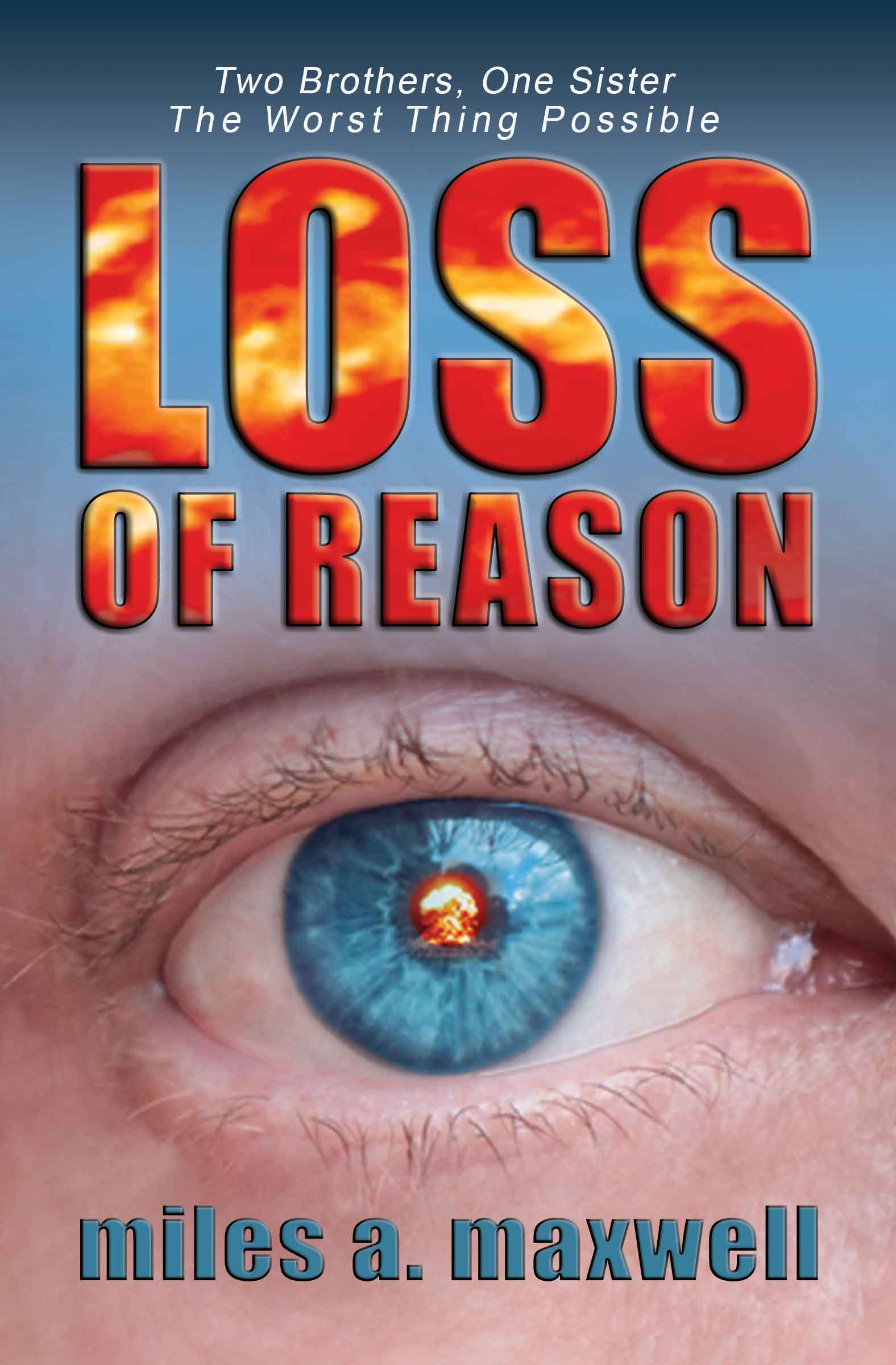
    I cherish books and getting books from an author or a company is really energizing. A few months ago, I received Loss of Reason by Miles A. Maxwell and to make things even better, it even had the author’s signature. It is about how a bomb goes off in New York and all the difficulties that the characters go through. A very interesting part of the book is that it’s also very technical.

    I grabbed Loss of Reason while I was on a train which I generally do since I appreciate reading while in transit to work or elsewhere. So with a receptive outlook, I began to read. I had to re-read the initial two pages and I could not get into the book. I do not know whether it was just me or plenty of readers could not get into the book. It was not that the book was boring or horribly written, I just do not know why I could not get into the book. Maybe it was because I have been in a reading slump? Perhaps I was just truly drained? I don’t recognize what it was.

    I was not going to surrender so rapidly, so I set away Loss of Reason and attempted some other time. I was so determined to finish the book that I picked it up again and began to read. At that point it hit me… once more! I just could not get into the book. I trust that it was an excessive amount going on at once and too many characters all at once in the beginning. I thought the characters were not introduced properly and I got confounded frequently. The book was interesting, well at least the plot was. Yet, Loss of Reason was poorly written.

    When I write reviews, I loathe when it’s a negative review. On top of writing negative reviews, I loathe not completing books I began. This was very disappointing for me. I feel bad terrible for simply writing this now. In any case, I’m going to be honest and give my opinion of the book. I would not recommend Loss of Reason to my family or dear companions however I would recommend it to my friend at work since he enjoys science fiction. I gave it two chances and I could not get into it and I am sorry about that. For the rating, I’d have to give Loss of Reason two out of five stars. From what I read I believe that this deserves the rating I gave it.

    Views: 21

  • Lost in Tanganyika

    Lost in Tanganyika

    One week later, a fisherman’s boat carried them to the Island where two British soldiers escorted the visitors to the Consulate of Lieutenant Colonel Hamerton, His Majesty’s Consul and East India Company’s Honorable agent. – Lost in Tanganyika

    I hate to say this but I found Lost in Tanganyika to be rather bland, boring, monotonous and the pacing was just unbearable. Let’s see the characters were single dimensional people with no development or any depth, they were just there to carry on the story, we had Williams and Elizabeth falling ill from time to time in the good old 1850s but no way near where I can feel for them. I felt like I was reading a history book with an encyclopedia and that too in a fictional theme, I loved history in school because it was factual and not a figment of an inspired event from someone else’s journeys.

    By evening, stormy winds subsided and swells diminished, but pitching lasted through the night

    There were too many facts and too little explanation or description about the surroundings. I mean how am I supposed to know every tribe, place, territory and history of a land as rich as Africa. Some explanation is due, right? I mean I was so lost and wandering in the book that I didn’t feel bad for Williams and Elizabeth as much as I felt bad for myself. Please explain to me the landscape, the people, nature and the atmosphere surrounding the Williams and Elizabeth in detail and not just in a vague way. I should know about Williams and Elizabeth so that I can enjoy and suffer with them like reliving their terror and quest for freedom. As far as I am concerned the most knowledge that the majority people have is from the Discovery Channel.

    “People of Uganda are the Waganda, and Wa-Khutu possessions are also U-Khutu. Of course, many tribes have migrated and through wars or slave trade occupied territories of another name. Uzinza, for example, is ruled by two Wanguana chieftains.”

    I also read that Thomas Thorpe was inspired by the journeys of several individuals. God bless them but the thing is that his book, Lost in Tanganyika,  should be inspired by their journey not a word by word account of their adventures, the way I see it is like enjoying others journey then describing them in such a way that the readers can journey together in this awesome land Africa but what do I get? I get a very dull book. Now, of course, some will say that I tend to read the romance genre, I like to point out that some books like John Grisham’s are also inspired by law or events relating to it but it’s the flair of the storyteller that keeps me glued to the book. Although Thomas Thorpe has a rich vocabulary and good command of the language he failed to deliver the masterpiece. He had an abundance of information and facts that can be exploited for the benefit of all but still what was presented was just an inspiration that in my opinion missed the mark by a great distance.

    Here, cuts in the ravines revealed granite and coarse sandstone, brown and green with sun-blackened strata tilted up to outcrops. At higher elevations, the ground was overgrown with shrubbery of mimosas and other thorny gums. 

    I hope that the effort put in Lost in Tanganyika is appreciated by others and maybe they see the light at the end of the tunnel or the end of an epic adventure, me not so much. All the best to the others, it was a very boring read and required loads of effort from my side.

    Rating: 2 Stars- Stars are mostly for the effort

    Views: 37