Blog

  • Jubilee Year

    Jubilee Year

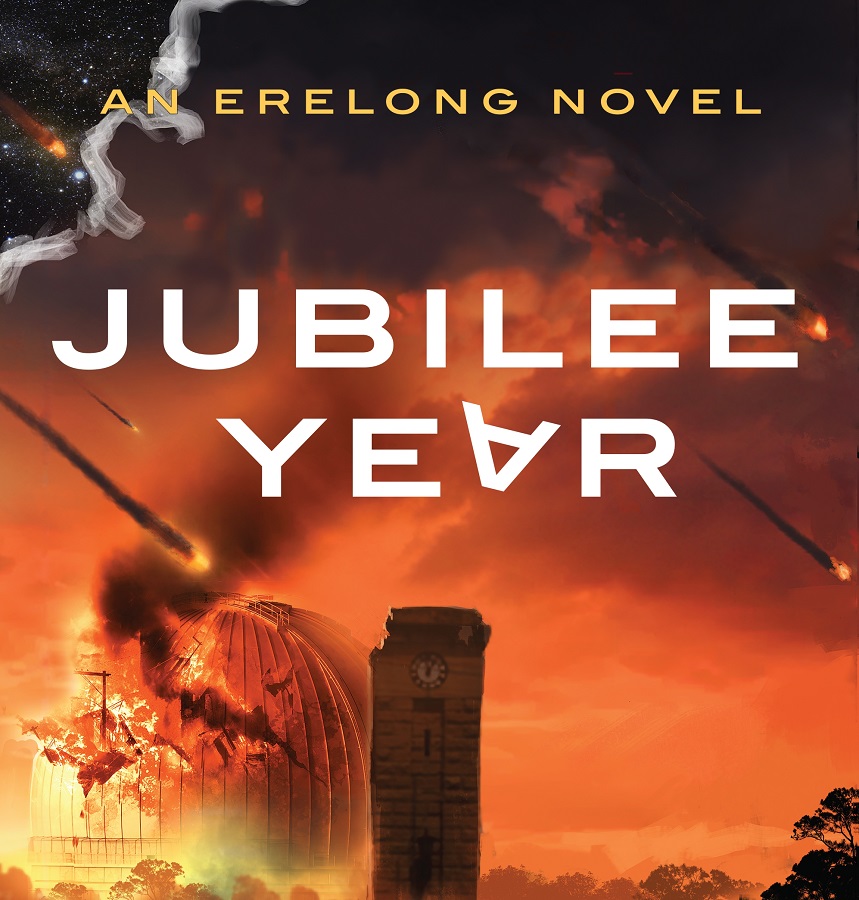
    What if the world were about to end, but they weren’t going to tell you? Eighteen-year-old Storm lives in a small country town in Australia, next to one of the most famous telescopes in the world. When he falls for Penny, the daughter of the chief scientist at the observatory, he discovers a global conspiracy of silence. He learns a mini-star system approaches Earth, and the penalty for any scientist who talks about it is death. – Jubilee Year”

    If Storm and his companions are to survive they must stay out of the way of the government’s security forces, assassination squads working for powerful hidden entities, and the internment camps for dissenters. Even his special ability is not going to be enough. He must accept help when it’s offered. But others are not who they seem to be and neither is the reality of a world Storm thought he knew”

    Upon going into this book, I had checked out a few reviews to see if I would end up liking this book. Most of the reviews were very positive, so I was excited to get into it. I love space; I love any kind of book or and story relating to astronomy and that kind of science. I was however disappointed a bit in this book and this plot.

    To start, I’m not sure very much editing went into this novel. On nearly every page I found an editing mistake. Whether it was the wrong use of a word (like their, there, they’re), or an incomplete sentence, they were everywhere. Sometimes a word would be there when it clearly was meant to have been deleted. Poor editing, at least for me, really takes away from the enjoyment of a novel. If it’s not in proper English, how am I supposed to read it?

    Secondly, there was far, far too much dialogue. I felt like the plot was thrown at me in series of constant conversations. Sometimes, this can be worked incorrectly for the story, but not with Jubilee Year. I don’t like when the plot line is handed to me. I like finding out things in creative ways other than just through dialogue. This book was like the script to a movie, not a novel.

    The last thing I didn’t like about this novel was that it was taking too long to get into the plot. My kindle won’t tell me how far I was into the book, but  I believe it was at least 30% before I put it down and did not finish. Nothing intriguing was happening. However, I might not have given it enough time for the novel to really settle in. Other reviews of the book mentioned the long, dragged out beginning was worth it in the end.

    In my opinion, if the book starts off slow and doesn’t really catch my interest, there’s no point in continuing. Maybe one of these days I’ll sit down and finish the novel but, I lost interest a while back. On a positive note, I definitely did enjoy the astronomy & science mentioned in the beginning of the book. It was fairly accurate and well researched.

    I’d say if you like slow, poorly edited novels with a space theme to it, then Jubilee Year is the book for you. I personally just did not have the patience for it. From what I’d read so far, I’d give Jubilee Year two and a half out of five stars, tops.

    Views: 0
  • Winds of Aerathiea

    Winds of Aerathiea

    Rating: 2.5 Stars

    Age Recommendation: Young Adult

    Warnings: Would’ve been ranked as a Lower YA or even Middle Grade, but there is too much cursing for either

    Genre(s): Fantasy, Post-Apocalyptic Fiction, Action and Adventure


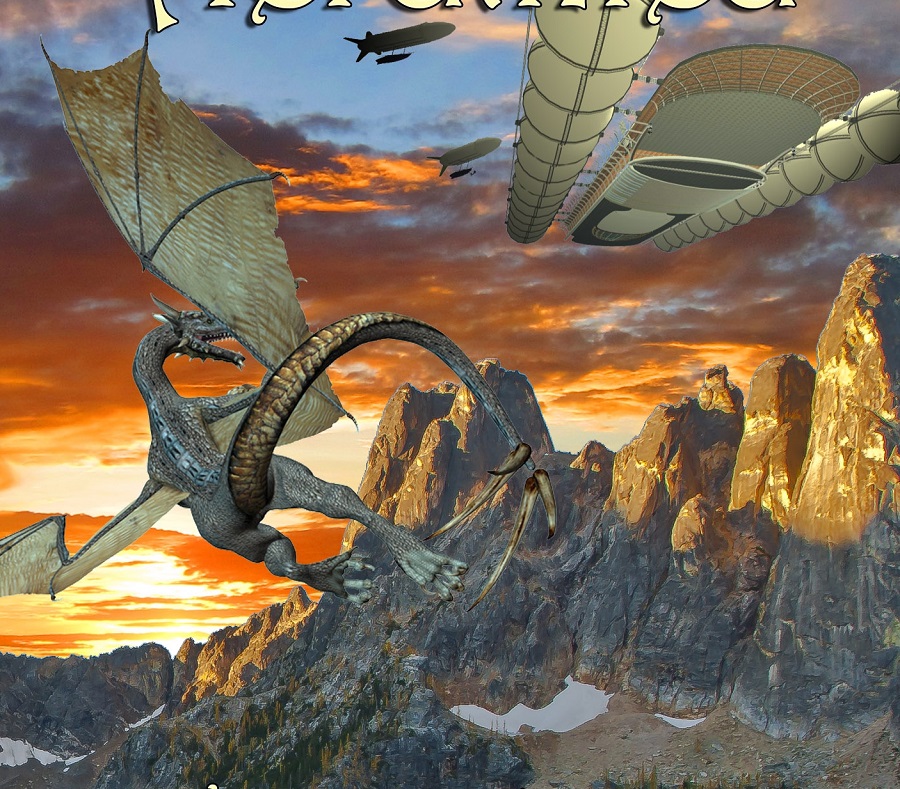
    “Liam and Red squatted in the shadows and peered up at the sight from behind an upturned car and a downed power pole. They began to see the full expanse of the vessel hovering over them. Liam had never seen anything like it. He would have said it was as big as any ship on the ocean, but this one gave you the impression it was much more at home in the sky.”


    Liam Waite is a boy, only fifteen, who is living the dangerous life of a survivor after a series of terrible natural disasters, and is now trying to make it despite a lack of supplies and food. One day, however, an airship comes down, looking for his father. He hasn’t seen his parents in months, but almost inadvertently joins the hunt, and ends up on a whirlwind of an adventure in order to do so. Along the way, he learns exciting things about his father, comes face to face with dragons, and creates bonds with a number of interesting characters. Winds of Aerathiea, by T. E. Adams, is the first in the Chronicles of Aerathiea and was released in October of last year.

    Winds of Aerathiea has an action-packed start, some well-thought out descriptions and a back story that is offered up to the reader very well. It is entirely likely that the first two chapters will hook whoever decides to pick it up. Unfortunately, I personally had issues with the text.

    On the whole, the plot is not what I had trouble with. Some things were a little repetitive, but the concept itself was interesting. The epilogue is a perfect set-up for a sequel, and I thought it was creative. However, I had issues with the way Winds of Aerathiea was written. I received an EPUB in exchange for an honest review on this site, and I found numerous mistakes in the copy (that is to say, the way in which the words were written on the document), as well as grammatical issues and problems with word choice.

    While reading, I came to the conclusion that it might simply be intended for younger readers, and thus the narration would be offered as through the eyes of the fifteen-year-old main character. I’m not entirely sure that that is the case, though, because there is a fair amount of cursing throughout. Also, are sections of the novel which are italicized and which give the characters further information, and there were issues there as well, grammatically, so I think that it may just be a series of mistakes.

    I found it difficult to focus on Winds of Aerathiea when the main character made misogynistic comments, quotation marks or commas were missing, things like that. I do think, however, that many readers might find the concept of a post-apocalyptic world interesting. Not that they should pick up the views of the main character, of course, but that’s entirely different.

    While some of the characters did not feel very fleshed out or easy to relate to, others did. While the text itself might benefit from an editor taking another look, fans of fantasy may appreciate the fantasy elements and things like magical creatures. It could very well be someone’s introduction to reading and enjoying fiction, provided the grammar and other things do not affect their ability to dive into the text, and I genuinely hope that it is.

    Views: 3

  • Fallen Angel

    Fallen Angel

    Rating: 4 Stars

    Age Recommendation: Upper Young Adult, New Adult +

    Warnings: Mention of and Attempted Rape, Character Death, Violence, Slight Language

    Genres: Fantasy (Supernatural), Romance, Action and Adventure

    Pages: 344 (EPUB version, provided in exchange for an honest review)


    “I had been unsure about the future, tossed into the rapids by things beyond my control, but I had never been so befuddled about what I was going to do to get myself where I wanted to go. Home was New York, I tried to remind myself. Or was it?”


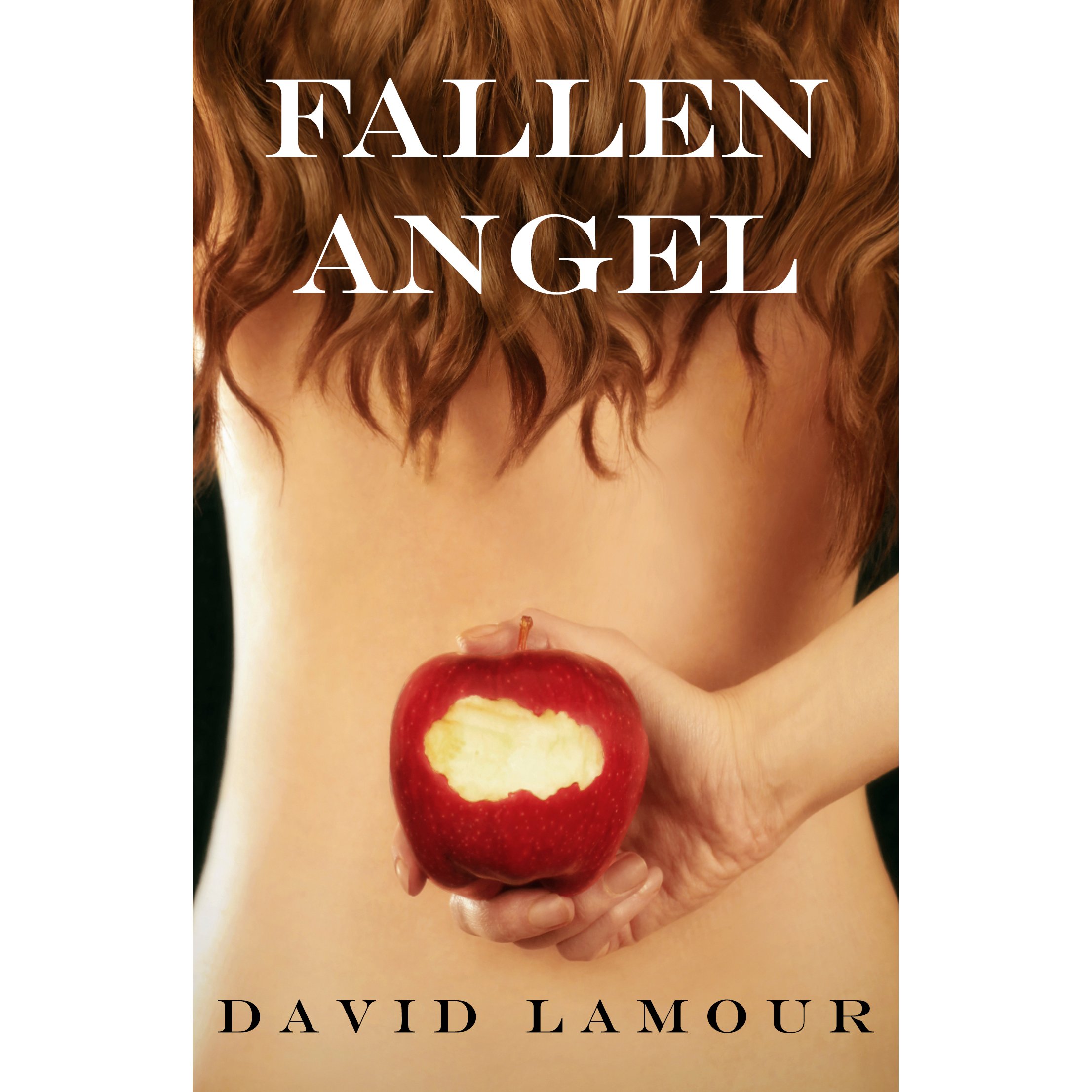
    Evelynn is not an average student. She used to be a swimmer at a school in New York before she had to move up to live with her Aunt and Uncle in Montana after the death of her parents. She isn’t thrilled about getting involved in things like the cheer team or dating a boy on the football team, but those aren’t exactly the biggest of her problems. Referencing the fall of Satan in a novel that is something of a mix between Paradise Lost and the “Hush, Hush” series by Becca Fitzpatrick, Fallen Angel, by David Lamour, tells Evelynn’s story of love, fear, and angels versus demons.

    I wasn’t sure what to expect upon starting my read of this story, though I knew that Fallen Angel had received high ratings on Goodreads and similar sites. Once I hit chapter three or so, I was stuck. I stayed up past three in the morning to continue, despite having work that would need to be done the next afternoon. In truth, the story was pretty addicting.

    The descriptions in Fallen Angel are beautiful. I noted that from the very beginning, and any author who can make a world feel real and who can allow me to visualize what is happening automatically gets points in my book. Equally, it took me a little while to realize that this is being partly written in Evelynn’s diary, which actually makes it more interesting, in my opinion. Typically, diary-style writing is overly detailed. Things that people shouldn’t be able to recall later on. But that isn’t the case here, and I appreciate that greatly. I do wish that there had been some sort of italics or indication of what had been written by Evelynn and what hadn’t been, though. There were a few typos, grammar issues and spelling changes in the Epub I was sent in exchange for a review, but they didn’t really distract me very much from the story itself.

    One thing that threw me off, though, was the way Evelynn’s thoughts sometimes seemed a little too self-aware. Sometimes the comments seemed to come from Lamour and not from the character herself – for example, several comments are made early on about authors and writing style and even “instant-love.” I found it a little funny at first, but it did pull me out of the story a bit, as it didn’t seem to match the rest of the text.

    Evelynn as a character is mischievous, rather funny, and although she is hung up on her past, she of all people has a right to be. She is a reader with a good heart, making her easy to like. There are a few things in the first couple of chapters that seem to be included specifically to set her apart from “normal” girls or the “popular” group, which I feel is a bit of a YA habit at this point. It didn’t really bother me too much, but I did notice and feel that it was a little forced.

    The romantic interests in this story were portrayed in a different way than most love triangle-style characters and relationships are. In this case, it was clear who the “winner” of sorts would be, but neither really struck me as the ‘bad boy’ trope that so many are tired of.

    Overall, I found the text to be very funny, and the epilogue was a brilliant set-up for the next book. I am very glad I’ve had the chance to start the Fallen Angel series and I can’t wait for the sequel!

    Views: 47

  • The Infinite Moment of Us

    The Infinite Moment of Us

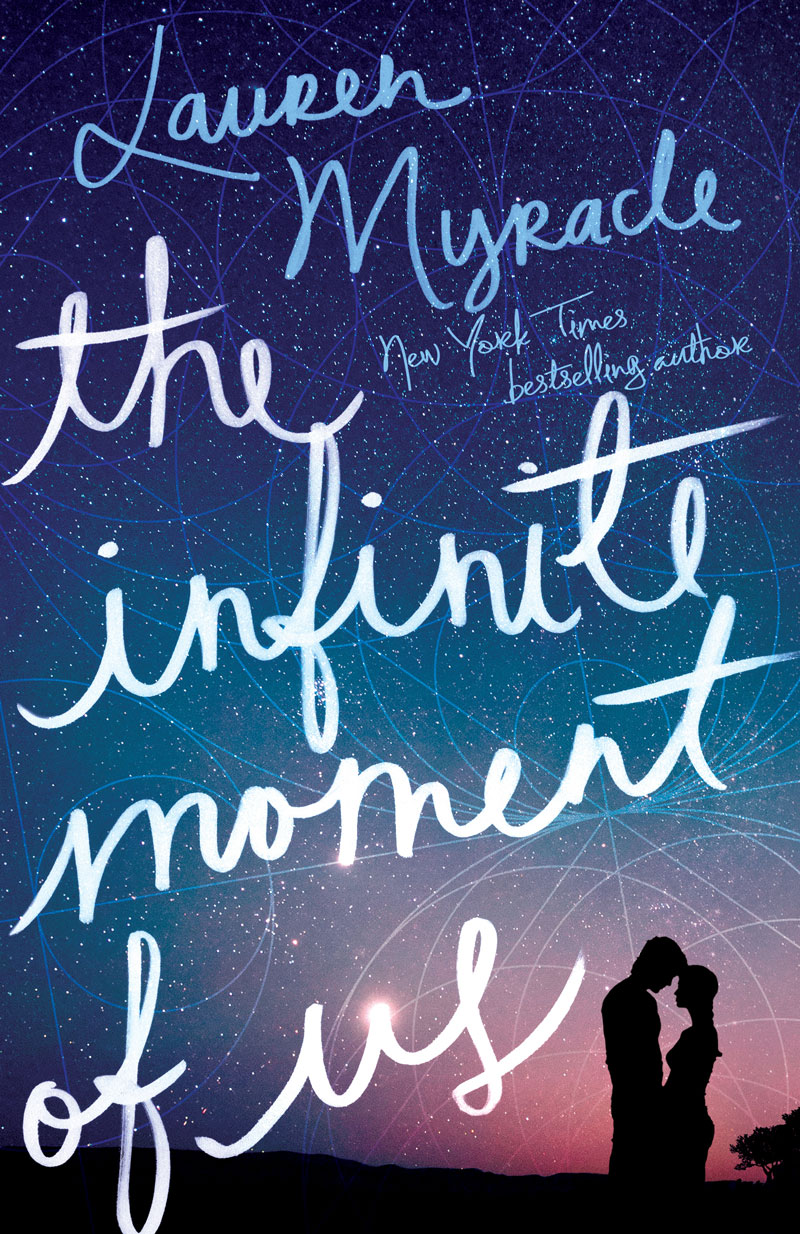
    The Infinite Moment of Us by Lauren Myracle is a phenomenal young adult, YA, book. I immensely enjoyed it. In my opinion, The Infinite Moment of Us is a more modern take on Forever by Judy Bloom. While I think Forever is a great book that has become a pillar amongst the YA bookshelf, The Infinite Moment of Us has secondary storylines and more details than Forever included to some degree. Forever is a more direct story while The Infinite Moment of Us has a few additional underlying elements pertaining to the romance such as the family dynamics and past relationships.

    Charlie and Wren were a really fun couple to read about. It’s fascinating and enjoyable that two people who went to the same high school, for all four years, could have vastly different experiences and never cross paths until graduation. Wren lived a very sheltered life, working hard to fulfill her parents’ goals and dreams for her. She was accepted to Emory University and has her future all mapped out. Charlie, on the other hand, has had a tough life and no clear career goals or college plans. When Charlie finally finds a family, his adopted younger brother is in a wheelchair and he must assist his foster parents in paying bills. The pair could not be more different. Charlie always thought of Wren as untouchable and developed a crush on her from afar, but never acted on his feelings. It is not until a graduation party that he realizes he will not have another chance. This summary may sound similar to the 1989 classic film Say Anything starring John Cusack and Ione Skye, but the stories progress differently.

    I particularly enjoyed the characters were realistic and their emotions were relatable. For instance, Wren met Charlie’s ex-girlfriend, Starla, and she was not comfortable with Starla’s presence in Charlie’s life. As his love interest, why would she be comfortable with his ex-girlfriend? As a reader, Wren’s concerns were valid because it is awkward to see the person you like with someone else or strange to know that there was a previous relationship before yours. By Wren vocalizing this, she becomes a multidimensional character for the reader and a person with whom they could relate to and understand more in-depth.

    On a side note, when I was on Goodreads, I came across a negative review of this book and was very upset by the write-up. The user cited Charlie and Wren’s relationship as antifeminist or portraying stereotypical gender roles. As someone who has taken numerous gender studies classes, in addition to studying gender roles in many genres, politics, films, and literature, I did not find that to be the case in the novel. Rather than think of Wren as a stereotypical girl, I found her disposition to be reminiscent of someone who is meek and new to the world, having been sheltered her entire life. I thought it made sense she turned to Charlie or her friend for explanations. Taking into account that Charlie had an unconventional upbringing, he is more worldly to some degree. That personality trait is not him being a stereotypical man but a well-written character. The pair are opposites in many ways, which is why the reader is interested in their relationship.

    In the end, I highly recommend this novel for readers interested in young adult romance. Five out of five stars. While The Infinite Moment of Us focuses on a love story, there are many other details to entertain the reader such as fun secondary characters, witty dialogue, emotional elements, and some suspense.

    Views: 10

  • Winter

    Winter

    Rating: 5 Stars

    Age Recommendation: Upper Young Adult + (Perhaps around 16 and up)

    Warnings: Character Death, Violence, Potential Triggers (mental illness)

    Genre(s): Fantasy, Fairytale Retelling, Science Fiction


    “We can’t go back,” said Wolf. “It’s suicide.”

    To punctuate his words, a volley of bullets struck the doors, their loud clangs echoing down the corridor they were now trapped in.

    “We’re not leaving her.”

    “Thorne-” started Cinder.

    “No!” Wriggling one arm free, Thorne swung, but Wolf ducked. In half a heartbeat, Wolf had spun around and pinned Thorne to the wall, one enormous hand at Thorne’s throat.

    “She gave us this chance,” Wolf said. “Don’t waste it.”


    Winter, by Marissa Meyer, is the final installment in The Lunar Chronicles (aside from the novella that Meyer released, though it does not fall within the same timeline as the other four books). Although the reader is granted a closer look at Princess Winter and the struggles she faces, we also see Cinder, Cress, Thorn, Scarlet, Kai, Iko and everyone else we have grown to love throughout the series. Their plan to take out the evil queen (pun intended) is a daunting one, and they quickly realize that they are going to need a lot of help if they want their attempt to succeed.

    I want to take a minute to address the warnings I listed above before I get into the finer details of the story and writing style. This book is a great deal more violent than any of the others, as it is the actual climax of the story, and because Princess Winter has a mental illness brought on by things that are explained within the novel.

    The story doesn’t glorify violence, or make out her condition to be something inherently negative, and for those reasons, I deeply appreciate this book and the way in which Meyer wrote it. But I will say that it is certainly possible that younger readers would be frightened by some of the events, this time. It might be best to read these more slowly if your reader is of the early young adult age, perhaps by gifting them one a year or every few months or so.

    As for the rest of the novel, allow me to pick out a few points that I noticed along the way. First, characters within the main cast are flawed wonderfully, but Meyer clearly makes an effort to distinguish between the sorts of flaws that heroes can have. By that, I mean that characters learn to be heroes throughout, growing as people and acquiring qualities that allow them to succeed. Those who do not change, or who develop traits that directly, negatively affect others are going to find that their ways are not going to be rewarded.

    Second, several types of romance have been portrayed throughout this series, and all of that becomes quite clear when looking at the final installment. Nowhere will you find an abusive relationship in this story or one that you would not want your child glorifying in their mind. Safety, confidence, equality and acceptance are some of the key themes in the relationships, and I find that incredibly appealing. I have no doubt that a young adult audience would as well, and they are definitely the sorts of examples I would want to offer my son or daughter in the future.

    Another thing I recognized throughout the text was how much more realistic it is than other revolution-themed series. Some young adult series make it far too simple or give the impression that pretty much anything a hero does will succeed. In Winter, that is not the case, and it’s spectacular. The book is quite long – particularly in the paperback version I own – but it needs to be that way because the heroes come across a multitude of challenges and setbacks. Yet they stand firm in what they want to do, which is another quality that I appreciate about the cast of characters Meyer presents the reader with.

    The Lunar Chronicles are, far and away, my favorite series of all time. Genre aside, the themes explored are relevant to everyone – particularly with the frightening and dangerous times that we are now experiencing all over the world. I cannot explain how well I loved this series, except like this:

    If it weren’t for the essays I have due in a couple weeks, I would pick up Cinder and read the whole series all over again.

    Views: 5

  • Cress

    Cress

    Rating: 5 Stars

    Age Recommendation: Young Adult +

    Warnings: Violence, Character Death, Potential Triggers (references to torture)

    Genre: Science Fiction, Fantasy, Fairytale-Retelling

    Pages: 550 (Puffin paperback)


    “She gasped, her eyes landing on the one screen that stood out from the rest, and the single bright green message on a field of black.

    FROM USER: MECHANIC. ETA 68 MINUTES.

    She heard Sybil’s steps approaching as she launched herself across the room. She shut down the screen just as the satellite door whistled open.

    Heart in her throat, Cress spun around and smiled.”


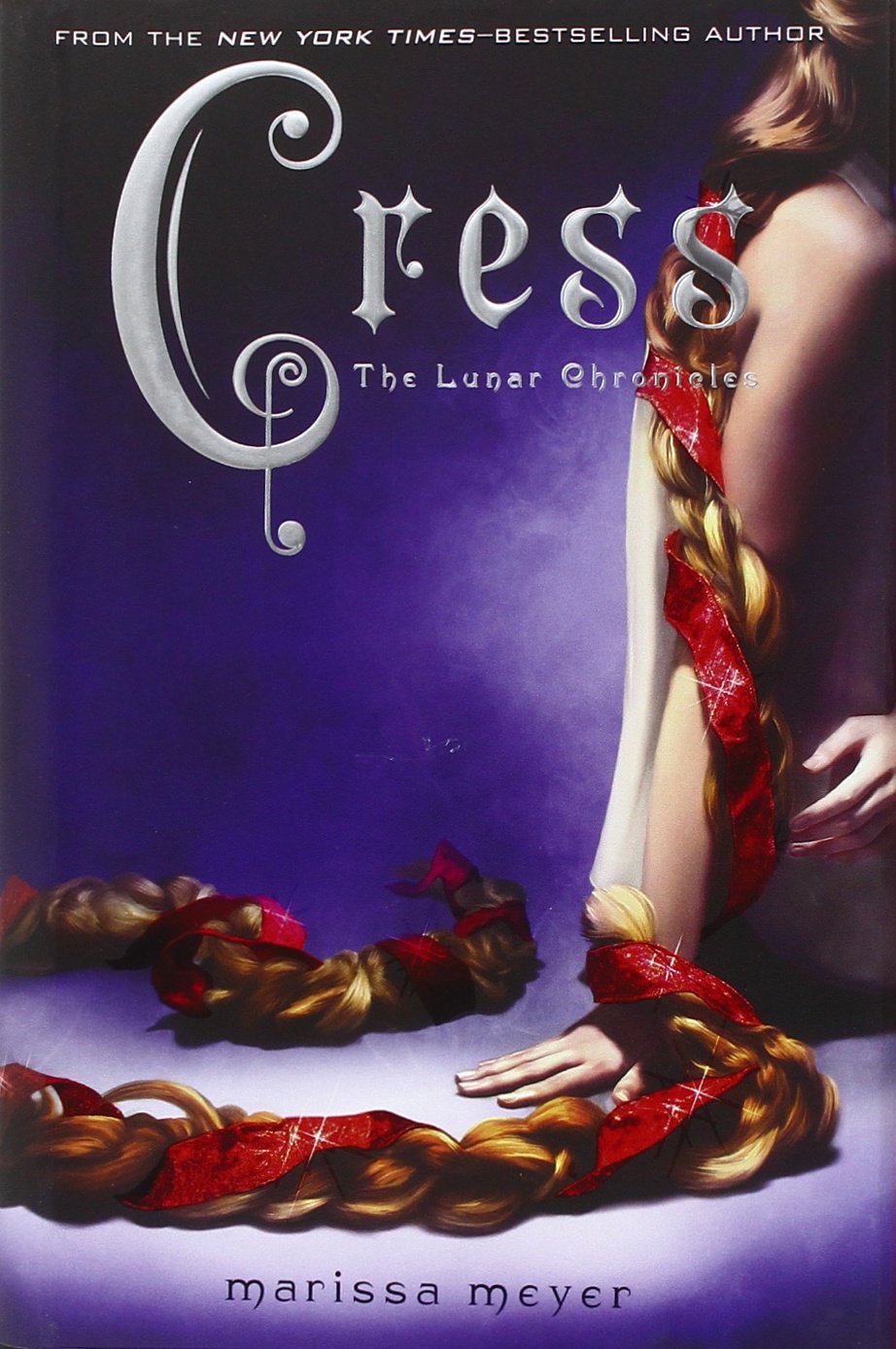
    Cress, by Marissa Meyer, is the third installment in the Lunar Chronicles. Focusing this time on the fantasy, sci-fi version of Rapunzel, Meyer tells the story of a girl who has been held captive in a satellite for at least seven years. Understandably, she hasn’t adapted well. As a child born on the moon, she’s now trapped between her home and the earth, where she would much rather be. Although she’s forced to work for the Queen of Luna, Cress has no desire to do so, and would much rather be part of something bigger.

    This book, by far, is my favorite of the three I have read so far. I am about to dive into Winter, the fourth book in the series, but I think that Cress might have just topped my favorites list – somewhere up there with The Book Thief, by Markus Zusak. It’s funny, it’s heart-wrenching, it has phenomenally developed characters.

    As a bonus, this story is also vastly different from the original tale of Rapunzel. While Cinder’s backstory as a character is rather on par with Cinderella, and Scarlet’s is indeed very different, Cress’s story is thrilling. In this book we learn more about all of the characters, from those just mentioned to Wolf, Captain Thorne, Emperor Kai, Iko and more.

    I truly dislike being that reader who gets overly-invested in the romantic interest, but in this case I think the development of that particular section of the plot was incredibly well-done. In an attempt at avoiding giving away exactly who I’m talking about, so I don’t give spoilers, let me try and explain. The male romantic interest for Cress is, perhaps, who the reader might expect. He’s funny, daring, and thinks less of himself than he ought to, which all adds up to a surprisingly genuine bond between Cress and the man in question. I can honestly say that I didn’t expect it to work out the way that it did, and that only made me love the match – and the book as a whole – all the more.

    There were, admittedly, a few moments where a character’s thought process surprised me. Where they somehow came to conclusions that seemed a bit out of reach, for example. And while I did pause and look at the page a bit funny, it didn’t take away from my overall enjoyment of the novel.

    Cress imagines her way into and out of situations, and although she is the most naïve and excitable of the cast, she has strengths as much as the others, and it’s clear that each person brought in or out of this series is important and relevant and necessary to the actions taking place. I appreciate that much more than I can say, because I have so much trouble keeping up with stories where characters are thrown in just to have more characters. This series doesn’t need that, and while there is a large cast, it’s almost impossible to get anyone mixed up because each character is so unique and has their own purposes, goals, personality and everything else.

    This series, even before its finale, has risen in the ranks to be not only my favorite young adult series, but quite definitely my favorite series of all time. I genuinely hope that anyone who reads this will go pick it up if they haven’t yet, because it is a series that anyone can like, regardless of if young adult fiction is something they typically reach for.

    Views: 9

  • Eleanor and Park

    Eleanor and Park

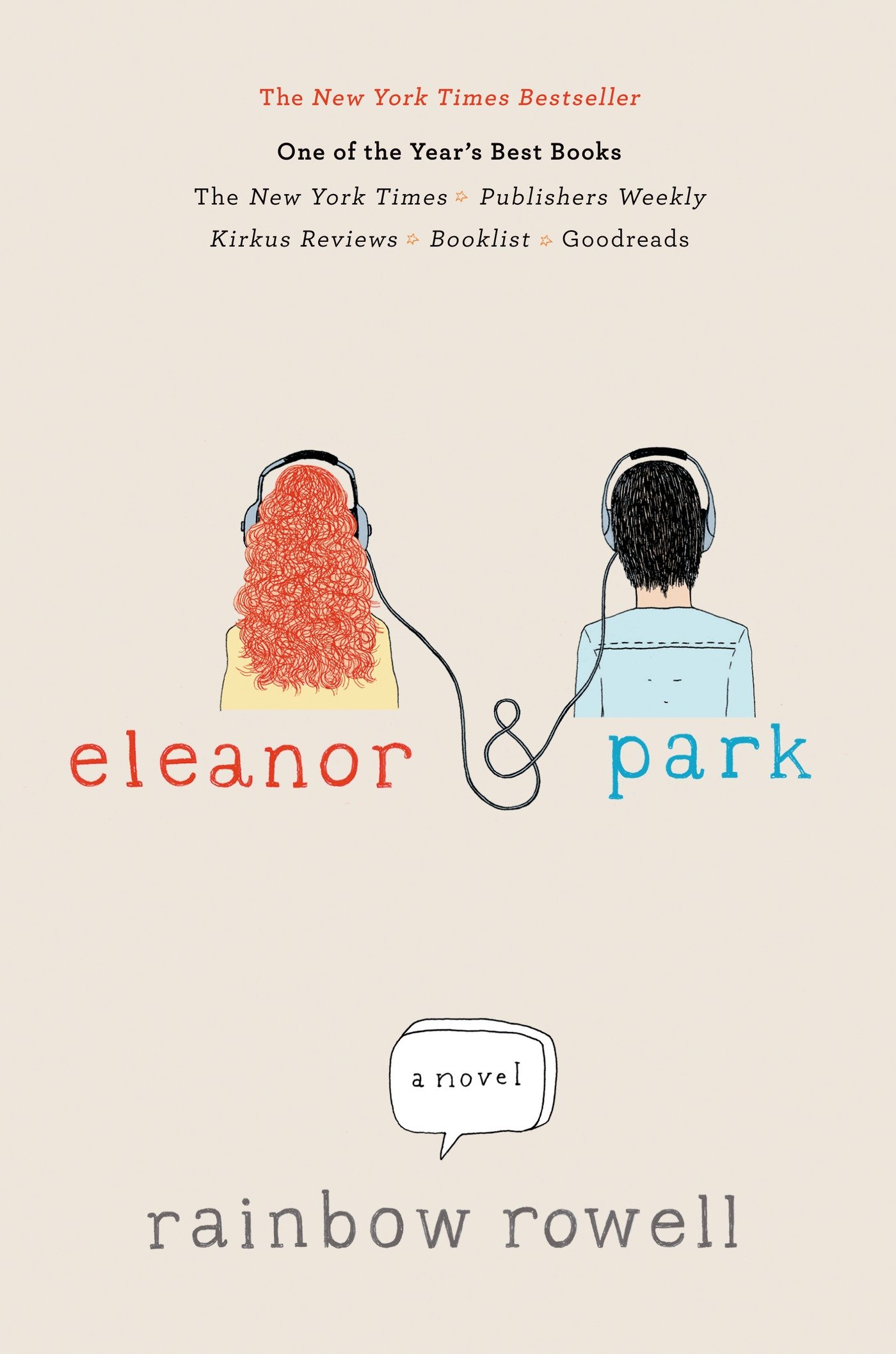
    Eleanor and Park by Rainbow Rowell is an extraordinarily well written Young Adult novel. Eleanor comes from a poor dysfunctional family, being forced to share her room with several siblings. She cannot afford to wear makeup or purchase new clothes on a regular basis so she needs to make do with items around her house. The only morning ritual Eleanor really has is her mother rubbing a little vanilla extract behind her ears to give the illusion of using a scented body soap or perfume. While Park and his family are middle class, who do not have money problems in the same manner as Eleanor, he still has some issues with his family. Park and his dad do not have similar dispositions causing some strain between them. When Eleanor walks onto the school bus one morning, everyone stops and stares at her. Eleanor has scarves wrapped around her waist and is dressed in a rather flamboyant fashion. Park sees Eleanor and immediately dismisses her presence until she walks to the back of the school bus where the only vacant seat is right next to him. Rather reluctantly, Park allows her to join him in his shared seating area. This moment changes everything.

    Rainbow Rowell was able to write authentic realistic characters who acted like typical teenagers. The dialogue was fun and poignant, the setting was believable, and the relationship was intriguing. Personally, I enjoyed the fact that Eleanor and Park’s relationship was built slowly throughout the duration of the novel. When Eleanor first meets Park, the two do not have this instant connection mimicking the love-at-first-sight scenario that occurs in a lot of other narratives. Instead, the pair sit by one another without speaking each morning and try not to brush up against the other (or even speak) as the school bus hits certain divots in the pavement causing them to move about in their seats.

    The first spark between the two characters occurs when Park notices Eleanor reading over his shoulder. On the school bus, Park would read his comic books to pass the time. Not having the luxury to purchase her own books, Eleanor does not have a lot to keep her occupied. She casually looks over his shoulder reading as he flips the pages. Park eventually notices this and leaves comics for Eleanor to borrow. “The next morning, when Eleanor got on the bus, there was a stack of comics next to her. She picked them up and sat down. He was already reading. Eleanor put the comics between her books and stared at the window. For some reason, she didn’t want to read in front of him. It would be like letting him watch her eat. It would be like… admitting something. But she thought about the comics all day, as soon as she got home, she climbed onto her bed and got them out. They were all the same title – Swamp Thing.”

    After Park lends Eleanor his comics, the pair soon strike up a conversation on the characters and story. This, eventually, leads to them talking about music, school, and a variety of other topics providing a natural progression for the characters to transition from comic books to subject matters of a more personal nature; thus, they form a bond.

    As a reader it is enjoyable to see both Park and Eleanor’s perspective throughout the book, Eleanor and Park. Rowell alternates narrators, allowing a deeper understanding of their state of minds. While neither is done in the first person narrative, the narration follows Eleanor and Park’s thoughts and emotional state, allowing the reader to learn more in that moment. Rather than have the story be told purely from Eleanor or Park’s perspective, the revolving narrator allows the reader to experience both characters. Interestingly, Rowell did not alternate chapters but would interject Park then Eleanor throughout. I loved Eleanor and Park, it is extraordinarily well written and superbly executed. For anyone who enjoys YA or character-driven novels, Eleanor and Park is a story that would appeal to them.

    Rating: 5 out of 5 stars!

    Views: 1

  • Outrageous: The Victoria Woodhull Saga Volume One

    Outrageous: The Victoria Woodhull Saga Volume One

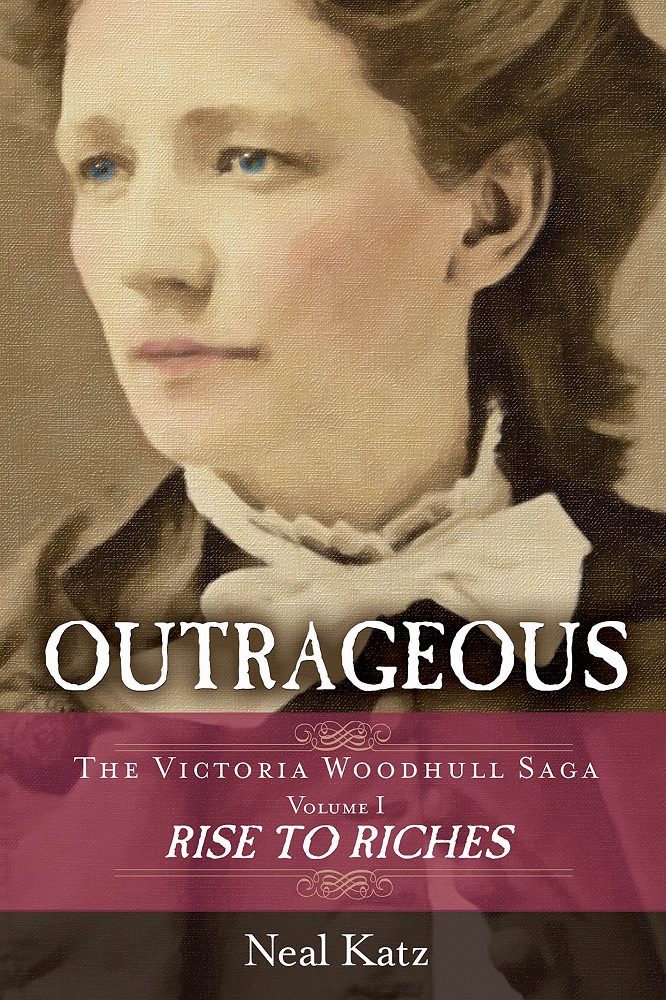
    Outrageous: The Victoria Woodhull Saga Volume One Rise to Riches by Neal Katz is a historical fiction book that follows the early life of Victoria Woodhull. In order to see and understand where she ends up, the story begins in her poor home with one too many children to feed and an abusive father. Firstly, this is a book for adults. The first chapter opens with Victoria’s father abusing her only to be followed by her being whipped in the second chapter. This is not a novel for the faint of heart. As a reader, I understand that this tragic and horrible background helps motivate her to escape and create a new life, but, as a person, I was rather troubled and, at times, distressed. There were moments I was cringing and waiting for her life to get better in the coming pages.

    In regards to Katz’s writing style, there were a few characteristics I would have liked to see him expand upon. Since Victoria’s persuasive tone and ability to speak well are large elements of her personality, I would have liked to see those talents develop. In chapter two, Speakin’, Katz cited a scene in which Victoria was telling stories to the local children while their parents were busy; “I used my big, blue eyes to help me tell the stories. I already knew that I could make people listen by changing the tone or volume of my voice. The children sat in silent rapture, all participating in the deception.” I think this is a very well written section, but, given the nature of her upbringing and future depending on her persuasive nature, it would have been nice to see more in this scene. For instance, Victoria saw the children drifting off and needed to do something new to captivate them, such as using varying voices for different characters.

    To be honest, it was hard for me to read Outrageous: The Victoria Woodhull Saga Volume One Rise to Riches. Victoria had a really tough life.  She went from one bad situation to another. This may be a sign of good writing, my being so disturbed. I do want to stress that this novel is fiction. After this book crossed my path, I did a little more research on Victoria Woodhull. Katz utilized several rumors surrounding her life as the foundation for his novel. There is no evidence that she was a “working girl” or believed in marriage for monetary gain. Other subjects are true, such as Dr. Woodhull’s alcoholism and womanizing. Katz blended some historical records with his imagination to create this novel.

    Views: 1

  • Outlander

    Outlander

    Rating: 3.5 Stars

    Age Recommendation: Adult (16/17+, depending on the reader’s discretion)

    Warnings: Adult themes including violence, language, and suggestions of sexual activities (not all consensual)

    Genre(s): Fantasy, Romance, Historical Fiction


    The screaming stones were the last thing I could truly say I remembered. And even that I had doubts about. The screaming had kept up, all the time. It was possible, I thought, that the noise came not from the stones themselves but from… whatever… I had stepped into.


    Outlander, by Diana Gabaldon, is the first book in a series of six, and introduces the reader to Claire Randall, a woman who worked as a nurse during World War II. Her interest in botany and her husband, Frank’s, interest in his family history leads the two to Inverness, Scotland, for their second honeymoon. While there, he learns about an ancestor of his named Jonathan “Black Jack” Randall and dives into learning about him while Claire goes off on her own adventure. When she stumbles across the standing stones upon a nearby hill, she, of course, has no idea that the circle will transport her back in time.

    Claire finds herself in the middle of British soldiers as they fight clansmen, gets caught up in a web of lies about who she is and where she has come from and decides that – until she can get back home to Frank – what really matters is that she manages to stay alive.

    The plot of Outlander is what drew me in, initially. I have heard so many rave reviews, although I’ll point out that most of them include a great deal of love for the male lead, Jamie, rather than any intensive look at other characters or writing style. I do not believe that Diana Gabaldon is a bad writer, in any sense. I will say, however, that her main character is not particularly likable in my opinion. I did watch the television show (an HBO series) before picking up the book, mainly because my best friend is rather in love with the novels as well as the show.

    Obviously, my reaction to the written story was not the same as hers, so you may wish to take it with a grain of salt, but I found Claire to be indecisive and frustrating, as the goals she sets for herself are not met and she doesn’t seem particularly invested in trying to accomplish them. It does feel a bit like Gabaldon may have tried to ensure that the romance would happen, and that makes sense. It’s the main reason the plot works at all. But I find it difficult to enjoy the novel I’m reading if I do not feel I can connect with the main character.

    The descriptions, however, are beautiful – even if sometimes they do go on for quite some time. For this reason, among others (mainly to do with exposition and setting the scene), the beginning feels very slow. The way Gabaldon explains action sequences, however, is quite something. I always understood exactly where each character was and what was happening to them. The portion where Claire is transported back in time is kept vague purposefully, I believe, and in that instance, I do think it works. Later scenes, I feel, are granted more explanation.

    The plot does not seem to be like any other I have come across, which is a reason that means quite a lot to me these days, as many books seem to all have some element in common. This series is original, and actually rather funny, and I do recommend that people read Outlander before watching the show if they wish to enjoy the book. The adaptation is absolutely phenomenal in how closely it sticks to the book, but I think that, after watching that version of Claire, I was disappointed by the written one.

    As ever, I feel that my opinion may or may not be similar to yours, but I do think that it is worth giving the series a go – particularly if you have yet to start the television show. I wouldn’t recommend that young readers try this one out, as there are some potentially upsetting themes. The television show, on that note, is something that parents may wish to be wary of as well, just as a heads up.

    If I could rate Outlander on plot alone, I would give it a good 4.5 stars, but some of the descriptions along with my issues with Claire brought the rating down.

    Views: 2

  • 6th Horseman

    6th Horseman

    The 6th Horseman follows a story of six main characters as they each play a part in the end of the world. Each of them helped out someone named “Zilla” allow a virus to spread around New York City (and potentially the world), which kills off the population and turns them into zombies of sorts. These six characters get vaccinations in order for their deed, but soon realize the awful mistake they made. They did this for their own personal desires, and they ended up killing the entire world. The 6th Horseman, told in both images and text, is an action packed, gory, intense and confusing read.

    I, however, wasn’t really much of a fan. I’ve never been a fan of zombie stories. There’s something that I don’t like about them. I thought I’d give this book a chance since it’s WAY out of my comfort zone or regular genre of reads. It wasn’t too bad, I just didn’t find myself enjoying it for a lot of reasons that pertain to my own personal opinion.

    For example, I know squat about politics, or even religion. Much of this book tied back to the roots of Christianity as well as American politics. So, much of the plot was often hard to follow as I understand little about both topics. Therefore, this book is probably more for adults older than me who understand this. At twenty years old, my focus is college right now and not politics and religion.

    Issues unrelated to my own knowledge that I didn’t like much about this book were that there was a lot of unnecessary filler scenes. For example, there were way too many descriptions of irrelevant topics such as stupid comments from the characters that had nothing to do what was going on at that moment. There also were often flashbacks that felt out of place and didn’t add to the story at all except to try and give background to characters. The only problem was that I didn’t care; I didn’t need that background information.

    Besides all of this negative stuff, the book wasn’t a complete trainwreck as I’m making it out to be. The end was probably the most exciting part when finally everything came together and the truth was revealed. I just wish this ending came a little sooner. There was a chunk of time in the book that could have been skipped over and brought right to the events of the end of the story. The 6th Horseman for sure was a very well thought out plot by the author, and I can’t say that it wasn’t creative. The way religion was tied into the events of the story was mostly what interested me, even if I didn’t particularly understand it. Once I got past about one hundred pages or so, I found myself more intrigued and curious as to why this was all going on and who “Zilla” was.

    If you like hardcore zombie books/stories with gore and swearing and an interesting story in the background, this book is for you. It reminds me a little of Resident Evil so if you enjoyed those movies and video games, you’ll like this too. It just wasn’t for me, who’s used to reading fantasy novels!

    Overall, I give it a 3 stars rating. Partially because I personally could not understand things, and because a lot of the book was irrelevant to the storyline. I may continue with this series, but it’s not at the top of my list. The next book in the series is called “Killing Salvation”.

    Views: 2