Category: Fiction

  • Romancing the Crime

    Romancing the Crime


    Rating: 3.5 Stars

    Age Recommendation: Adult (~16+)

    Warnings: Frequent Adult Language, Implied Sexual Content (nothing explicit)

    Genres: Crime, Murder Mystery, Romance

    Pages: 421 (paperback edition, provided in exchange for a review)


    Lou glanced at the back jacket. “Fletcher Manning. Turns out he’s a best-selling novelist. And he was so impressed by your little performance, he wants to shadow you as part of the research he’s doing on his new book.”

    Cory leaned back, letting the counter support her. A novelist? He wanted to see her again.


    JW Robitaille’s Romancing the Crime is essentially a fresh take on a classic murder mystery, crime-solving novel, but it also includes a romance that has a strong footing within the story. The characters brought together are done so in a way that’s very similar to the television show Castle, and thus gives their interaction a great starting point. It’s very difficult to miss that common plot between this book and the series, but the story is one with a merit of its own.

    The research for this novel has clearly been done formidably, and the writing is – a good 95% of the time – quite spectacular. I did get lost a bit in the number of secondary characters that were introduced, but I understand that this book is the first in a series, and expect that these characters will be returning ones, or ones meant to help with this plot until we meet the new ones. As far as the plot goes, for the most part, everything seemed to line up and follow along with an understandable, realistic path. I struggled, though, when sometimes things seemed to go off on a tangent without explanation.

    For example, Marin decides in chapter four to ask about another detective’s brother seemingly out of the blue, with no obvious relation to the action that’s been happening in the book or even in the scene. Moments like that distract me from the story because even as I read along, I’m still stuck back at the start, wondering why it was brought up.

    Romancing the Crime also felt slightly problematic in regards to the way diversity was featured. I think that diversity is very important because it accurately represents the world we live in, but sometimes the characters in this story seemed to be described as a bit too long, or in a way that implies that they are somehow marked as an ‘other.’ And while that’s fair considering who Marin is, it felt a bit unnecessary and forced.

    In truth, the descriptions of Gainsville, Florida – the setting of Robitaille’s story – and the detailed knowledge of detectives and how they work were the real stars of Romancing the Crime. Those who love crime stories will find it easy to dive into this one and anyone who loves a bit of local information to help solidify a story will be pleased that the author has included so much of it. That decision certainly made it easier to imagine the scene and the world in which Marin’s investigation takes place.

    On the whole, the plot is one that easily engages those interested in knowing “Whodunit,” with many false leads and an ending the reader probably won’t see coming. For those that enjoy Romancing the Crime, Robitaille has written a few other novels, as well as screenplays and short stories that may need to be the next on their To-Be-Read list!

    Views: 1

  • A Time to Rise

    A Time to Rise

    What more can you sacrifice than your life? – A Time to Rise

     Parvin Blackwater is dead.

    At least…that’s what the Council—and the world—thinks. But her sacrifice tore down part of the Wall long enough to stir up hope and rebellion in the people. Now she will rise again. Strong, free, and fearless.

    Parvin and Solomon must uncover the mysterious clues that Jude left behind in order to destroy the projected Wall once and for all. Meanwhile, the Council schemes to new levels of technology in its attempts to keep the people contained. Can a one-handed Radical and a scarred ex-Enforcer really bring shalom to the world?” -summary from Goodreads

    I can’t believe it’s over, friends. This is it. The last book in the Out of Time trilogy. And to be honest, it was rather a lackluster finale. This is going to be a tough review to write, since I LOVED the first two books so much, and this one leaves me only with a sort of half-hearted like.

    A few of my favorite highlights of the book were

    1. Parvin not being dead. (Obviously.)
    2. Russia. I love Russia, and it was really cool to see Parvin & Co. visit this land.
    3. Solomon. Need I say more?

    However, I feel like the cons outweigh the pros in this one. The pacing was very rushed (you can tell she had a deadline coming up fast!). The plot itself wasn’t very strong it seemed to rely heavily on plot devices, and at times glossed over significant events. I noticed a few continuity errors as well.

    I think the worst part of A Time to Rise was Parvin herself. She wasn’t the same Parvin from the first two books. Every now and again something would ring true and I could see the original Parvin in her, but overall it wasn’t the same. Parvin’s voice seemed slightly off, and she seems even more impulsive than she was in the first book. At times, she even comes off as immature.

    Though most of the loose ends were wrapped up, and we got answers to several important questions, I still felt like it didn’t end satisfactorily. A Time to Rise just doesn’t quite fit with its predecessors, giving me the impression of hammering a square peg into a round hole. Not sure what happened whether Brandes has lost her touch, or it needed a couple more rounds of editing, but one thing is for sure: library read, not a buy-it read.

    Content guide (parenthesis may contain minor spoilers):

    Violence/Graphic: 10/10(attacks by wild animals, serious injuries, rioting, etc.)

    Sexual: 2/10(brief kisses, thoughts about kissing, mention of pregnancy, etc.)

    Language: 0/10

    Views: 4

  • A Time to Speak

    A Time to Speak

    “What happens when you live longer than you wanted to?

    Parvin Blackwater wanted to die, but now she’s being called to be a leader. The only problem is, no one wants to follow.

    The Council is using Jude’s Clock-matching invention to force “new-and-improved” Clocks on the public. Those who can’t afford one are packed into boxcars like cattle and used for the Council’s purposes. Parvin and Solomon team up to rescue the people. Instead, they find themselves on a cargo ship of Radicals headed out to sea. What will the Council do to them? And why are people suddenly dying before their Clocks have zeroed-out?”-summary from Goodreads

    *Note: This review contains spoilers from A Time to Die, the previous book.*

    Normally, sequels fall pretty flat. They can drag along without a focused plot, just trying to shuffle along the reader from point A to point B, so the author can get to the exciting conclusion.

    However, A Time to Speak is a rare exception. A stellar exception, even.

    Surprisingly enough, I liked A Time to Speak better than its predecessor, A Time to Die. The characters were marvelous, and I couldn’t help but to love them. And what fun seeing all the new places they ventured to! My one big beef with the book was the ending-I might suggest not reading this book until the third and last book is released in October. (I would hate for any readers to die of an apoplectic fit.)

    Now, on to the fun stuff.

    Parvin grows so much in this book as she pursues her calling to be a shalom-maker. Now that she knows God has a purpose for her life, she steps out in faith to take action. She’s still the Parvin we met in A Time to Die, but she’s changed in a good way. Even with this transformation, however, she still stumbles in her faith at times.

    Thankfully, there’s Solomon Hawke to save the day.

    I was pretty upset with Mrs. Brandes after she killed Jude-who happened to be one of my favorite characters in A Time to Die. But I was soon reconciled to his death, largely due to Solomon. He was such a fun character to read, and together he and Parvin had some moments which left me giggling and sighing all at once. I think the best part was how Parvin grew closer to both God and Solomon every time they talked. He was such an encouragement to her and helped strengthen her in the faith by leaps and bounds. I love their relationship and would be very happy to see more of them in A Time to Speak.

    Parvin & Co. traveled to so many new and wonderful places. Prime, Lost Angel, and more fun locations were described vividly, and I felt like I was right there, exploring along with them. I won’t say much more about their adventure so I don’t spoil the story, but rest assured it’s a fantastic journey.

    A lot of twists and surprises kept me on my toes throughout the whole story and left me with more questions than answers at the end. I will be eagerly awaiting the next book in the series. Until then tally ho!

    Content guide (parenthesis may contain minor spoilers):

    Violence/Graphic: 7/10(graphic deaths, injuries, attacks, etc)

    Sexual: 2/10(brief kiss, thoughts about kissing, hugs, etc)

    Language: 0/10

    Views: 10

  • The Hunter’s Moon

    The Hunter’s Moon

    A male figure appeared through the meld of orange and yellow leaves. He was young about Morgan’s age…- The Hunter’s Moon

    The first thing that came to my mind when I was reading The Hunter’s Moon by Beth Trissel was that I can never hang out with this person. Bizarre thought, right? Not to me. I had to say the sentences in The Hunter’s Moon were written in a way that was a switch between first person and third person point of view. Maybe the author wrote in the first person point of view initially and just deleted the noun and left it that way and the result was that when I was reading I found it hard to follow the flow of The Hunter’s Moon. Sometimes it’s like this it’s as if she is telling a story about Morgan and Jackson and the Wapicoli clan and the next it’s like she is Morgan and is telling me about her thoughts. I even at one point felt like I was reading a Twilight fan fiction where Jacob is replaced by Jackson and courteously eliminate Edward from the equation and now we have a werewolf saga. The result was that I was bored, to say the least. Hence it took remarkable effort on my side to finish this book. The book is set in the mountains of Fort Valley or someplace cold in the mountains in a lodge to put it precisely where they have no electricity and have all the things to live like they are in the mid-1900s or some age where there was a lack of electricity. I wasn’t impressed, no wifi, no outside world, no school (school wasn’t really fun but it is a must I believe everyone has to endure it like a rite of passage). What on earth is this?

    Oh, crap. Don’t let this place be haunted! She’d never seen a ghost before and didn’t want to start now, especially not in this room.

    As the book cover suggests yes they are werewolves. While reading this book I had to hand out to Stephenie Meyer for Twilight and for her creativity in creating this vision of werewolves that has spurred the imagination of many to write fictions with the same idea and given light to the much-forgotten natives. Credit is given where credit is due. Jackson is a werewolf, yeah Jackson like Jacob see the similarity and he is also a native American. Stereotyping is getting so common and it is not fun. I also observed that the author used the acronym NA for native Americans, I found that rather impolite just pointing out the obvious here. I have never really read much of authors using short forms except for messaging or email parts of interactions in novels. I found this NA thing rather unsettling. Thanksgiving and Native Americans don’t mix I get the idea that she was trying to be cool or something but from what I have read Thanksgiving is rarely celebrated by the natives because of the issues with the atrocities that they went through from the occupation of foreign forces on their land. It was like very strong matter overlooked by the author. It was rather insensitive and the author should be aware that not everyone shares the same sentiment. That’s why I believe proper research is vital so that information provided or conveyed to others are worthy and do not mislead or hurt others in the process.

    Were those dyed porcupine quills sewn in with the beadwork? Morgan couldn’t be sure.

    The funny thing in The Hunter’s Moon was that sometimes Morgan knew stuff before it was even mentioned or the information she mentioned contradicts with the facts presented before. Like the sentence above I had to say it was mentioned in the book that Morgan was a suburban kid and all of a sudden, she knows what or how porcupine quills looks like. Well, I don’t, I would have thought what a fancy hair pin. There were holes in the plot and then Morgan was bombarded with so much information and exposed to a whole new world but as the main character she took in stride, that was just too much. Seriously what exactly does a teenager want to do in the forest full of strangers even if their intentions are good? Oh well, she does the all-knowing instant-love thing. I don’t know but I didn’t get the chemistry. Maybe the author was trying to emulate Edward and Bella’s story in werewolf form. Needless to say, the effort was a waste. Not only did I didn’t fell a thing but I also felt like the push at the end for Morgan to confess her feelings to Jackson was just ridiculous. I mean it started with a crush and became full blown love so soon. They didn’t even go out on a date!!! Morgan doesn’t even go to school, I dislike this fact I prefer the teens actually finish school rather than become dropouts. I have to wonder did the author forget that these books are for young adults? That being said young adults need creative work that can keep them engaged and capture their interest because they tend to lose interest easily. To me the best part of  The Hunter’s Moon came at the end, in this part, the interaction between Morgan and Jackson is actually very sweet and believable while throughout the book the author was trying to create a relationship dynamic between them that really didn’t work.

    Sobering words. Morgan wondered if she were a participant on some form of the TV show, Survivor.

    The authors writing was not something I enjoyed. The author didn’t give a proper explanation about the lodge or the surroundings, there were holes in the plot like Morgan knowing things that impossible she would have known. I mean I was lost, the story moved too quick like the author was in hurry trying to show the good part or something and the ridiculous instant love chemistry felt off to me. Aside from this, I have to say the author seriously lacked in explaining and describing the physical surroundings like for example the lodge was described in a rather poetic way like burning torches and all but there was nothing about the color or more description that explained the things but was really vague about that. The Hunter’s Moon was all over the place, I can’t tell how many times I had to figure out what was really happening and how Morgan knows a lot when she is a novice in this shape-shifting world. There are a lot of things that require help and I hope maybe the author can see through that. There was also the constant barrage of TV shows that led me to think that how many a teenager watches one that is constantly on the run and watching something like Survivor. I was wondering do teenagers even watch that, sometimes school is like going through Survivor itself. It just wasn’t my cup of tea.

    Views: 1

  • Where Death is a Hunter

    Where Death is a Hunter

    Where Death is a Hunter

    Recommended Age: 16+

    Warnings: Character Death, Surgery, Mild Violence, Mentions of Alcoholism / Hallucinations

    Pages: 371 (Paperback)


    Christopher Stookey’s Where Death is a Hunter was recently sent to me by Full of Books to review. As with most of my readings assigned for review, I enjoyed the book more than I expected to.  As an avid YA-Fiction fan, I rarely decide to read books from other genres – especially medical thrillers. However, I definitely enjoyed the change in genre, even for just one book.

     Hannah Fatier has just started her first job as an anesthesiologist at Deaconess Hospital in San Francisco, she has just bought a new home, and she is newly engaged. In short, Hannah’s life is going well. That is, until a patient under Hannah’s care dies of mysterious causes during a routine operation. An investigation of the case reveals the cause of death to be a basic medical error that Hannah seems to be responsible for. When she decides to dig deeper into the records concerning the case, Hannah discovers a number of puzzling inconsistencies. She begins to suspect that someone has framed her for the death of her patient, but who? And more importantly, why?

    Let me get this straight: I consider myself to be a ‘scaredy-cat’. I jump easily at horror films, don’t enjoy “scary” activities, and hate seeing blood and gore. However, the medical and thriller aspects of this book didn’t bother me at all. I enjoyed the fact that the book included facts and statistics, which provided further insight to the medical world. (For example: did you know that at least 44,000 people die in hospitals each year because of medical errors?) The plot did not drag back or rush ahead; it moved at a perfect pace. The big reveal of ‘whodunit’ is an unexpected plot twist, and the novel has a strong conclusion. The only drawback is the fact that there was almost no character development. Hannah does learn that she cannot trust everyone, but there is no big realization or change from the beginning to the end of the book.


    Views: 2

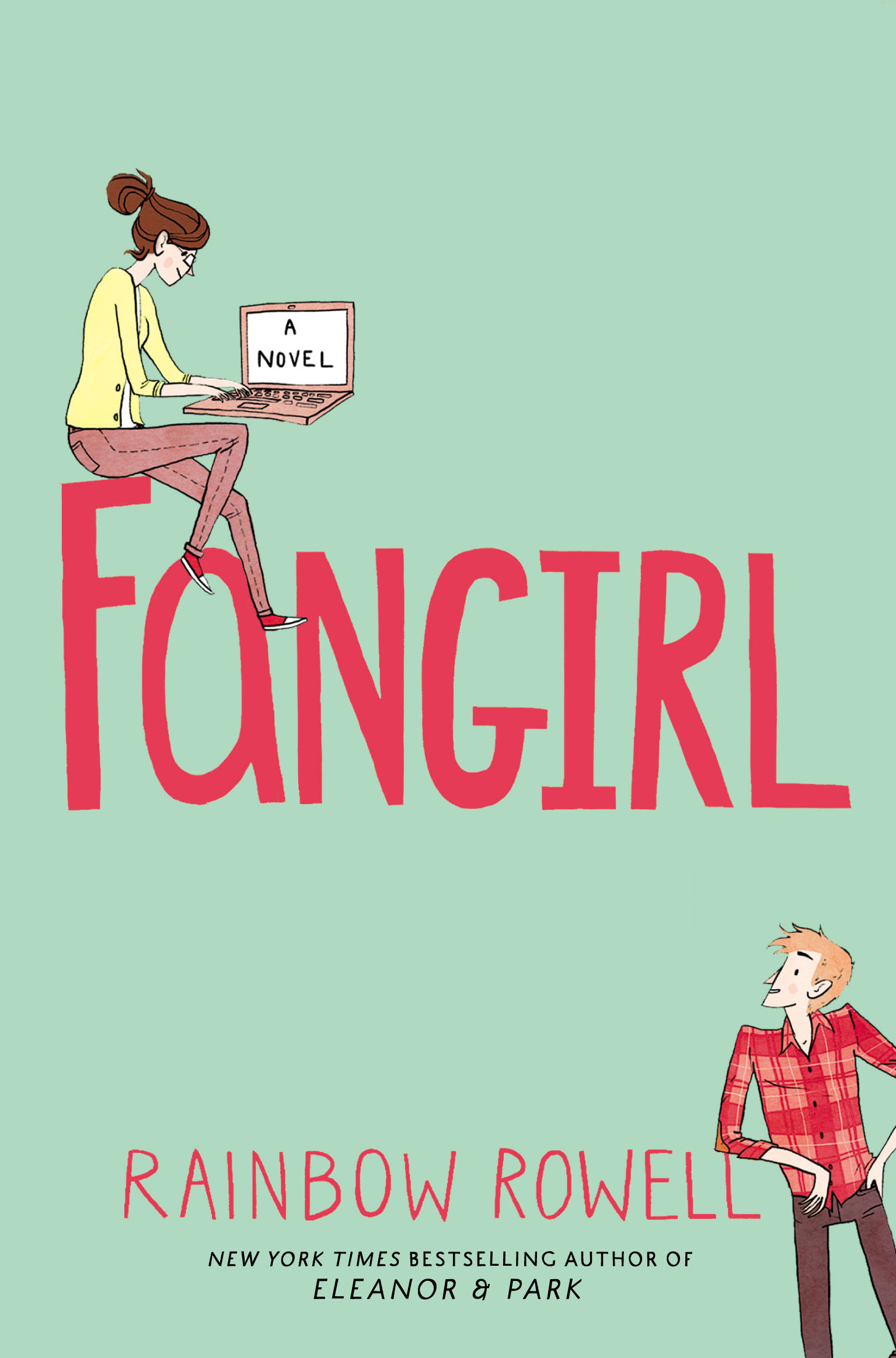
  • Fangirl

    Fangirl

    Fangirl by Rainbow Rowell has quickly become one of my favorite novels. Cather, nicknamed Cath, has always relied on her twin sister, Wren, for companionship. Growing up, the two read Simon Snow and wrote fanfiction together. After their mother left, the sisters relied on the fantastical storylines they read and penned to fill a void, allowing them to fall into a magical mystical world and spend time together doing something they loved.

    While Wren had moved on with her life, extraordinarily excited for freshman year of college, Cath still loved Simon Snow more than anything. She hung posters in her dorm room and placed copies of Simon Snow books by her bed. Every day Cath still wrote her Simon Snow fanfiction, Carry On, wanting to continue the story of Baz and Simon. Cath assumed she and Wren would room together in college, but Wren decided that it was time for the pair to separate and experience life on their own, forcing Cath into a situation she did not necessarily anticipate.

    In turn, Cath was forced to room with Reagan, who was not a freshman but an upperclassman. Reagan was not welcoming to Cath, making Cath feel even more isolated. Oddly enough, the pair bonded over the fact that they were forced to share a room. Cath soon started to interact with Reagan’s friends, particularly Levi, who stopped by their room on a regular basis. Rowell was able to incorporate his character in a manner that did not feel contrived whatsoever. I looked forward to Levi’s visits.

    While reading, I was amazed at Rowell’s attention to detail. Her writing skills and talent warrant a special acknowledgment. For instance, Cath’s mother did not know she was pregnant with twins, originally, selecting the name Catherine for her unborn daughter. When she found out she was going to have twins, she split the name in two, Cath and Wren. Small details like this really resonate with me as a reader. I appreciated Rowell’s ability to add unexpected depths, dialogue, and character traits.

    Similarly, Rowell’s characters are entertaining and exceptional. For instance, Cath used her fanfiction to fill a void in her life. By spending time on her computer, she was not out in the world experiencing life firsthand. This characterization and personality trait is rather ingenious. Cath was a talented writer who chose to focus on another author’s creation rather than craft her own story. In her creative writing class, Cath felt compelled to find a writing partner to work with rather than write on her own. Cath had a natural inclination to work with another person because that was the type of relationship she was used to, due to her reliance on Wren. In general, Cath was not used to working independently or being by herself. In a manner of speaking, her fanfiction was reflective of her inner turmoil or ambiguity.

    Rowell created a multidimensional protagonist who not only captivates the reader but is someone they can root for throughout the duration of the story. As a reader, I wanted Cath to find happiness and develop a sense of being outside from her sister, Wren, or her roommate, Reagan. Simple moments such as Cath being able to eat by herself in the dining hall or interact with new people on campus made me proud of her character growth. I do not want to give away any spoilers of Fangirl, so I will refrain from writing about Cath’s romantic life, but I will say that in order for her to have a healthy romantic relationship, it was important for her to develop a personal sense of worth and being beforehand. The manner in which Rowell included this development was brilliantly done.

    Everything about Rowell’s writing was spectacular! Her setting, characterizations, dialogue, secondary characters, and subplots were all phenomenal and created a superb novel. I would give Fangirl more than five stars if I could!

    Views: 5

  • A Time to Die

    A Time to Die

    “How would you live if you knew the day you’d die?

    Parvin Blackwater has wasted her life. At only seventeen, she has one year left according to the Clock by her bedside.

    In a last-ditch effort to make a difference, she tries to rescue Radicals from the crooked justice system. But when the authorities find out about her illegal activity, they cast her through the Wall — her people’s death sentence.

    What she finds on the other side about the world, about eternity, and about herself changes Parvin forever and might just save her people. But her Clock is running out.”-summary of A Time to Die from Goodreads

    A Time to Die by Nadine Brandes is one of the few books I consider to have rocked my world. The first time I read it, I was in a book coma for the rest of the day. Powerful, moving, and heartbreaking beyond words.

    Parvin Brielle Blackwater is an inspiration. She is an amazing character who endured so much for what she felt was worth fighting for. Nadine Brandes does a stellar job of telling the story through Parvin’s eyes giving the reader the ability to truly live out the story in Parvin’s place. First person narration is very popular in the YA market nowadays, and I can say that I have yet to see an author who can carry it off as well as Brandes. Well done, Nadine.

    One of the best aspects of the book is the amazing world it is set in. The author crafts the scenery expertly, leaving the reader immersed in a brave and terrible new world. Terrible, because of the brokenness and lack of hope that resides in the USE, but brave and beautiful as well, shown by the forward-thinking mindset and ingenuity of Ivanhoe. No, it’s not a utopia by any means, but enough light shines through to give the reader hope for the future.

    The plot is very interesting in itself as well. It’s hard to get a reader to connect with an already-doomed character. After all, why bother to care about her if she’s just going to die anyway? However, as we get to know Parvin and experience life through her eyes, we begin to start pulling for her to make that last year worthwhile. We want her to win, and as her clock steadily counts down, we already begin to grieve that she won’t have more time with which to make a difference.

    There’s a lot of beauty in this book, but with that comes a lot of pain. Even the second time through, when I was bracing myself for the several heart-wrenching scenes, they still hurt. I won’t go into detail so I don’t spoil it for you, but it might be wise to keep the tissue box handy.

    Overall, I rate A Time to Die with five glowing stars. It’s inspiring and touching, balancing pain with whimsy. I highly recommend this book to readers 15 and up (due to a few disturbing moments and scenes of peril). I leave you all with a few reminders from Philippians that fit the tone of A Time to Die perfectly:

    Philippians 3:12

    “Not that I have already obtained it or have already become perfect, but I press on so that I may lay hold of that for which also I was laid hold of by Christ Jesus.”

    Philippians 1:23-24

    “But I am hard-pressed from both directions, having the desire to depart and be with Christ, for that is very much better; yet to remain on in the flesh is more necessary for your sake.”

    Content guide (parenthesis may contain minor spoilers):

    Violence/Graphic: 10/10 (attacks by wild animals, stitches, amputations, injuries, much mention of death and dying).

    Sexual: 2/10(brief kiss on the cheek, thoughts about kissing, admiring a man’s muscles, shirtless scenes-all kept in an innocent light).

    Language: 0/10.

    Views: 3

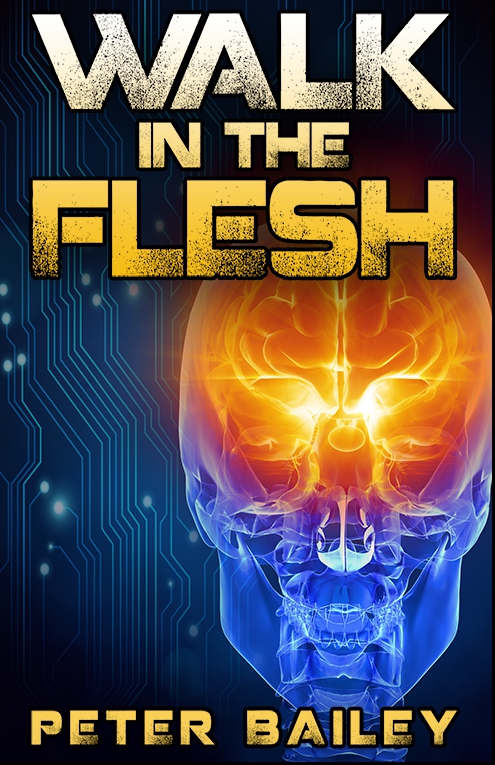
  • Walk in the Flesh

    Walk in the Flesh

    The phased array radar that had been so conspicuously placed would not be able to get a lock on the attacker’s radar-absorbent composite materials, but the shorter range heat seekers had been placed by an expert. At exactly the point where the bombers would lose their stealth capability when they launched cruise missiles, fields of camouflaged S-300PMU missiles waiting for them. – Walk in the Flesh


    Walk in the Flesh was such a guy’s book. I was baffled by the amount of seriously unwanted information on weapons that was found in this book. I am still reeling from the effects. So this book is set in different locations throughout the world depending on the mission of the so-called robotic agent. I was reminded of several different Sci-fi movies and series that I enjoyed during my TV-loving days. So let’s see there was Chuck, the one where information is downloaded into the brain and an average guy becomes super smart all of a sudden and Avatar like recovery room and other shows. It was all put together into creating this humanoid cyborg. So how was the book to me, here is a simple rundown of the book.


    There were three of them, each armed with Khaybar KH2002 assault rifle, and its data flowed up from the tumor mass. Thirty round magazine. A direct copy of the Chinese CQ assault rifle. 800-850 rounds per minute. Just one of these could turn the room into an abattoir.


    I don’t know what to say about Neil, well he was described as a violent, psychotic and someone who has the love and yearns to kill most of the time. He has an honorable military background with all the medals and all, and add in the blind loyalty towards the country (no right and wrong here) without putting his love lust aside (kill and just kill), I mean that is the extra perk right, well I believe this are all the criteria for a good terrorist but he was an abusive man to his wife right from the start but also loved wife, I mean what a contradictory. Neil, in my opinion, was sometimes described as loving but he was so compulsive in killing people, it was like for me reading a dark twisty Sci-fi, he was also very super human, I mean I can’t get really digest it. He wasn’t even anti-hero he was at times, pure villain. It was really like reading a very testosterone-heavy book, there was a description of fights that left me reeling. As for the heroine, I think it would be Ariana, she was a fighter till the end though she lost a lot by the end of the book due to Neil’s psychotic tendencies. Ironically, I actually enjoyed the writer’s writing, though I hope the violence was less and maybe the numbers and models of weapons used be actually explained because half the time I didn’t what was the weapons were anyways.


    The pain made him bend forward, perfectly positioned for the rising strike that took him in the throat. Across the table, the guard’s smile changed to alarm at a snail’s pace and he recoiled a little. This put his head at exactly the right angle, so Neil’s palm-strike to his nose sent splinters of bone directly into his brain. He was probably dead before he reached the floor.


    Walk in the Flesh needed good editing and the story actually got really interesting by the end, did the story just begun? No idea, the first few chapters slowly build up the story towards Neil and his actions. There were other players involved since this was a futuristic military sci-fi book. The story was different with a combination of different sci-fi plots and characters put together. The writing style was good but the writing technicalities can be improved in terms of explanation and description, not everything needs to be explained by the model number or the speed and the impact radius etc. I can’t see this stuff and I also have no interest in researching about them in my opinion a good book actually researches that for me. I was disappointed as the story actually got really interesting by the end because Neil was acting more human now than ever in the book. I mean it was like he killed all the time someone who just kills and kills. Walk in the Flesh is hardcore sci-fi leaning towards guys who prefer army life, weapons, and brutal fights.


    Views: 2

  • Wayfarer

    Wayfarer

    Rating: 2 Stars

    Age Recommendation: 17+

    Warnings: Explicit scenes regarding intimacy, Strong language, Violence/torture

    Genres: Romance, Science Fiction, Action and Adventure

    Pages: 251 (paperback provided in exchange for an honest review)


    Adara flew. Space surrounded her and whispered to her of the secrets it held. She smiled as she followed the course and took the shuttle to the Pritchard. The Pritchard was a sleek ship. The hunter class ships were all bullet shaped with the bridge at the top back of the bullet. Excitement rippled through her with the first glimpse of it waiting for her. Something in her clicked into place and she felt at home again.


    Wayfarer, by Eileen Troemel, is a science fiction novel in some ways, but is really more of a romance novel set on a sci-fi backdrop. Adara is half-Wayfarer, which means that she has inherited some of her father’s ability to understand and see things about space that others can’t, even with more experience flying ships or with a certain piece of the universe. Her new captain, Decker Flannery, didn’t actually want to bring her on board as his third pilot, but after she does join his crew, he starts to see the importance she could have for his crew and in his life in general.

    Now, one thing that I felt actually worked was the setting and some of the plot devices used. Adara survived a ship’s explosion and saved many people on board, but couldn’t save everyone, and that causes some lingering resentment from others as well as within herself. And those problems lead to even bigger ones. That aspect of this book really seemed to work.

    I also felt that the progression of the two main relationships in the novel worked for the most part, even though one was happening out of sight of the reader. Although the story is told in third person, we follow Adara for the most part. I will say, however, that I did not expect the graphic scenes that occurred a few times throughout the story.

    That said, I did have a number of problems with the text, leading to the rating of only 2 out of 5 stars. I never like giving low ratings but I had trouble understanding some of the elements in Troemel’s novel.

    First and foremost, the writing was strange. Spare, choppy sentences aren’t always bad, but when an entire book is built up of them, it makes action difficult to follow. Everything happens more quickly when there are fewer commas to slow a reader’s pace, and sometimes that’s a really important trick to use. But it made the whole novel seem jumpy and short. There were also a number of grammar issues. For example, plurals and possessives were mixed up so rather than saying “heads” it might read “head’s,” and rather than saying “Adara’s” it might say “Adaras.” I’m not sure if that’s just an editing mistake or not. So as a would-be editor, the writing style and those mistakes were fairly distracting.

    The lore of Adara’s species was also very strange. That is, her background as a half-Wayfarer and the rules about that sort of person. She is still human, but with a better eye for seeing disruptions in space; she’s able to stay awake for longer periods of time, endure more pain, and heals more quickly. I have all of that tucked away and understood. But the main problem I had with the Wayfarer culture is that I couldn’t understand why they were considered outsiders or why they were disliked. Wayfarers are said to be more promiscuous, which I suppose would be a valid complaint in a world where that sort of thing isn’t discussed or is not done very often. But people in this universe’s culture talk about it frequently, have very strong curse words which are used often, and Adara’s two best friends are also quite obviously doing exactly the same as she is with her love interest, so I didn’t understand their problem with her at all.

    Really, Adara should’ve been quite important and popular, so to speak, from the start. She has all of these great abilities that could help her as a pilot, but she’s run into some bad luck. And when that last happened, she saved over fifty people all by herself. I feel like that deserves more credit than it’s given.

    Over all, this novel felt like a romance novel with a bit of science fiction world building. There are others in the series, which makes me think that this book is something of a set up for the others, but I can’t say for sure as I haven’t read them. I do believe that fans of the adult romance genre would really quite enjoy this, but those coming in believing it to be a science-fiction heavy story may not feel as strongly about it.

    That said, the author has written other sorts of books that might be great for those who enjoy the Wafarer series, so a dig around Goodreads should help out with finding more of those. Troemel is quite prolific, and her many works can be found online, for e-readers as well.

    Views: 3

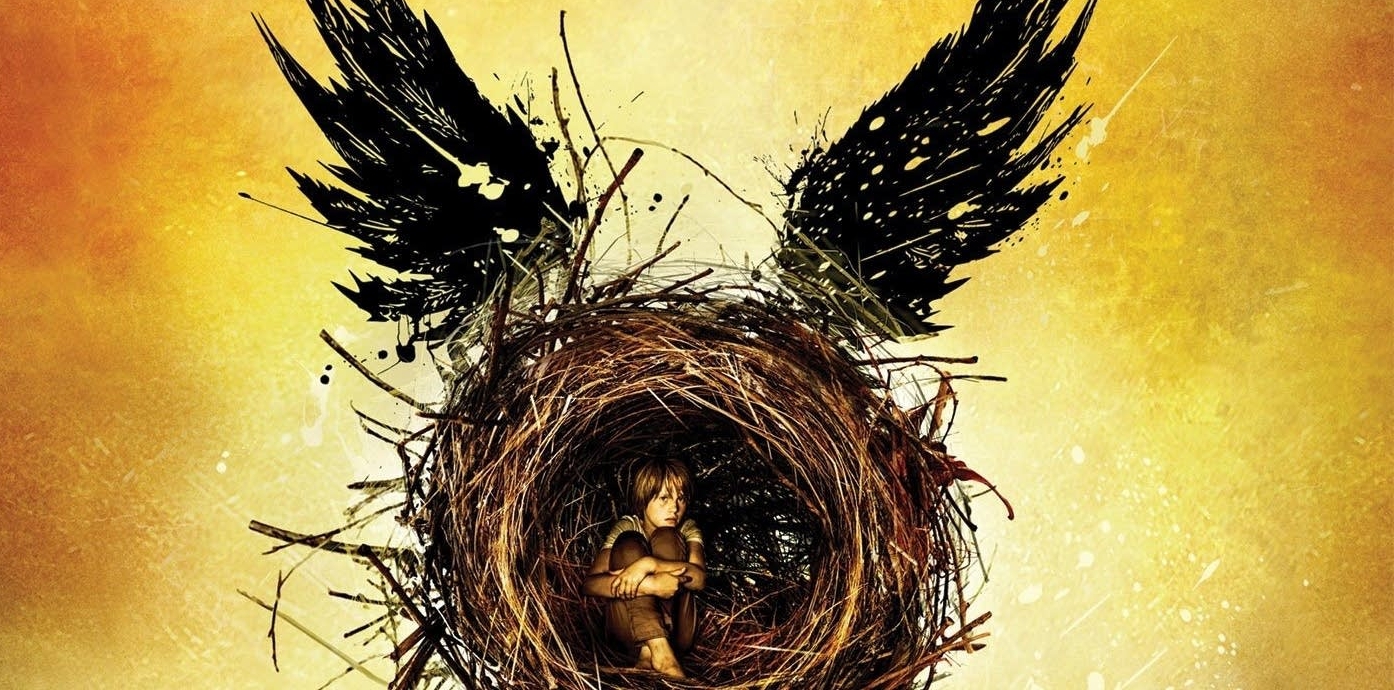
  • Harry Potter and the Cursed Child

    Harry Potter and the Cursed Child

    Rating: 2.5 Stars

    Age Recommendation: 11/12 + (Middle Grade)

    Warnings: Violence, Character Death

    Genres: Fantasy, Action and Adventure, Coming-of-Age

    Pages: 308 (Hardback edition)


    ALBUS: We’re ready to put our lives at risk.

    SCORPIUS: Are we?

    AMOS (gravely): I hope you have it in you.


    NOTE: Harry Potter and the Cursed Child actually has three credited creators: J.K. Rowling and John Tiffany helped to create the story, but Jack Throne is the actual playwright. So I will be addressing each of them individually throughout this review.

    To start, I want to say that I did originally consider giving Harry Potter and the Cursed Child four stars instead of 2.5 because I did really enjoy reading it. But in hindsight, I do understand where the other average or negative reviews are coming from. This story, while laugh-out-loud funny and undoubtedly astounding to view on a live stage, breaks Rowling’s own rules, and that’s a huge problem for fans.

    I don’t want to spoil anything for those who haven’t read it, but let’s start with my absolute favorite part: Scorpius Malfoy. He has immediately risen to my top five characters list, because of his sheer wit. He’s also very caring in a way that most readers assumed his father could never be. I am not personally in that camp, as I tend to go with the book version of Draco Malfoy, who quite clearly seems redeemable. But Scorpius is immediately a sympathetic character because of rumors about who his actual father might be. But I won’t get too into that for fear of ruining the surprise of the story. Thorne has created incredible lines that, honestly, I wish I had an excuse to quote. They’re just that funny.

    Albus Potter was great too, and his personal struggle felt entirely founded and reasonable, which is impressive for a play. The first half of the play does cover his formative Hogwarts years, though briefly, but I think it works despite how quickly it went by. In a live production, I imagine it wouldn’t feel so fast. Again, Thorne’s writing feels alive in a way that plays almost never do for me, so I really did enjoy reading Harry Potter and the Cursed Child.

    Despite those two fantastic characters, many of them were bizarre. Ron Weasley was not his usual self, seeming to deflate as a character. There’s a Trolley Witch, as she’s called in the character list, who seems like something out of Percy Jackson instead of Harry Potter; and the main problem I had with this book? Delphi. As a character, she is extremely problematic. She breaks suspension of disbelief for the reader like nothing Rowling has ever created before. There were so many problems with lore being either ignored or changed and as a fan since I was only five years old, it was actually sort of offensive to see that she didn’t stick to the world we are used to and try to find a story that fit within it.

    To be honest, I didn’t need an eighth book. And this felt like Rowling, Thorne and Tiffany decided to write a piece of fanfiction, then put it on the stage in two parts. Which, of course, means more productions in the same way that the Fantastic Beasts films will be a trilogy for reasons yet unknown. But here’s hoping that the movies stick to the lore, as they’re set in the past rather than the future. Or, if we’re going by the new Harry Potter timeline, the present.

    As for John Tiffany’s work on Harry Potter and the Cursed Child, he is a renowned director and I don’t doubt that the effects and stage presence must be brilliant. Incredibly so. But as much as I would love to see it live, I don’t know that I would want to go back twice to do so. I do understand that the play would probably be massively long, however, were it not split.

    At any rate, the main issue for most everyone, it seems, it the lore. Which, to be clear, is the term for a story/world’s rules, backstory, character list, things like that. The things that the author creates themselves are called Canon, and the things that the fans imagine or wish for or wonder about, those are called Headcanons (because they’re made up in someone else’s head, I suppose). This play felt like it was almost entirely a piece of fanfiction, built around those headcanon ideas. Delphi as a character should not be possible. The plot device that Draco uses should not be possible, nor should the one that Albus and Scorpius use to create the majority of the story’s conflict. I understand why Rowling let the latter happen, but a great deal of Harry Potter and the Cursed Child seems unlikely based on Rowling’s previous works.

    Now, that isn’t to say that I didn’t quite like this play. As I said, I nearly gave this four stars and did rate it as such on Goodreads initially. But as I looked into it more and considered it, I understood where people felt the faults were coming from. As a reading experience, it was definitely worth four stars. But as a work in the Harry Potter universe and franchise, I couldn’t let myself leave that rating.

    A great deal of readers probably won’t even register those lore differences, as some were probably the sort who preferred watching the films, or maybe who only read the books once and enjoyed them but didn’t commit a lot of the lore to memory. Which is entirely valid and shouldn’t be discredited. But, that said, those people might actually enjoy this much more than people like me, who love the books far better than any other series, and who grew up reading and re-reading, and then watching the movies a silly number of times.

    So, as much fun as I had reading it, I certainly don’t feel like it’s part of canon, and I’m not particularly inclined to include it as such in my mental log of the plot arc of Harry Potter and his friends. Perhaps if it had been created sooner, people would have been more receptive, but as something that I’d read for fun, Harry Potter and the Cursed Child is spectacularly entertaining.

    Views: 0